The key facts
- The draft amendments narrow the grounds for using RSDL but do not abolish it entirely
- The 55-article bill includes an outright ban on the presumption of guilt
- If the amendments are adopted, it will be the fourth revision of the code since 1979
Draft amendments to the Criminal Procedure Law
Chinese lawmakers have proposed restricting the use of a controversial system of holding suspects in specially designated locations under constant police surveillance. According to the South China Morning Post, the draft amendments to the PRC Criminal Procedure Law provide for reducing law enforcement powers, strengthening protections for detainees, and an outright ban on the presumption of guilt.
What is RSDL and why is it criticized
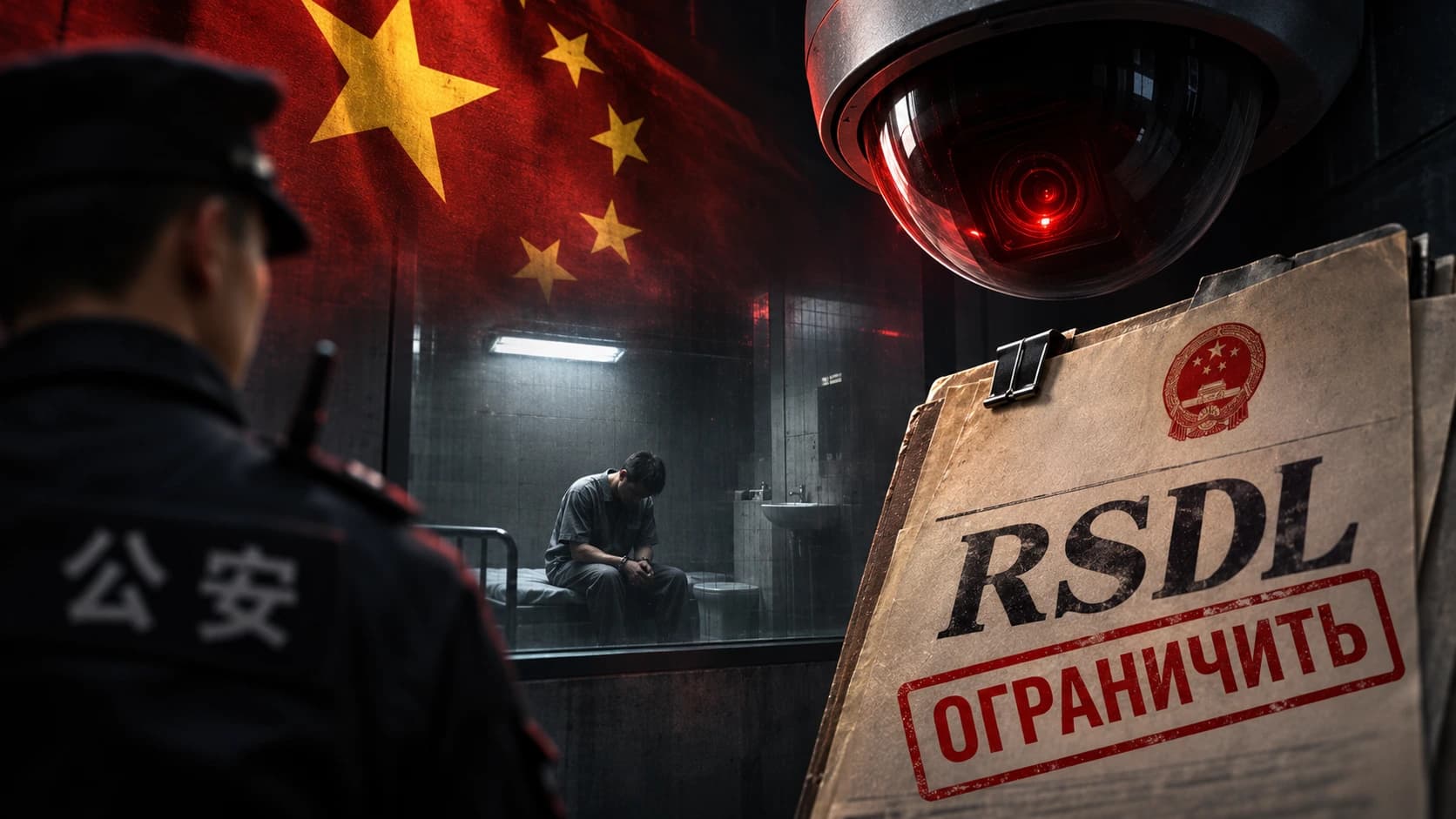
The measure in question is Residential Surveillance at a Designated Location (RSDL), which allows suspects to be placed under surveillance not at their place of residence but in a specially chosen premises. The mechanism is used, in particular, in investigations of crimes against state security and terrorism; in some cases a person may be held in such conditions for up to six months. The system was originally conceived as a less severe alternative to pre-trial detention, but, according to lawyers, over time it has become one of the harshest forms of restricting freedom in Chinese criminal practice.
Human rights advocates and lawyers on the practice of its use
Human rights advocates have repeatedly criticized RSDL for the possibility of isolating suspects and for abuses by investigative bodies. According to lawyers, some detainees were kept under round-the-clock surveillance, including while sleeping and using the toilet, and were subjected to prolonged interrogations; there were also reports of allegations of torture used to obtain confessions.
What the bill changes
Under the draft, police will no longer be able to send suspects to a designated location merely because they lack a permanent place of residence — instead, other coercive measures provided by law will have to be used. The document contains 55 articles in total: in addition to changes to the operation of RSDL, it provides additional guarantees for suspects, defendants, victims and lawyers, with particular attention to preventing detention beyond established time limits and expanding access to legal assistance. One important provision will be an outright ban on the presumption of guilt — treating a suspect as guilty before the circumstances have been established in the manner prescribed by law will be ruled out.
Assessments by lawyers
Liu Renwen, a researcher at the Institute of Law of the Chinese Academy of Social Sciences, acknowledged that abuses of the RSDL mechanism had occurred in practice, undermining the fairness of the judicial system, and said the aim of the changes was to reduce the use of this measure and provide more reliable protection of citizens' rights. Beijing lawyer Jin Hongwei welcomed the initiative but warned of a possible side effect: restricting one form of surveillance will not necessarily reduce the number of detentions, since investigative bodies may more often seek ordinary arrest. Professor Li Fenfei of Renmin University of China proposed easing the conditions for release on bail.
What comes next
The draft has been submitted for initial consideration to the Standing Committee of the National People's Congress. If the amendments are adopted, it will be the fourth revision of the PRC Criminal Procedure Law since its adoption in 1979. At the same time, this is not yet about a complete abolition of RSDL, but only about restricting the grounds for its use — the fate of the document under consideration remains unknown.