The key facts
- A 5,300-year-old urinary stone has been found in the Ipatovo-5 kurgan in Stavropol Krai.
- Chemical analysis confirmed the infectious nature of the formation rather than a metabolic disorder.
- The man's skeleton indicates heavy physical strain and multiple past fractures.
A find in the Ipatovo-5 kurgan
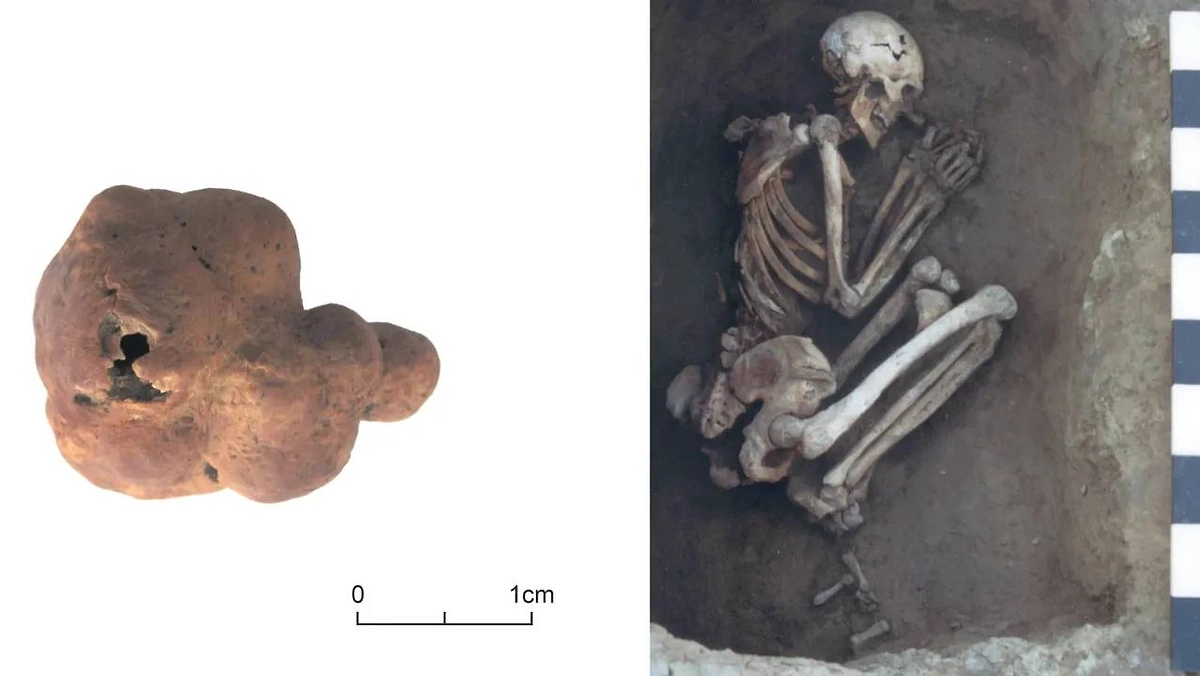
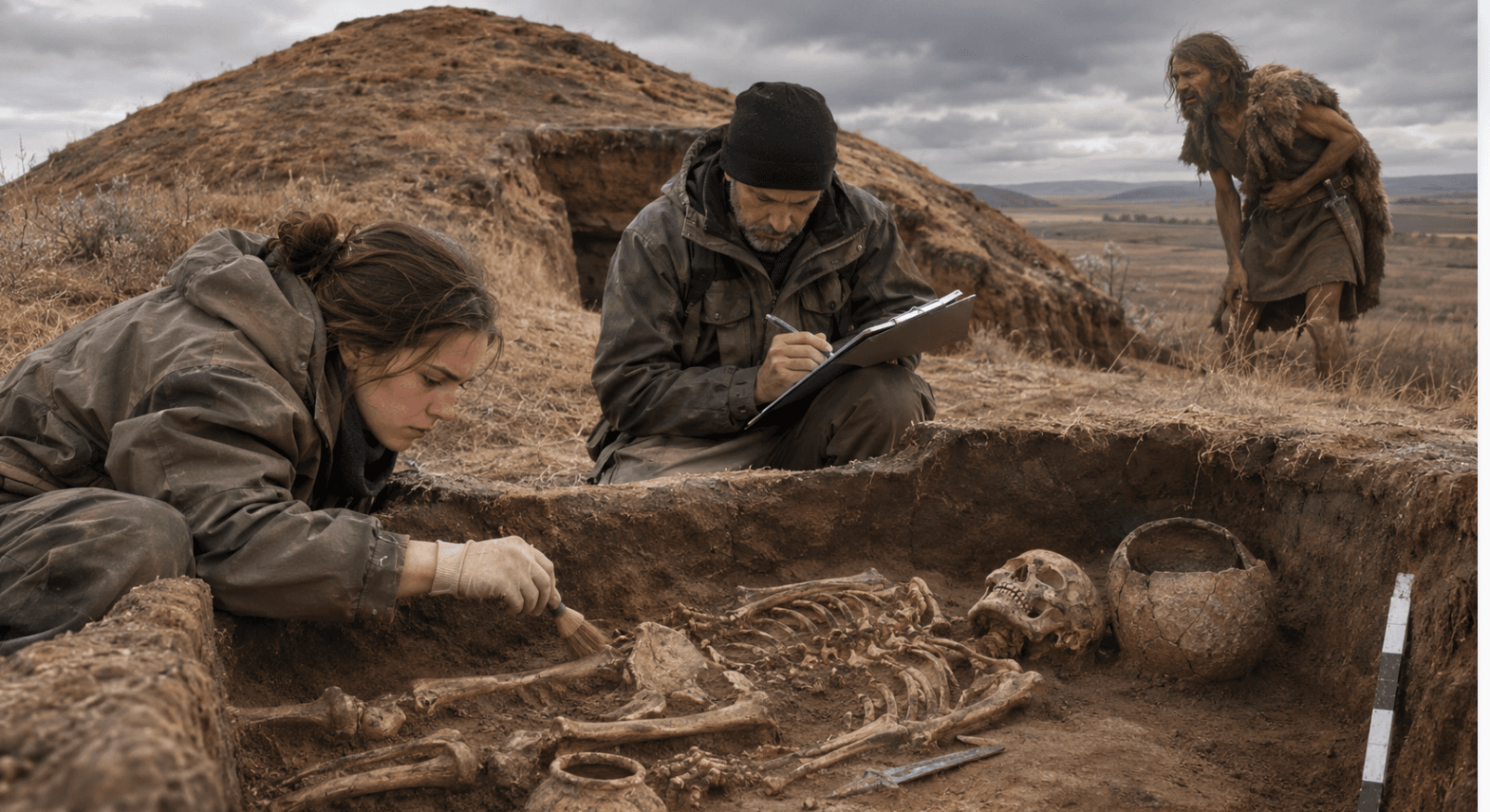
Archaeologists have discovered a urinary stone about 5,300 years old in the remains of an Early Bronze Age man found in the Ipatovo-5 kurgan on the Stavropol Upland. The find, the size of a grape (21 by 17 millimeters), was discovered among the hand bones and stood out for its rounded shape with protrusions, while a crack on its surface revealed a crystalline structure. The study, published in the journal Archaeological and Anthropological Sciences, made it possible to reconstruct the hard fate of a resident of Ciscaucasia who died at the age of 40–49.
The nature of the formation and the diagnosis
Chemical analysis revealed calcium, phosphorus, and the mineral whitlockite, which is characteristic of some urinary stones associated with bacterial infections. Unlike stones caused by metabolic disorders or dietary habits, the sample contained no substances typical of such conditions. This led specialists to link the find specifically to a chronic inflammatory process which, according to the researchers, most likely formed in the kidney, although formation in the prostate gland cannot be ruled out.
Health condition and way of life
The man's skeleton testifies to heavy physical strain and multiple injuries sustained during his lifetime. The deceased showed pronounced changes in the spine and joints, signs of gout, and several healed fractures: a clavicle fracture in adolescence, a compression fracture of a lumbar vertebra, and a fracture of the radius. Researchers attribute such injuries to the way of life of steppe herders, who had to work with cattle and handle heavy carts.
The significance of the find for science
The preservation of the urinary stone is considered a rare stroke of luck, since such formations usually disintegrate in the soil and are easily mistaken for ordinary pebbles during excavations. The uniqueness of the find lies not only in its age but also in the ability to precisely determine the nature of the ancient man's disease. The researchers now plan to apply the chemical analysis methods used to other archaeological finds in order to build a fuller picture of the spread of diseases in antiquity.