The key facts
- The Ministry of Transport has prepared a draft law 'On Highly Automated Vehicles'; submission to the State Duma is planned before the end of the autumn session
- Initially, harm to the victim must be compensated by the owner of the driverless vehicle
- Insurance for autonomous transport exists within experimental frameworks: mandatory liability insurance (OSAGO) plus additional coverage of at least 10 million rubles per vehicle
Compensation scheme: payout first, investigation later
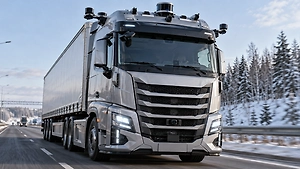
Driverless trucks already haul cargo on Russian highways, and autonomous taxis are being tested in cities, but the question of liability for crashes caused by an algorithm rather than a human has not yet been finally resolved. The Ministry of Transport has prepared a draft law insurance industry, as reported by Life.ru.
How it will work
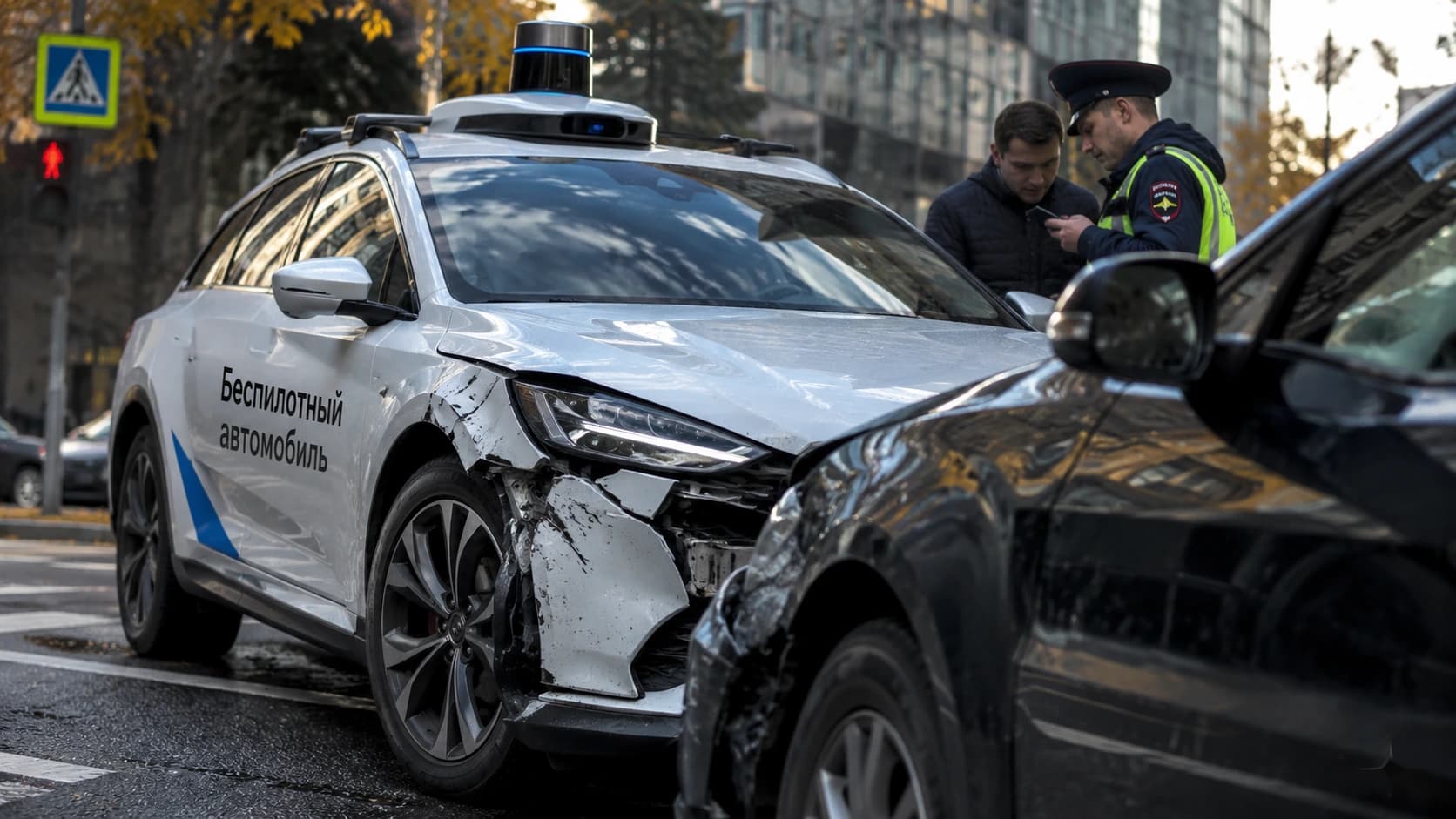
Under the proposed scheme, the victim will not have to prove which sensor or line of code failed: initially, the harm must be compensated by the owner of the driverless vehicle. If the investigation shows that the crash was caused by a vehicle defect, a software failure, poor maintenance, or improper actions of the remote support operator, the owner or the insurer can then bring claims against the party actually responsible for the malfunction. Sergey Demidov, Vice President of Renaissance Insurance, believes that for an ordinary accident victim the procedure should remain as close as possible to the familiar one: the insurance payout comes first, and the technical causes are sorted out afterwards. Sogazie also believes the law should allow claims to be brought against manufacturers and developers of driverless systems.
A 'black box' as a condition for the investigation
The key difficulty, according to insurers, is that after a crash it is not enough to determine who was in the vehicle — it is necessary to understand who was actually driving at that particular second: the human or the software. This requires access to a kind of 'black box' of the driverless car: onboard systems must make it possible to reconstruct the autopilot's commands before the collision, the condition of cameras and sensors, any human intervention, installed software updates, and the actions of the remote support operator. Market participants believe the rules for storing and transferring such data should be separately enshrined in law.
What already works and what is missing
Insurance for autonomous transport already exists in Russia — so far only within experimental frameworks. The first KamAZ driverless trucks took to the M-11 Neva highway in the summer of 2023, and in the spring of 2026 autonomous freight operations were launched on the M-12 Vostok. In addition to standard mandatory liability insurance (OSAGO), such vehicles are required to carry additional coverage of at least 10 million rubles per vehicle. There are also precedents for payouts: back in 2020, Renaissance Insurance compensated a comprehensive insurance (kasko) claim after a crash in Moscow in which an ordinary Audi collided with a driverless Hyundai.
A separate policy and the fate of the draft law
The market is not yet ready to offer a mass-market separate policy for driverless vehicles: calculating the tariff requires statistics on accidents, damage, and payouts, and there is far too little of it so far. Because of this, it is hard to say whether insurance for a self-driving car will be more expensive than for a regular one: the algorithm potentially removes some human-error accidents, but repairing sensors, cameras, lidars, and electronics can cost considerably more. The Ministry of Transport presented the draft law for public discussion in early 2026; after comments were received, the document was sent for revision, and it is planned to be submitted to the State Duma before the end of the autumn session. Thus, the scheme described by insurers is the industry's position and a draft regulation, not rules already in force: the final allocation of liability between the owner, the manufacturer, the autopilot developer, the service company, and the operator will become known after the law is adopted.