The key facts
- A fine of 3 to 5 BRV (1.32–2.2 million soums) is provided for gas filling stations, not for citizens; the rule takes effect on February 5, 2027.
- The regulated price of liquefied gas rises from 2,000 to 5,000 soums per kg from November 15; vulnerable families receive compensation of up to 60,000 soums per month.
- Economist Otabek Bakirov pointed out a contradiction: no liability is established for suppliers for untimely gas delivery.
New fine for filling household cylinders
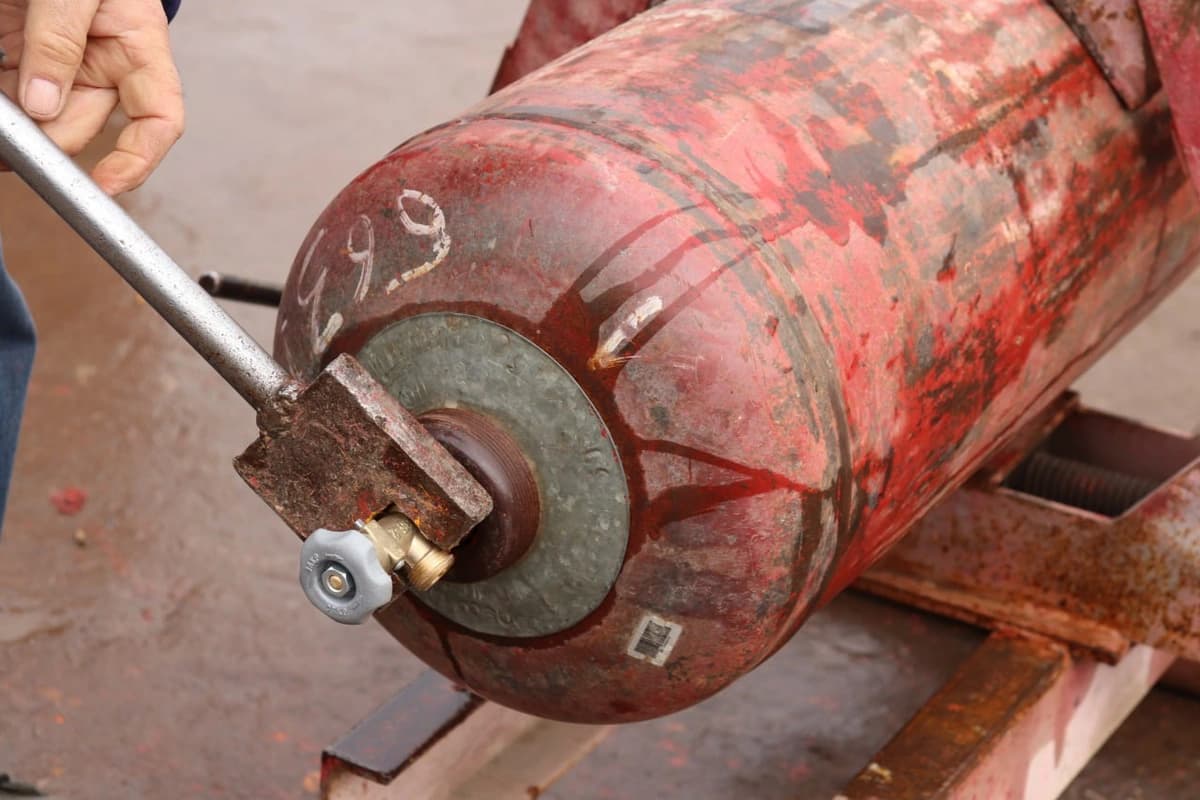
Uzbekistan is introducing administrative liability for dispensing liquefied gas into household cylinders at vehicle gas filling stations. The fine for gas filling stations will range from 3 to 5 base calculation values — from 1.32 million to 2.2 million soums. President Shavkat Mirziyoyev signed the relevant amendments to fire safety legislation on November 2; the law supplements the Code of Administrative Liability with Article 101−1 «Violation of the procedure for retail sale of liquefied hydrocarbon gas» (Gazeta reports on this). Importantly, the sanction is addressed to the station itself, not to the citizen who came to have a cylinder filled: the new article does not provide for a separate fine for consumers. The amendments will take effect three months after official publication — on February 5, 2027.
Against the backdrop of irregular supplies and rising gas prices
The new rule immediately raised the question of how residents of districts with irregular supplies will obtain fuel. According to figures announced at a meeting with the president in early September, about 3.8 million consumers and nearly 2,000 social sector facilities are supplied with liquefied gas; delivering 20 kg to each of them monthly requires about 912,000 tons per year. Inspections showed that 22% of consumers receive gas at intervals of more than 46 days. In October the Ministry of Economy and Finance presented calculations, according to which the average interval between deliveries was 30−35 days, and in some regions it was noticeably longer: a resident of the Ishtikhon district of the Samarkand region received gas on average once every 53 days (from January to July he bought an additional 60 kg at 11,000 soums per kilogram), while a resident of the Kushtepa district of the Fergana region received it once every 71 days (she purchased another 24 kg at 13,500 soums). The government cited these cases as justification for reforming supplies and revising prices.
Changes to the supply system and prices
By a Cabinet of Ministers resolution of October 31, the regulated price of liquefied gas for the population was raised from 2,000 to 5,000 soums per kilogram — the new tariff takes effect on November 15. Socially vulnerable families are entitled to compensation of 3,000 soums per kilogram, but for no more than 20 kg per month, that is, up to 60,000 soums. From November 1, gas purchases through the exchange and supplies to the population are organized by LPG-Trade, a company created with the participation of Khududgaztaminot; private entrepreneurs may also supply imported gas to the population. The authorities explain the changes by declining domestic production, a growing share of more expensive imports, and the need to deliver fuel on time.
Criticism: suppliers' liability remains an open question
Economist Otabek Bakirov drew attention to the situation of those who do not receive gas on time. In his view, a contradiction arises: liability is being introduced for dispensing gas into household cylinders at gas filling stations, while sanctions for suppliers for untimely delivery are absent. «If Khududgaz or the recently created LPG-Trade do not deliver propane to the population on time, there is no punishment at all. But if people come to a gas filling station themselves to fill a cylinder, a hefty fine is provided for refilling,» he wrote. Bakirov recalled that when justifying the price increase, the government itself cited examples of residents forced to buy fuel elsewhere due to irregular supplies. In addition to the gas provision, the law introduces fines for the absence of mandatory fire insurance for markets and shopping complexes (50−75 BRV, and 75−100 BRV for a repeat violation), for violating fire audit requirements (15 BRV for citizens and 30 BRV for officials), and also expands the powers of fire supervision.