The key facts
- 56% say data centres were a decisive or important voting factor, while 76% oppose new construction in their community
- Democrats won Senate seats in Texas, Ohio and Iowa — states with high concentrations of data centres
- OpenAI pledged to fully pay for its electricity the day after the elections
Survey: data centres became a noticeable factor in voting
A survey conducted for AP and a consortium of news organisations revealed that 56% of respondents considered data centres a 'decisive or important' factor in their voting, while 76% stated they would oppose the construction of a new data centre in their community. Hostile sentiments were significantly stronger among those who voted for Democrats. This follows a Pew Research survey indicating that about half of Americans view data centres as 'mostly harmful' to the environment, electricity costs and quality of life — a notable deterioration in attitudes since January. However, the topic trailed behind other key factors: 90% cited corruption in government, and 89% mentioned the cost of living.
Did data centres influence Senate races?
Three Senate seats won by Democrats — Texas (595 data centres), Ohio (258) and Iowa (117) — significantly exceed the median of 55 centres across all 50 states; in Texas, moreover, 31 facilities are under construction — more than in any other state. However, BBC Verify's analysis of state-level survey data shows that states leaning towards Democrats either followed the national trend of dissatisfaction or were less concerned, making it impossible to specify the exact number of votes or seats 'delivered' to the opposition by data centres. Notably, in three key states for AI construction — Texas, Georgia and Ohio — Democrats won, advocating for stricter regulations: temporary construction bans, cancellation of tax incentives, requirements to fully cover energy and water costs, mandatory use of union labour, environmental and transparency guarantees, and local veto rights.
What does this mean for the AI boom?
The stakes are high: the US economy in recent years has largely relied on major corporate investments in AI, including the construction of data centres. According to official data, inflation-adjusted monthly spending on data centre construction (excluding IT equipment) in August 2026 reached $5 billion — five times higher than in 2023. A Columbia Business School analysis indicates that investments in AI infrastructure now account for a larger share of the US economy than spending on new railways at the peak of that boom in the 19th century. Analyst opinions differ: Koray Kradir from the Future of Tech Institute expects new state leaders to set conditions or 'even halt uncontrolled construction'; Sima Shah from Principal Asset Management believes that requirements to fund grid development and the removal of tax incentives 'will increase costs and slow down new supply'; Heather West from Eurasia Group argues that bans and regulations will only delay deployment but not stop it — already approved projects will continue, while delays will impact the 'next wave'. Oxford Economics analysts point to tax revenues and job creation as incentives for politicians to avoid strict restrictions, while Deepak Surana from Futurum Group expects Texas leadership to pursue 'negotiations rather than a moratorium'. Notably, OpenAI, which has a data centre in Texas and projects under construction in Ohio, the day after the elections pledged to fully pay for its own electricity.
 Image source, Getty Images
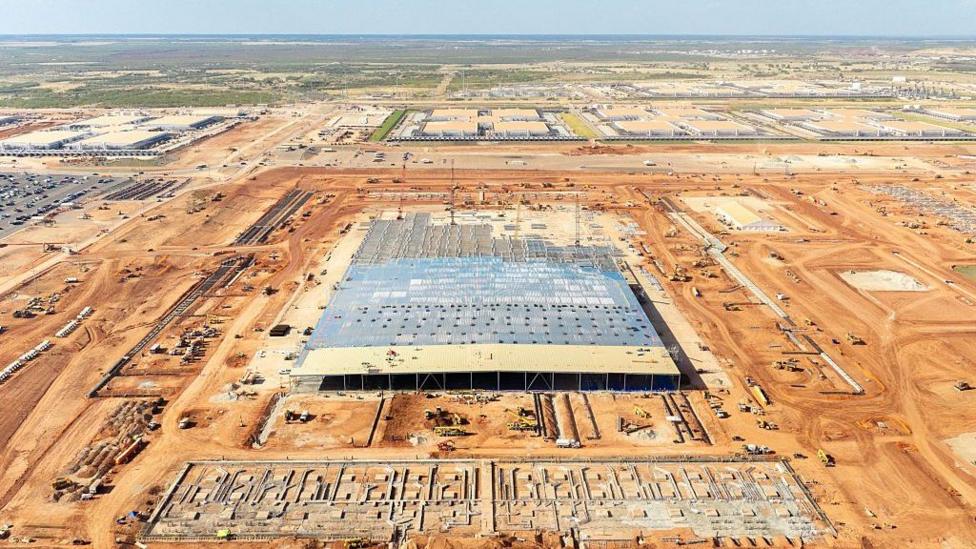 Image source, Getty Images
The Stargate Oracle AI data centre spans roughly four million square feet in Abilene, Texas