The key facts
- The underground laboratory is being built in the gneiss rocks of the Nizhne-Kansky massif at a depth of more than 500 meters; construction has been underway since 2018
- The research program includes more than 150 scientific areas, with scientific supervision provided by IBRAE RAS
- The laboratory is not intended for waste disposal — its task is to gather scientific data for future decisions
What is happening
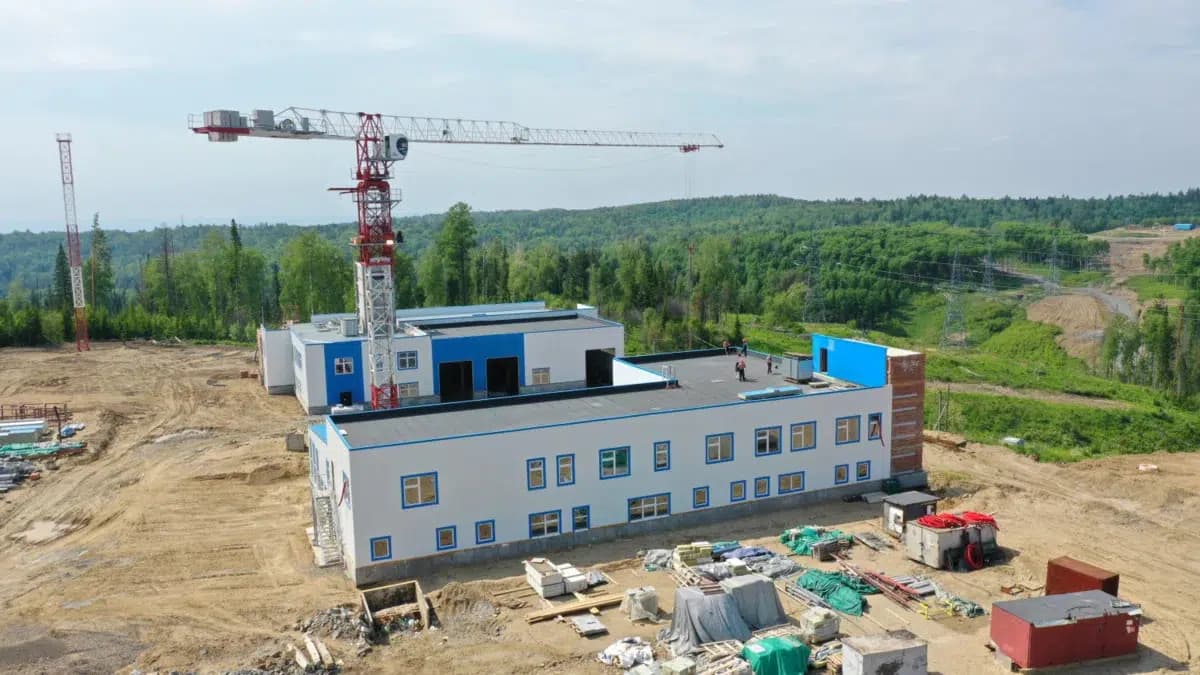
In Russia, a method for the final isolation of radioactive waste for thousands of years is being tested. As Kun.uz reports, citing data from Rosatom, an underground laboratory is being built in the rock formations of the Nizhne-Kansky massif. Its task is to experimentally assess how reliably the natural geological environment and engineered protective barriers retain radionuclides.
Why this matters and what exactly is being tested
High- and intermediate-level waste, whose radioactivity persists for a long time, is mainly generated during the reprocessing of spent nuclear fuel and can remain hazardous for thousands of years, which is why disposal methods require thorough verification. The laboratory's research program covers more than 150 scientific areas: scientists study the properties of the rock massif, test protective materials and structures, including the insulating properties of various rock types and special waste containers. Scientific supervision of the project is provided by the Nuclear Safety Institute of the Russian Academy of Sciences (IBRAE RAS). Researchers have theoretical models of long-term safety, and the underground laboratory makes it possible to compare their calculations with data obtained under real geological conditions.
What project participants say and what comes next
Andrey Dakhno, director of the Siberian branch of the national operator for radioactive waste management, called the project an important stage in developing solutions for the final isolation of high-level waste. According to him, the work is being carried out in exceptionally strong gneiss rocks, which provides a unique opportunity to confirm theoretical knowledge in practice at a depth of more than 500 meters — and only after that, having received the approval of the regulatory authority and taken public opinion into account, can work begin on further developing the final isolation infrastructure. An important detail to keep in mind: the facility under construction is not itself a repository — its main function today is to gather scientific data for future decisions on waste isolation. Construction of the laboratory has been ongoing since 2018 under the federal target program for ensuring nuclear and radiation safety for 2016–2020 and up to 2035.