The key facts
- Kun.uz published a popular-science piece on the structure of the atom and the nucleus
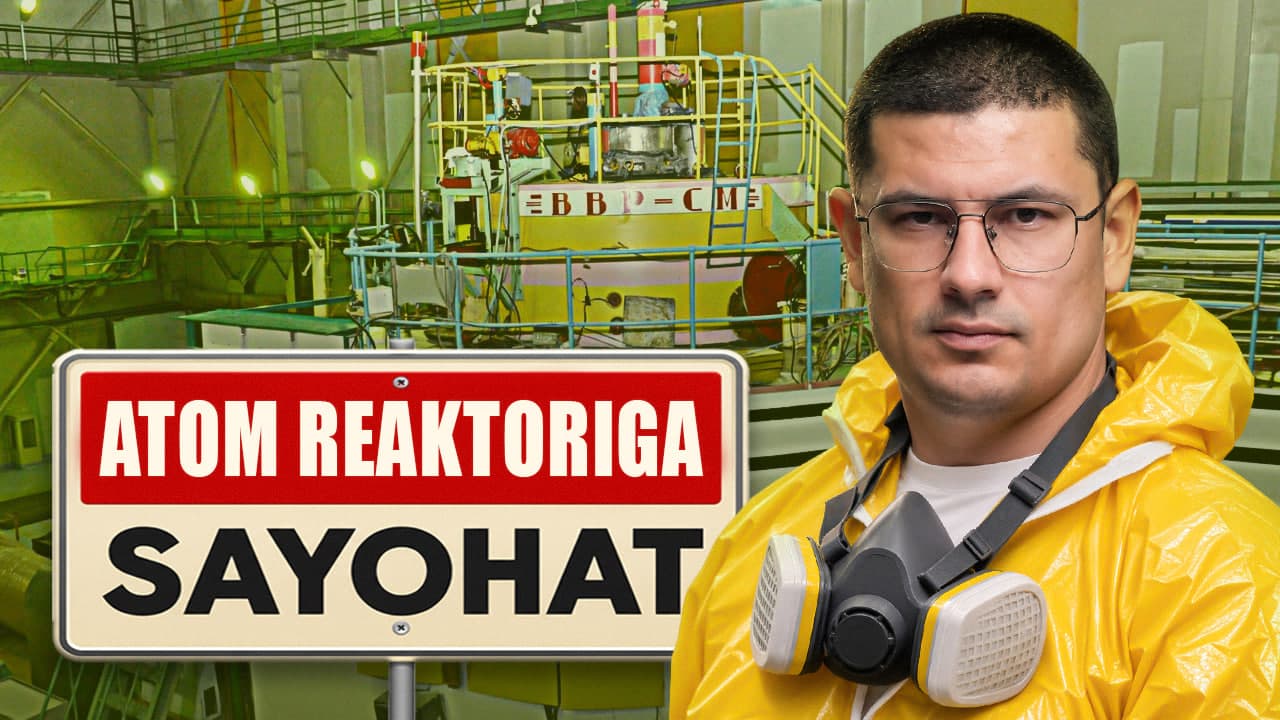
- The headline promises a story about a nuclear reactor in Uzbekistan, but the text presented covers only nuclear physics
- The outlet explains radioactivity through the ratio of protons and neutrons in the nucleus
What the article covers
The outlet Kun.uz published a popular-science explainer on November 6 about the atom and nuclear energy. The article begins by noting that the sunlight we see comes from a thermonuclear reactor — the Sun, located 150 million kilometers away from us. The author then promises to show how a real nuclear reactor works, but first to 'refresh' readers' understanding of the atom and its nucleus. One limitation should be noted: the headline of the publication announces the topic of a nuclear reactor in Uzbekistan, but the available text of the article itself contains no specific information about a reactor in the country — the portion presented is devoted to basic nuclear physics.
How small the nucleus is compared to the atom
For clarity, the outlet uses a comparison with a stadium: if the entire uranium atom were imagined as the Bunyodkor stadium, its nucleus would be the size of a nut. At the same time, almost all of the atom's mass is concentrated precisely in this tiny nucleus. The nucleus consists of positively charged protons and uncharged neutrons. Since like charges repel, protons compressed into a small volume should fly apart — but this does not happen because of the strong nuclear force, which, according to the comparison given in the article, is roughly 100 times stronger than the electromagnetic force. It has one condition: it acts only at very short distances. Neutrons, although they carry no charge, bind with protons and other neutrons through the nuclear force — they can be likened to the 'glue' holding the nucleus together.
Why some elements are radioactive
The second part of the explainer describes why some elements emit radiation on their own while others do not. According to the outlet, this is related to the stability of the nucleus, in particular the ratio of protons to neutrons within it. Examples are given: a carbon nucleus has six protons and six neutrons, while a uranium nucleus has 92 protons and 146 neutrons — a ratio of roughly one to one and a half. The author compares an unstable heavy nucleus to a patient whom a doctor advises to reduce their weight from 150 to about 80–90 kilograms: striving for stability, such a nucleus spontaneously decays and emits radiation. Based on the excerpt of the article presented, it is impossible to judge how a nuclear reactor actually works or what is said about a reactor in Uzbekistan — that part is not covered in the source.