The key facts
- In December 2021, Russia proposed enshrining a renunciation of NATO enlargement; the talks in early 2022 produced no agreement
- In December 2021, Russia proposed enshrining a halt to NATO expansion; the negotiations in early 2022 produced no agreement
- Finland and Sweden joined the alliance in 2023–2024, and at the summit in The Hague NATO members agreed to spend 5% of GDP on defense by 2035
- On October 29, 2026, Vladimir Putin declared his support for returning to full-fledged ties with European countries
- On October 29, 2026, Vladimir Putin declared Russia's support for returning to full-fledged ties with European countries
From a dispute over guarantees to a break in contacts
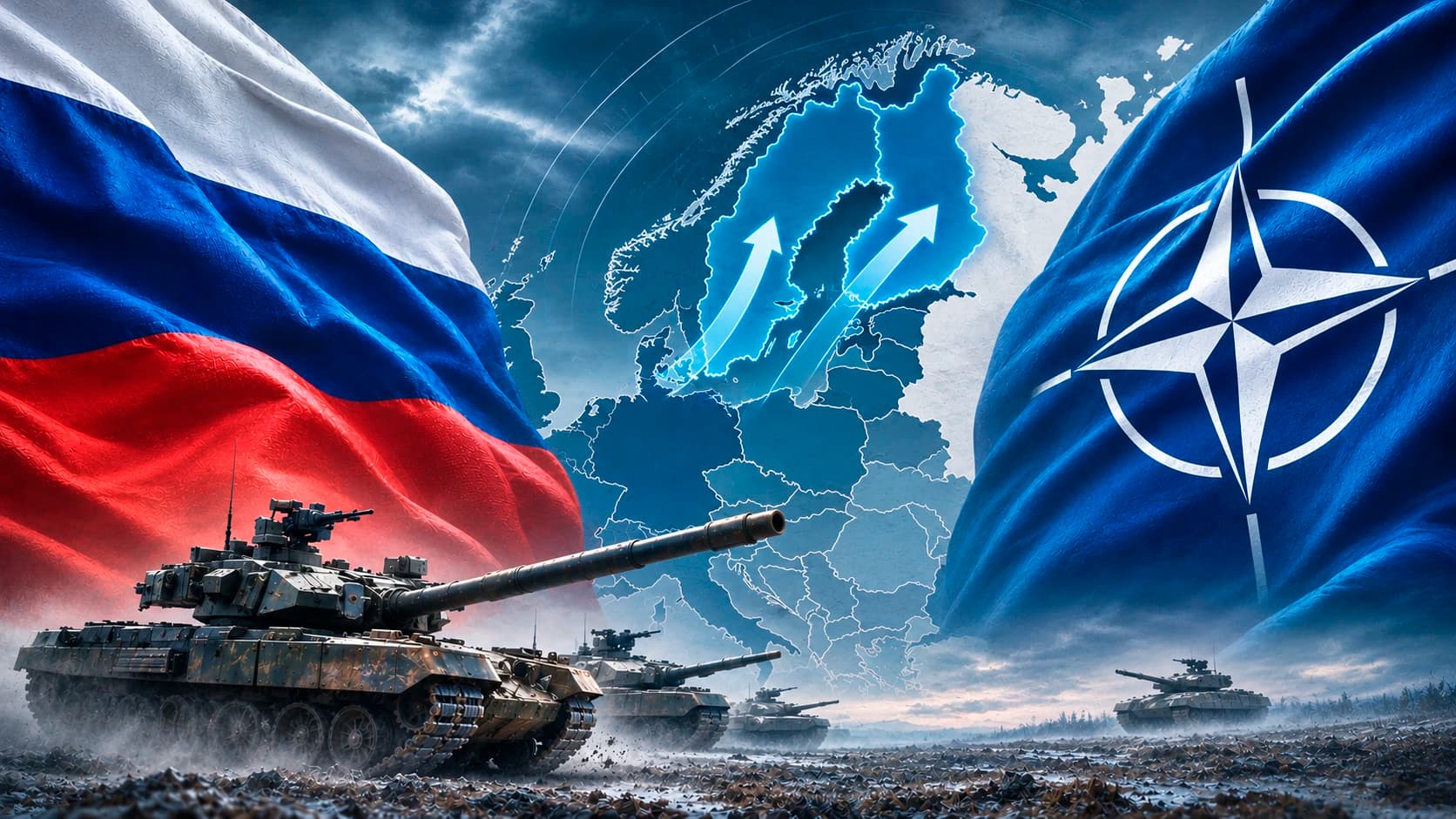
In a retrospective piece, the outlet Life.ru described how, over five years, the dispute over European security grew into an open conflict between Russia and NATO. The author names 2021 as the starting point: at the Brussels summit on June 14, the alliance's leaders declared that Russia's actions threatened Euro-Atlantic security, while keeping in the communiqué a caveat about readiness for dialogue 'on the basis of reciprocity.' In the autumn, tensions were heightened by reports of Russian troops near the Ukrainian border — estimates of their numbers differed: Volodymyr Zelensky spoke of almost 100,000 servicemen, Ukraine's Defense Ministry had earlier put the figure at about 90,000, and in December The Washington Post reported an American estimate of a possible future deployment of up to 175,000. Moscow denied any plans for an attack and called the movement of troops on its own territory an internal matter.
Diplomatic missions closed, draft agreements not accepted
The conflict also affected diplomatic channels: after the accreditation of eight Russian diplomats was revoked, Sergey Lavrov announced the suspension, from November 1, 2021, of the work of Russia's Permanent Mission to NATO; at the same time, the military liaison mission and the alliance's Information Office in Moscow ceased operations. On December 17, Moscow published draft agreements proposing to enshrine the principle of equal and indivisible security, to renounce further NATO enlargement, including Ukraine's accession, and to limit the deployment of additional forces in Europe to the level of May 27, 1997 — that is, in Life.ru's wording, to abandon the course of the 2008 Bucharest summit, which declared Ukraine and Georgia future members of the alliance. The talks in early 2022 — the Russia–NATO Council meeting on January 12 and the alliance's written proposals on January 26 — produced no agreement: NATO was ready to discuss risk reduction and arms control, but reaffirmed its 'open door' policy. After February 24, 2022, contacts were almost entirely curtailed, and at the Madrid summit the alliance called Russia 'the most significant and direct threat' to the security of its allies.
Enlargement to the north and long-term rearmament
The key changes of the following years were Finland's accession to the alliance on April 4, 2023 and Sweden's on March 7, 2024 — countries that had previously adhered to military non-alignment. Both countries explained the decision by a changed security assessment; for Russia, as Life.ru notes, this lengthened the border with the alliance and altered the situation in the Baltic region. The Madrid summit and the new edition of Russia's foreign policy concept, approved by Vladimir Putin on March 31, 2023, fixed the parties' mutual positions: Moscow stated that it did not consider itself an enemy of the West, but allowed for the restoration of relations only on the basis of sovereign equality and recognition of multipolarity. Later, on May 20, 2026, Putin and the PRC Chairman Xi Jinping signed a declaration on a multipolar world. For its part, at the summit in The Hague on June 25, 2025, NATO agreed to allocate 5% of GDP to defense by 2035 — a minimum of 3.5% for military needs and up to 1.5% for infrastructure and the defense industry — and at the summit in Ankara on July 8, 2026, it reaffirmed this course and again named Russia a long-term threat.
Deadlock amid a declared readiness for dialogue
The outcome of five years, according to Life.ru, is a practical dead end: the former mechanisms of interaction are not working, new rules have not been agreed upon, and the question of the principles of European security, raised by Moscow in December 2021, remains open. At the same time, on October 29, 2026, Vladimir Putin stated that Russia supports steps toward returning to full-fledged ties with European countries; in the same month, there were reports of alliance maneuvers near Russian borders, which political scientist Alexander Perendzhiyev, in the outlet's article, called 'probing the ground.' It should be noted that the Life.ru material is distinctly retrospective and evaluative in nature: the chronology of events and dates are given, but some of the wording is the outlet's own interpretation, and there is no independent confirmation from other sources in this publication.