The key facts
- First images of the COMAC CE-25A aircraft with registration number B-0EFH have been published
- The authenticity of the photos was checked by AI models, but there is no independent confirmation
- The stated specifications — cruise speed of about 400 km/h and range of 400–500 km — remain design targets
First images of the CE-25A
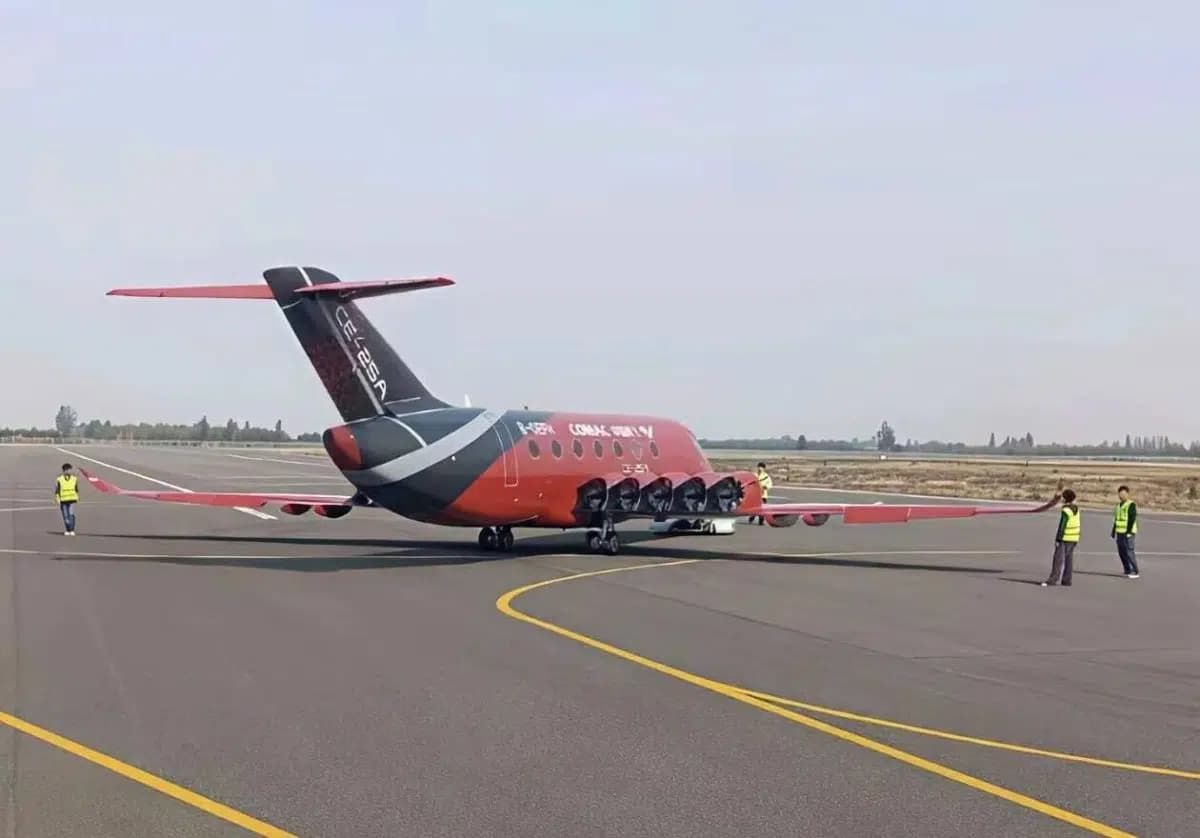
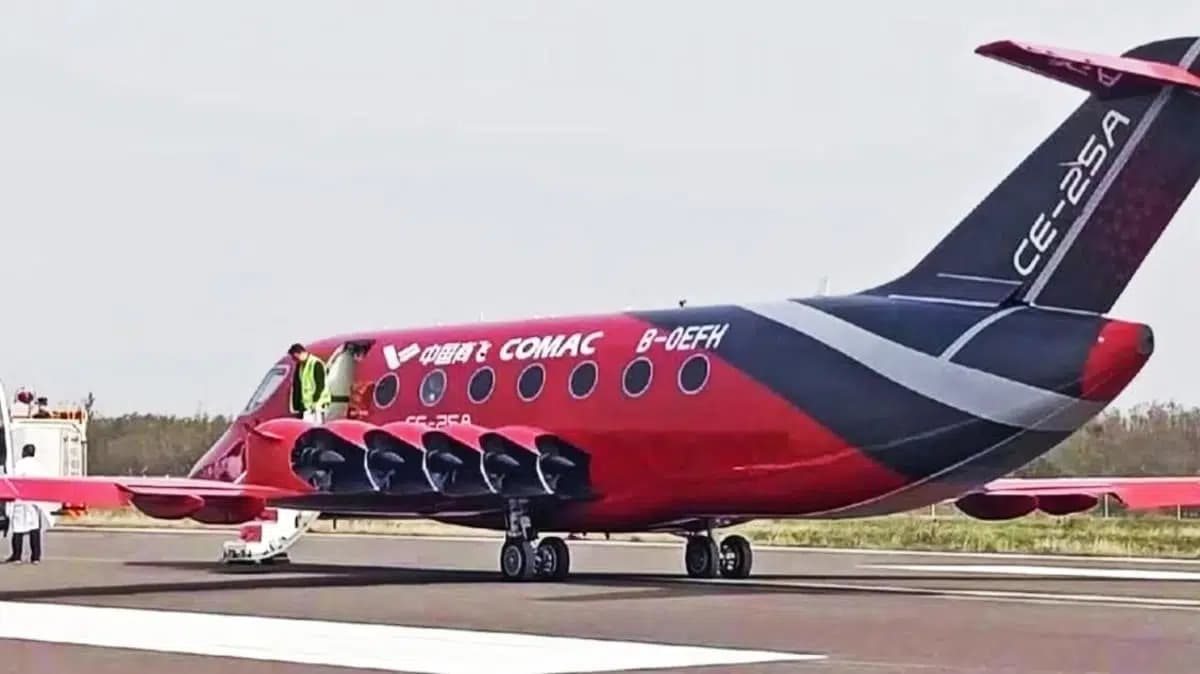
The first images of the COMAC CE-25A electric aircraft have appeared online — a project that the Chinese corporation Commercial Aircraft Corporation first presented to the public back in 2023. The photos show the aircraft in a red-and-black livery with a silver stripe along the fuselage, COMAC and CE-25A markings, and the registration number B-0EFH. According to available information, the images were first published by Chinese blogger Han Lu, who writes about cars (Kun.uz).
Authenticity and project status remain in question
The photographs were analyzed using several artificial intelligence models: no obvious signs of synthetic origin were found, but this does not independently confirm their authenticity. Moreover, there is no open data indicating that the aircraft in the images has ever taken to the air, and it is unknown what role this particular airframe plays in the project. Therefore, there is currently no basis to consider it as having passed flight tests or being ready for passenger service.
What is known about the concept
COMAC first unveiled the CE-25A concept in November 2023 at the China International Import Expo in Shanghai, describing it as a fully electric aircraft for short and medium routes, passenger transport, and business aviation. According to the stated design figures, the cruise speed should be around 400 km/h, with a range of 400–500 km. These are target values of the project, not results confirmed in practice.
Distributed electric propulsion
The most unusual feature of the CE-25A is its distributed electric propulsion: instead of traditional turboprop engines, it features 10 electric ducted fans integrated into the wing. This arrangement gives engineers more freedom in creating thrust and integrating the powerplant into the airframe; depending on the placement of the units, aerodynamic performance and energy efficiency in certain flight regimes may improve. Electric motors also make it possible to simplify certain parts of the powerplant compared with gas turbines, but such a design requires solving serious engineering challenges.