The key facts
- Democrats will hold at least 237 House seats (versus 139 for Republicans) and 54 versus 44 in the Senate
- The popular vote margin was 13 points, the largest since 1976 (New York Times data)
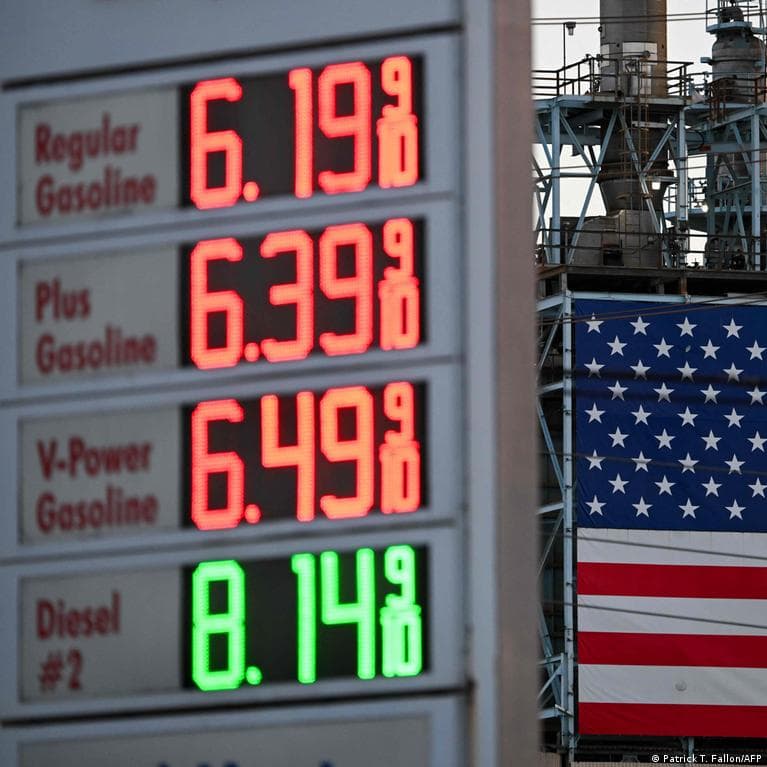
- Trump and Vice President Vance acknowledged that the war in Iran and gasoline prices cost Republicans the victory
'Blue tsunami' instead of 'blue wave'
The 2026 US midterm elections, according to Deutsche Welle, turned into a rout for Republicans, which by Wednesday morning had grown from the predicted 'blue wave' into a 'blue tsunami.' From January, Democrats will hold a majority in the House of Representatives of at least 237 to 139, and in the Senate 54 to 44. Democratic candidates flipped seven competitive Senate seats, including states long considered reliably Republican.
Symbolic victories in 'red' states
In Texas, James Talarico became the state's first Democratic senator since 1988, and Gina Hinojosa its first Democratic governor in more than 30 years. In Kansas, where farmers suffered from high diesel prices and tariffs, Adam Hamilton will become the state's first Democrat in the US Senate in over 90 years. Democrats also scored unexpected victories in Iowa, South Carolina, and Ohio.
The scale of the margin
According to a New York Times analysis cited by Deutsche Welle, Democrats won the House popular vote by a 13-point margin — the largest such result since 1976, when elections took place after the Watergate scandal. Compared with the 2024 presidential election, Democrats made major gains among virtually all groups of voters, indicating the breadth of the shift away from Republicans. The full composition of both chambers may become known later: some races are too close to call, and ballot counting in some districts is taking longer.
A referendum on Trump and an admission of the reasons for defeat
The elections were seen as a referendum on President Donald Trump, whose approval rating before the vote stood at a historically low 38%. Democrats seized on the administration's unpopular measures — the war in Iran and the record-high fuel price surge that followed, which worsened the affordability crisis — against the backdrop of a perception of the president as profiting from office. On Wednesday, Vice President JD Vance directly called the war in Iran 'the cause of our defeat,' and Trump himself, according to him, considered this 'mostly true', since the war 'raised gasoline prices in the short term.' At the same time, Trump did not dispute the results, saying Republicans would have won had his name been on the ballot, and pledged a willingness to work with Democrats — but with the use of the veto.
What Democrats promise and what they will fall short of
House Democratic Leader Hakeem Jeffries said the party is focused 'ruthlessly on affordability and accountability,' adding that 'the days of the House of Representatives serving as a fully subordinate arm of the Trump administration are over.' Democrats are preparing a 100-day plan to lower prices for fuel, groceries, and healthcare, as well as sweeping investigations into Trump and his administration; impeachment, according to Jeffries, is not currently on the table. Importantly, the Senate margin falls short of two-thirds — the supermajority needed to convict in an impeachment trial or override a presidential veto. Even as a 'lame duck' in the remaining two years of his term, Trump retains executive power with broad authority, especially in foreign policy.