The key facts
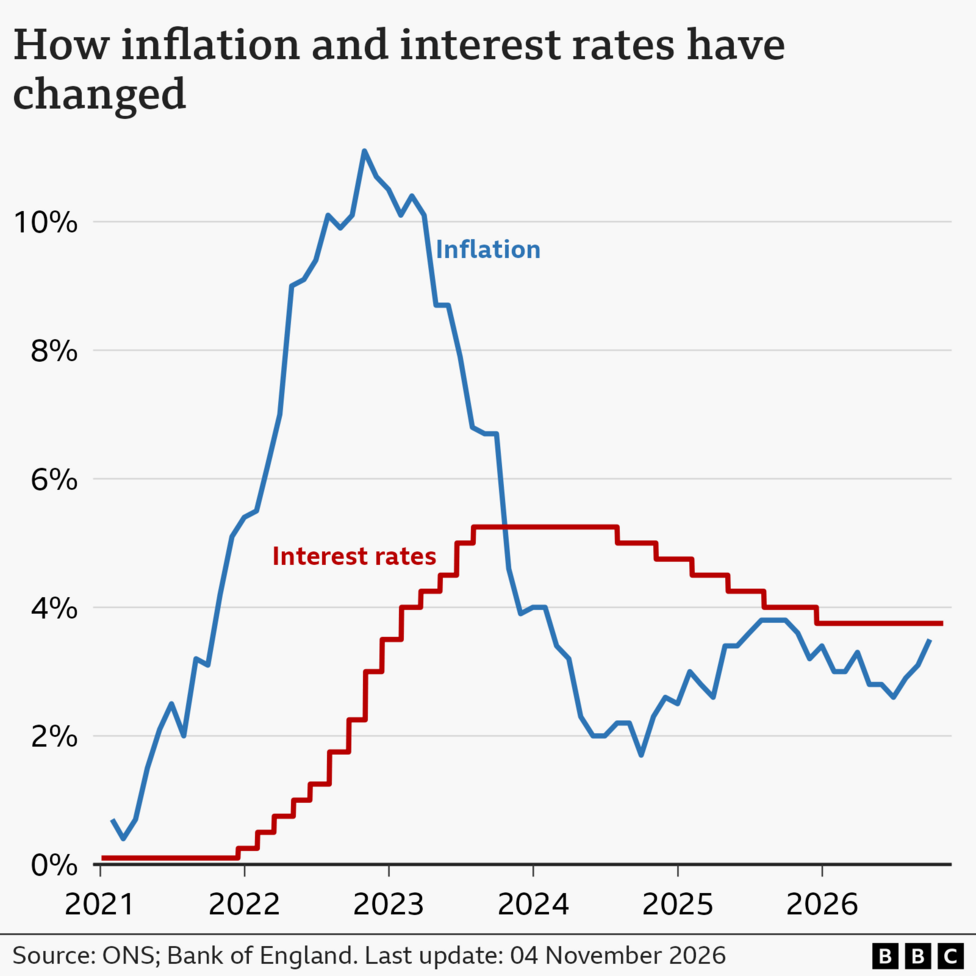
- The expected rise from 3.75% to 4% would be the first increase in more than three years
- CPI inflation in September 2026 stood at 3.5% against a 2% target
- The rise will immediately hit 510,000 tracker mortgage holders: about £31 a month
First rate rise since 2023
On Thursday, 5 November, at 12:00 GMT the Bank of England is expected to announce a rise in the base rate from 3.75% to 4% — which would be the first increase in more than three years. This is reported by BBC News citing the forecasts of most analysts. The regulator last raised the rate in August 2023; from its 2023–2024 peak of 5.25% it came down, and at the last six meetings of the Monetary Policy Committee it remained unchanged. According to analysts, the trigger for the turnaround was rising inflation, driven primarily by more expensive petrol and diesel.
Why the regulator is changing course
Inflation measured by the Consumer Prices Index (CPI) in September 2026 stood at 3.5% year on year — up from 3.1% a month earlier and well above the 2% target. BBC notes that UK inflation has been affected by the ongoing war involving Iran — primarily through energy and fuel costs; millions of consumers are bracing for a noticeable rise in electricity and gas prices in January. At the same time, the regulator has to act against the backdrop of a weakening economy. “The decision is less and less about whether the rate reaches 4%, and more and more about what comes after,” noted Chris Cheverall, head of UK coverage at CMC Markets, adding that the Bank has to balance between still-high inflation and sharply deteriorated growth prospects.
Who will be affected by the decision
The rate rise will immediately affect 510,000 tracker mortgage holders: according to calculations by the banking association UK Finance, a 0.25 percentage point rise means about £31 more per month for a typical tracker mortgage borrower. Another 470,000 holders of variable-rate mortgages will wait to see how their banks respond; a typical increase for them is about £14 a month. For fixed-rate borrowers, current payments will not change, but new deals have already “priced in” the expected rise: according to Moneyfacts data as of 4 November, the average two-year fixed rate on a residential mortgage was 5.96%, and the five-year rate 5.99%. Broker L&C calculated that on a £200,000 mortgage over 25 years, borrowers taking out a deal now could pay almost £5,000 a year more than those who refinanced in 2021, when the average five-year rate at the ten largest banks was 1.30%. High fixed rates are pushing some borrowers to consider trackers in the hope of future cuts; as Rachel Springall of Moneyfacts noted, “the right choice ultimately depends on whether the borrower is confident they can withstand future increases.” For savers, by contrast, a rise in the base rate may mean better offered interest rates.
 Image source, Getty Images