The key facts
- Óscar Puente announced his resignation on 3 November in parliament and withdrew his candidacy from the 29 November elections
- The crash near Urda on 28 October killed 69 people; in January, 46 died on the same Madrid — Seville line near Adamuz
- A few hours before the resignation, the government approved a package of safety measures and 30 million euros in aid
Resignation six days after the disaster
Spain's Transport Minister Óscar Puente announced his resignation on 3 November, speaking before the Permanent Deputation of the Congress of Deputies — six days after the collision of high-speed trains near the town of Urda in the province of Toledo, which killed 69 people and left about 200 injured. This was reported by BBC News, Deutsche Welle, euronews and AFP. 'A transport minister in a country like Spain cannot remain in office after two accidents of such severity in less than a year,' said Puente, referring also to the January disaster in Andalusia. He also stated that he was withdrawing his candidacy from the early parliamentary elections on 29 November, explaining that he wanted to 'live up to his party', and called his departure an act of political responsibility: 'It is wrong that all politicians are said to be the same.'
The decision came as a surprise
The resignation was unexpected: earlier Puente had ruled it out several times, and Prime Minister Pedro Sánchez, according to Deutsche Welle, had also not considered such a scenario possible. At the same time, the resignation had been demanded by the conservative People's Party, the far-right Vox, as well as the parliament-based Basque Nationalist Party and the Catalan Junts, whose votes sustain Sánchez's government. Opponents also criticised the minister for, in their words, trying to place the blame for the disaster on a single dispatcher at the control centre. People's Party spokesperson Esther Muñoz said that a minister's task is 'not to explain tragedies but to prevent them', while Vox spokesperson Pepa Millán accused him of 'evading responsibility'. Sánchez himself, according to Gazeta.uz, called his colleague's decision 'a worthy step out of respect for the victims and out of responsibility' in a post on X.
What is known about the crash
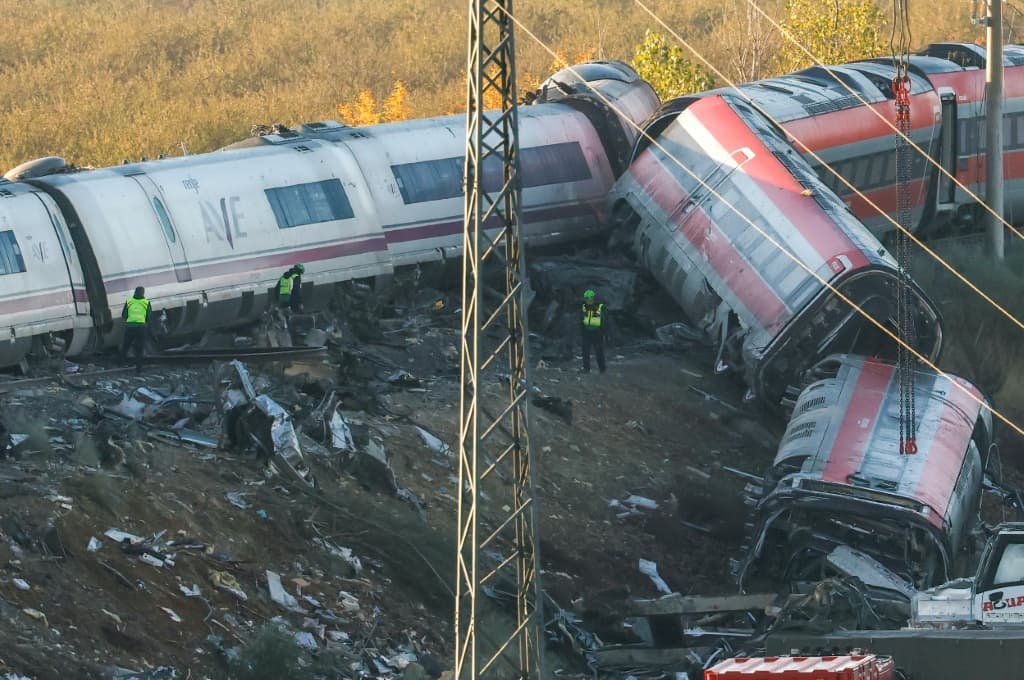
The accident occurred on the morning of 28 October on the Madrid — Seville line near Urda, about 130 km south of Madrid. Due to a failure of the automatic safety system (LZB), all trains on a 63-kilometre section were stopped, but the control centre of the state-owned Adif allowed the high-speed AVE train of the state company Renfe to continue moving. According to euronews, the AVE travelled about 25 kilometres at a speed of more than 160 km/h and crashed into the rear of a train of the private operator Iryo standing ahead; the driver of the stationary train, according to Gazeta.uz, repeatedly warned dispatchers that he could not move and was standing at a red signal. On impact, three carriages of the leading train derailed. This is already the second major disaster on the same line in less than a year: in January, 46 people died near Adamuz in the province of Córdoba. According to Daryo.uz, since the beginning of 2026, Spain has recorded seven railway accidents with injured passengers; the causes of the January disaster are linked to possible damage to the tracks, while in the Urda accident, investigators are examining the automation failure and possible errors by the control centre.
Safety measures and the political backdrop
A few hours before announcing his resignation, Puente presented a package of measures to improve railway safety: control centre software with automatic alerts, an AI agent to oversee the system which, according to the minister, should 'minimise the possibility of human error', and a rule requiring a second operator to confirm an operator's decisions when the automatic system is disabled. The Cabinet also approved a aid package for the injured and the families of the victims worth 30 million euros. The train drivers' union Semaf announced strikes at Renfe on 10 and 12 November, while the Adif works council agreed to push for a strike on 17 November demanding safer railways — formally, it has not yet been called. The disaster has weighed on the election campaign ahead of the 29 November vote, where Sánchez, according to AFP, is trailing in the polls. At the session, Puente defended the safety of the Madrid — Seville line, pointing to a 780-million-euro plan for its modernisation, and ended his speech with the words: 'I believe my country will live up to expectations. I tried to live up to them. Farewell.'