The key facts
- Fines increased tenfold — to nearly $800,000 per day, with a cap exceeding $15.6 million
- Violations became arrestable; courts may hear cases in the absence of defendants abroad
- The authorities may compel companies to appoint independent assessors at their own expense and restrict their access to financial services
What parliament changed
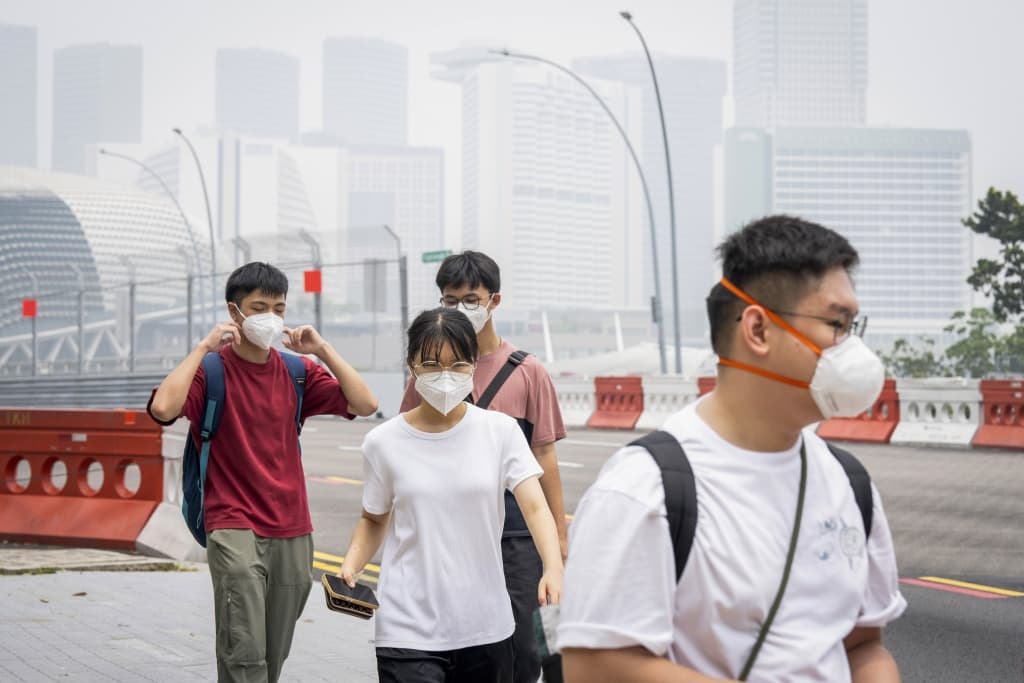
Singapore's parliament on Wednesday tightened the law on transboundary air pollution: violations became arrestable, fines increased, and companies linked to transboundary pollution from forest fires may face restrictions. The amendments passed without objection after lengthy debates dominated by the ruling People's Action Party; they were certified as urgent, allowing a swift vote. This is reported by AFP.
Specific powers
Fines for companies found to be in violation have been increased tenfold — to nearly $800,000 per day, with a cap exceeding $15.6 million. Courts can now hear cases in the absence of defendants if they are abroad or unreachable. The government gained the power to compel companies, at their own expense, to appoint independent assessors (approved by the authorities) to investigate fires, business activities and corporate links; the appointment of an assessor, it is stressed, does not in itself imply guilt. The authorities may also impose restrictions on designated companies, including limiting services from Singapore's large financial sector. Companies citing arson by third parties will have to prove they took reasonable measures to prevent and extinguish fires.
Context and reaction
The Transboundary Haze Pollution Act has been in force since 2014, but its enforcement has been hampered by jurisdictional barriers and the difficulty of obtaining evidence abroad: of six cases brought in 2015, two were closed in 2017 after the companies provided information, while investigations into the remaining four remain unfinished. The amendments were adopted after weeks of air pollution from fires in neighbouring Indonesia, which triggered calls for action in Singapore. According to the Nusantara Atlas monitor, from January to the end of September fires in Indonesia destroyed more than 1.9 million hectares, mostly in recent months; cited causes include drought linked to a strong El Niño, as well as prolonged deforestation and the draining of peatlands. Last month Singapore sent warnings to ten foreign companies (deploy firefighters, stop burning, submit action plans) and ordered ten firms registered in Singapore to appoint assessors.
Assessments
Minister for Sustainability and the Environment Grace Fu said that 'better ways of obtaining and verifying information' are needed, along with tracking complex corporate links and 'meaningful consequences' for violators, as well as the ability to intervene earlier, before the haze reaches Singapore; she added that Singapore welcomes Indonesia's steps but must also act within its own jurisdiction. Simon Tay, head of the Singapore Institute of International Affairs, believes that restricting commercial activity and financing will make the offending company a 'corporate pariah', but that 'there is no silver bullet' and cooperation within ASEAN with Indonesia and its neighbours is necessary. Heng Kia Chun of Greenpeace Malaysia noted that other Southeast Asian countries could adopt the approach, but national laws must be reinforced by ASEAN cooperation. Gerald Giam of the opposition Workers' Party supported the bill, yet expressed scepticism about the real effectiveness of criminal penalties, asking whether they might turn out to be a 'paper tiger'.