The key facts
- The Replicator 2 satellite printed a half-meter rigid beam in vacuum — a first for a free-flying spacecraft
- One of the four printers failed, but the boom it created successfully deployed a flexible solar panel
- The next mission in 2028 is to test a 5 kW panel; by 2030 the company expects 100+ kW per wing
The first rigid beam printed in vacuum
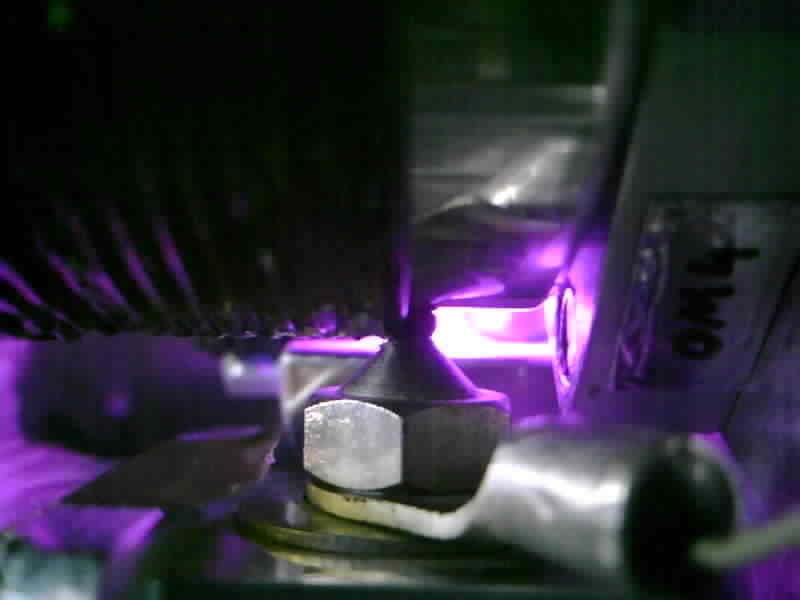
Replicator 2, a satellite built by the German startup Orbital Matter, has printed a half-meter-long rigid beam in orbit from a special plastic — according to the company's executives, a first for a free-flying spacecraft. TechCrunch reports this. The spacecraft was launched in the summer on a SpaceX rideshare mission; it carried four of the company's 3D printers. Each of them creates a rigid cylindrical beam by extruding spools of resin that are cured with ultraviolet light — the company compares the process to cement and water.
Why print structures right in orbit
The technology matters because future spacecraft, especially orbital data centers, will need large areas for power generation and heat dissipation, while still fitting inside a rocket's cramped fairing. If a spacecraft can build structures in orbit by itself, both problems become easier. «Replicator 2 is the first proof that we can simply build a panel in space, of any size the mission requires,» said the company's CEO and co-founder Jakub Stojek. The company cooperates with the European Space Agency and Thales Alenia, with whose participation Replicator 2 was built.
One printer's failure did not derail the experiment
Two of the four printers were meant to deploy a flexible solar panel, but due to an anomaly one of them failed. Nevertheless, the boom it created successfully deployed the panel, an important proof of concept. All previous 3D-printing experiments in microgravity were conducted only inside the sealed volume of the ISS; NASA previously funded a similar mission with the company Redwire, which printed beams in a vacuum chamber in 2023 but never made it to space. «That's why we put so many printers on one satellite. We preferred to learn in orbit and adapt the software as needed, rather than spend years on ground testing of every possibility,» the company's CTO Robert Ignatisin told TechCrunch.
Plans: from 5 kW to 100 meters
The boom's length is limited by the resin supply on board, and the company's engineers believe booms of 100 meters are feasible. For comparison: the solar panels of SpaceX Starlink V2 satellites, among the most powerful production spacecraft in orbit, are 20 meters long. Orbital Matter, founded in 2022 by Ignatisin (previously at FormLabs) and Stojek, which raised a $3 million seed round, is preparing its next demonstration mission with launch in 2028: on a larger satellite, an enlarged version of the printer will be tested, which the company hopes will deploy a 5 kW panel. This is a «stepping stone» toward deployments of more than 100 kW per wing by 2030. The company is also in talks with satellite manufacturers about integrating its PADS (printer-assisted deployment system) to extend solar panels, antennas and other components.