The key facts
- Democrats won 228 seats in the House of Representatives against 139 for Republicans, and 54 Senate seats against 43
- Hakeem Jeffries could become the first Black Speaker of the House of Representatives in US history
- Republicans retained the presidency: Donald Trump keeps veto power until January 2029
Democrats take both chambers of Congress
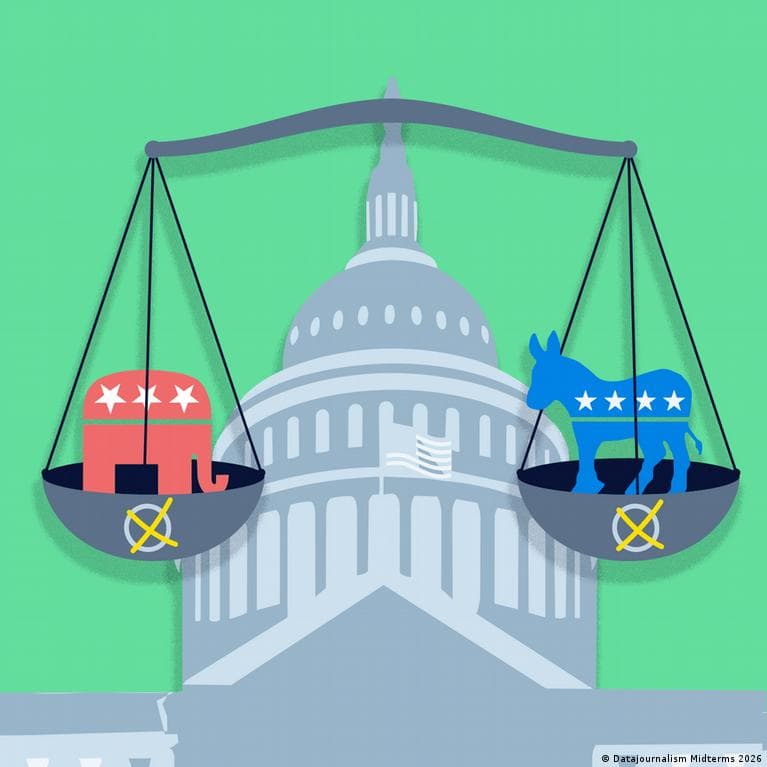
According to preliminary results of the midterm elections held on November 3, 2026, the Democratic Party has gained control of both chambers of the US Congress, Anadolu reports. In the 435-seat House of Representatives, Democrats lead with 228 seats against 139 for Republicans; 218 seats are needed for a majority. In the 100-seat Senate, early counting gives Democrats 54 seats (including two independents who caucus with them) against 43 for Republicans, while three races remain undecided.
Who will lead the new majority and minority
House Democratic leader Hakeem Jeffries is expected to become Speaker, replacing Republican Mike Johnson. If elected, Jeffries will become the first Black Speaker in US history. In the Senate, current Democratic leader Chuck Schumer is tipped to become majority leader, replacing Republican John Thune, who is expected to lead the Republican minority. Formally, these positions are subject to votes before the new session begins: the Speaker is elected by the full House, while party leaders are chosen by members of Congress themselves. Among Republicans in the minority, the outlet expects Johnson, Steve Scalise, and John Barrasso to keep key roles; among Democrats, Katherine Clark will likely retain a senior leadership position, while the Senate party whip post will have to be filled anew, since Dick Durbin is leaving at the end of his term.
How the Senate majority came about
Democrats took at least seven Senate seats from Republicans, including in traditionally conservative states. Among the notable wins, the outlet cites James Talarico's victory over Republican Ken Paxton in Texas, Adam Hamilton's win over incumbent Senator Roger Marshall in Kansas, and Josh Turek's victory over Ashley Hinson in Iowa. Democrats also took seats in South Carolina and North Carolina, where former Governor Roy Cooper won an open race; in Ohio, former Democratic Senator Sherrod Brown defeated incumbent Republican Jon Husted, and Troy Jackson defeated longtime Senator Susan Collins in Maine. At the same time, Democrats held competitive seats, including John Ossoff's re-election in Georgia. According to Anadolu, US media linked the Republican losses to voters' concerns about inflation, the cost of living, government corruption, and the war with Iran.
What changes and when
The change in control of Congress means a shift from a situation in which Republicans controlled both chambers and could advance the president's legislative priorities with fewer obstacles to one in which Democrats will gain influence over legislation, federal spending, confirmation of presidential appointments, and congressional oversight of the Trump administration. At the same time, Donald Trump remains president until January 2029 and retains the power to veto legislation. The new members of Congress will take office on January 3, 2027, with the convening of the 120th Congress; until that moment, Republicans retain the current majorities in both chambers. The new compositions will serve two-year terms, with the next elections to be held in November 2028 alongside the presidential vote.