The key facts
- Officials: mass valuation is only a reference point, not a mandatory transaction price or the final compensation amount
- Appraisers believe the boundaries of the valuation's application should be clearly set out in law
- Appraisers believe the boundaries of the valuation's application should be clearly spelled out in law
- In Tashkent, more than 100,000 listings and 85,000 notarized transactions over the past year have been studied
- In Tashkent, more than 100,000 listings and 85,000 notarized transactions were studied over the year
Debate on mass valuation: the parties' positions
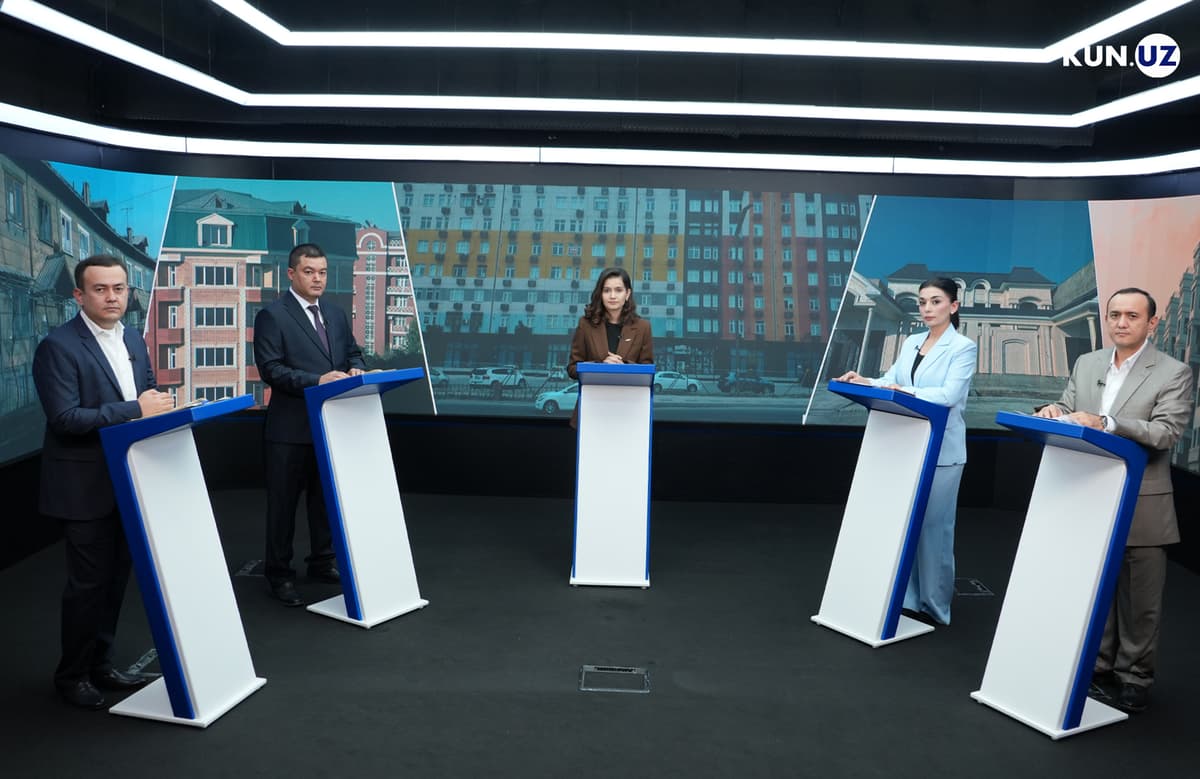
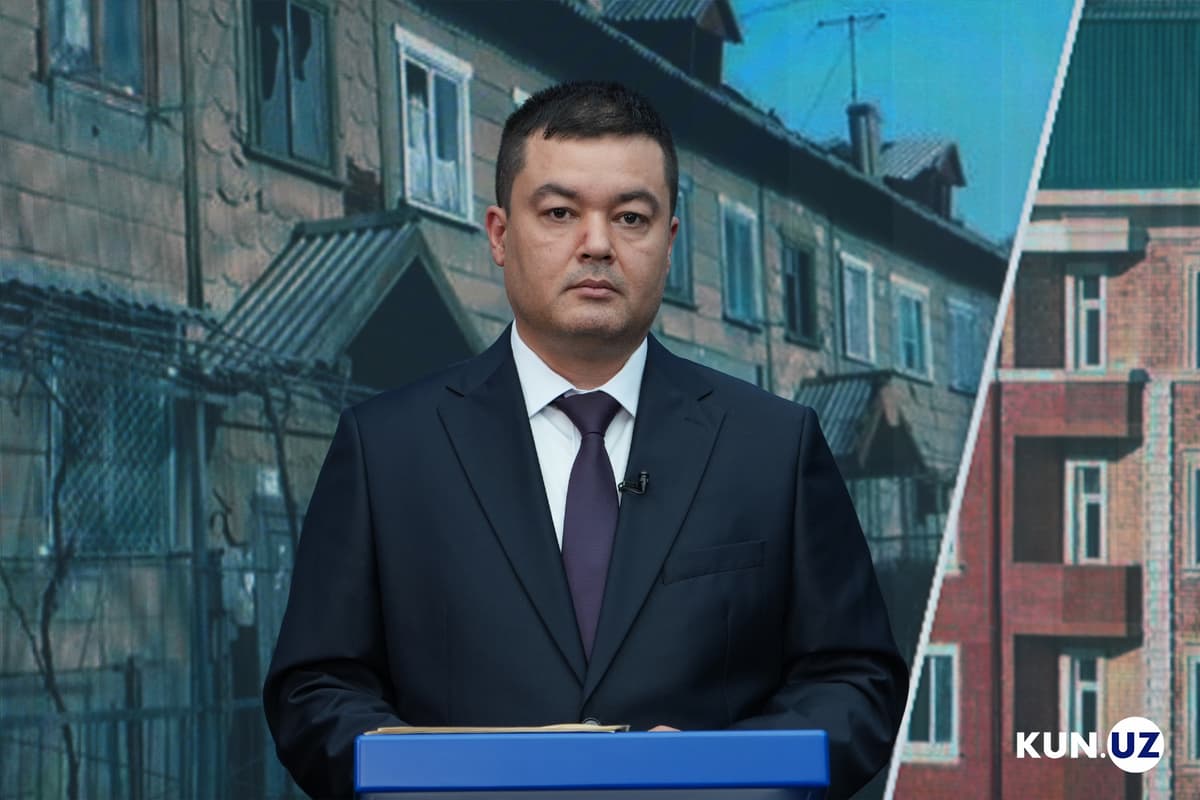
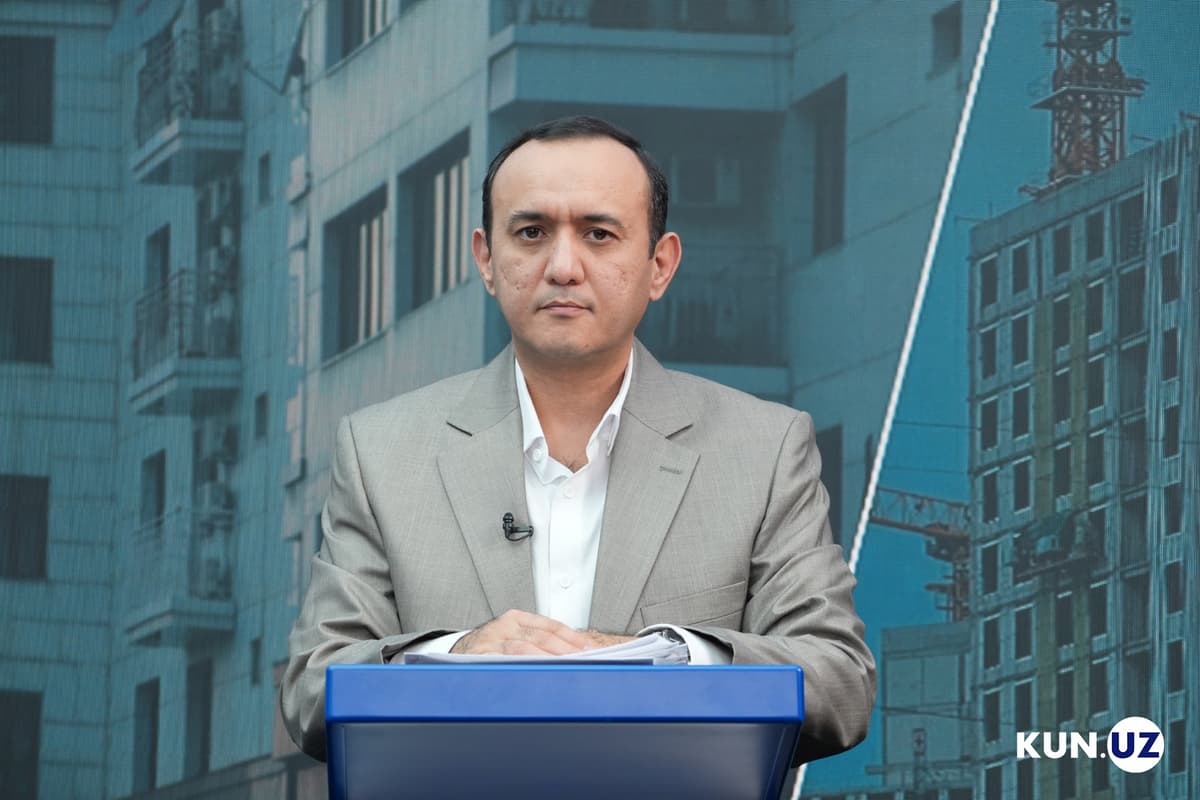
Kun.uz organized a debate on the mass valuation of real estate, attended by Feruz Sultonov, deputy director of the National Center for Mass Valuation of Real Estate, Botir Karimov, head of a department at the center, Zebuniso Isanova, chairwoman of the Society of Appraisers of Uzbekistan, and Shukhrat Abduvokhobov, a member of the society's council. They discussed the legal status of valuation results, the concept of
Compensation for demolition: a reference point or the final amount
According to Feruz Sultonov, mass valuation results are not treated as a figure that directly determines compensation when real estate is expropriated for public needs: it may serve as a source of information for preliminary calculations. The current compensation procedure remains in place; if one of the parties disagrees with the mass valuation result, an independent appraiser may be engaged. If, however, the owner and the other party agree with the established value, payments may be made on that basis. Shukhrat Abduvokhobov disagreed with this approach: in his view, relying on an agreement between the parties is not enough, because the law on the expropriation of land for public needs provides for separate categories of losses subject to compensation. The appraiser listed them: the value of rights to real estate and land, perennial plantings, lost profits, and relocation expenses.
Housing transactions: there will be no mandatory price
On the issue of purchase and sale, Sultonov stated that the mass valuation is not a mandatory price for either the owner or the buyer: a property valued at one billion soums does not necessarily have to be sold or bought for exactly that amount. According to his explanation, the valuation allows a citizen to learn the approximate value of their property, helps a buyer orient themselves in advance regarding the required amount, and gives the state an idea of the value of the real estate stock by region. The appraisers pointed out that this caveat is not expressed clearly enough in the draft law: Article 12 of the draft mentions the use of the results for processing real estate transactions, taxation, and other purposes defined by law. Abduvokhobov noted that
Taxes and valuation methodology
A representative of the center named the fair distribution of the tax burden among the goals of the system: differences between more expensive real estate due to location and infrastructure and real estate in areas with limited opportunities are supposed to be taken into account in taxation. At the same time, Sultonov emphasized that determining the procedure and rates for applying the results to taxes is not within the center's competence, and that mass valuation by itself does not mean a multiple increase in taxes; before implementation, the results of the experiment need to be studied. The appraisers, for their part, believe that the purpose of applying the results should be determined in advance: Abduvokhobov recalled that an owner is not obliged to participate in sale, mortgage or insurance transactions, but is obliged to pay taxes, so the areas of use of the valuation should be determined based on the processes for which it is needed. He also allowed for the use of such data in planning renovation programs and preliminary calculations of the required funds. The methodology was discussed separately: in mass valuation, no one enters the apartment and the actual condition of the renovation is not checked — properties are valued based on available data assuming an average renovation, whereas in individual valuation the property is examined on site. According to Sultonov, this is exactly what explains the term 'a value close to the market price'. Zeboiso Isanova objected that in valuation practice there are only two types of value — market value and value different from market value — and raised the question of which of them the result of mass valuation belongs to.
Price data and the appeal procedure
The gap between listing prices and actual transactions also became a subject of the dispute. According to Sultonov, over the year more than 100,000 listed offers and more than 85,000 notarized sale transactions were studied in Tashkent; he explained the mentioned discrepancies of 30–40% by the difference between the asking price and the price after bargaining. Abduvokhobov noted that the amounts in notarized contracts do not always reflect the real sale price, and that in individual valuation the bargaining adjustment is also taken into account. The debates ended with the question of handling complaints: Abduvokhobov pointed out that a commission headed by the center's director, which considers owners' objections to the value calculated by the center itself, calls impartiality into question. He also asked to clarify how the result is taken into account if the owner submitted an independent valuation report. These issues were not discussed in detail during the debates; center representatives proposed that appraisers jointly review the draft law and the methodology. The boundaries of applying mass valuation, the calculation of coefficients, and the complaint handling mechanism remained open.