The key facts
- First results expected after 18:00 EST (23:00 GMT), but projections for key states may take days
- A House majority requires 218 seats, the Senate 51 (in a 50-50 split the vice president holds the deciding vote)
- Cook Political Report rates seven Senate races as toss-ups: six are held by Republicans, one by the Democrats
What the elections decide and when to expect results
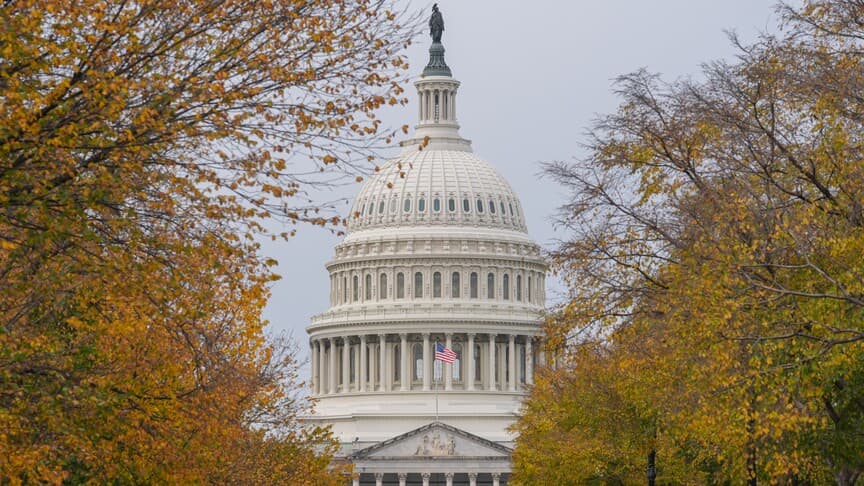
Millions of Americans are voting in the midterm elections, which will determine which party — Donald Trump's Republicans or the Democrats — will control Congress. To hold a majority in the House of Representatives, a party needs 218 seats, and in the Senate 51; in a 50-50 split, the vice president holds the tie-breaking vote. BBC News reports this.
The 2022 experience: counting took days and weeks
The 2022 elections serve as a guide to timing. The day after voting, the battle for control of Congress remained wide open: Republicans were considered favorites in the House, but the outcome in the Senate was unclear. CBS News only declared that Republicans had won the necessary 218 seats in the House on November 17. Counting in the key Senate race in Nevada took four days, and the Democrats' narrow victory gave them 50 seats and control of the Senate thanks to the tie-breaking vote of then Vice President Kamala Harris. In Georgia, where no candidate cleared the 50% threshold, a runoff was required — the Democrats won it only on December 7.
Key races of 2026
The independent analytical center Cook Political Report classifies seven Senate races as toss-ups: in Alaska, Kansas, Iowa, Maine, Michigan, Ohio and Texas. Republicans currently hold six of these seats and Democrats one; to reach 51 seats and control of the Senate, Democrats need to win four of them plus four districts classified as 'lean Democratic.' If Democrats fail to hold the Michigan seat, where left-wing outsider Abdul El-Sayed is running against Trump ally and former FBI agent Mike Rogers, the task becomes noticeably harder. In Texas, polls suggest Democrats have a chance: former teacher James Talarico could become the first Democrat to win a Senate seat in the state since 1988 if he defeats state Attorney General Ken Paxton. In the House, the Republican majority is minimal — exactly 218 seats plus one independent who votes with them; the most competitive districts, according to Cook Political Report, are on the East Coast, including New York's 17th district, Pennsylvania's 8th district and Virginia's 1st district.
How counting works and what could slow it down
Each state organizes its own elections and sets its own counting rules: some, like Florida, process early and mail-in ballots before Election Day, while others begin only on November 3. Local officials verify and recount votes (a procedure known as canvassing), and in most states an audit follows, comparing hand counts with machine counts. Delays are possible due to narrow margins, recounts and lawsuits: mail-in ballots take longer to process, and more than 30 states allow processing before Election Day while the rest do not. In California, ballots are counted if they arrive within seven days after the election. In Alaska, ranked-choice voting can significantly prolong the count, and the dispute over ballots — there, a second candidate named Dan Sullivan appeared on the ballot — could lead to legal complications. Results are certified first at the county level, then by the state, and Congress retains the final say: both chambers can theoretically refuse a candidate a mandate or order an investigation.

 Image source, Getty Images
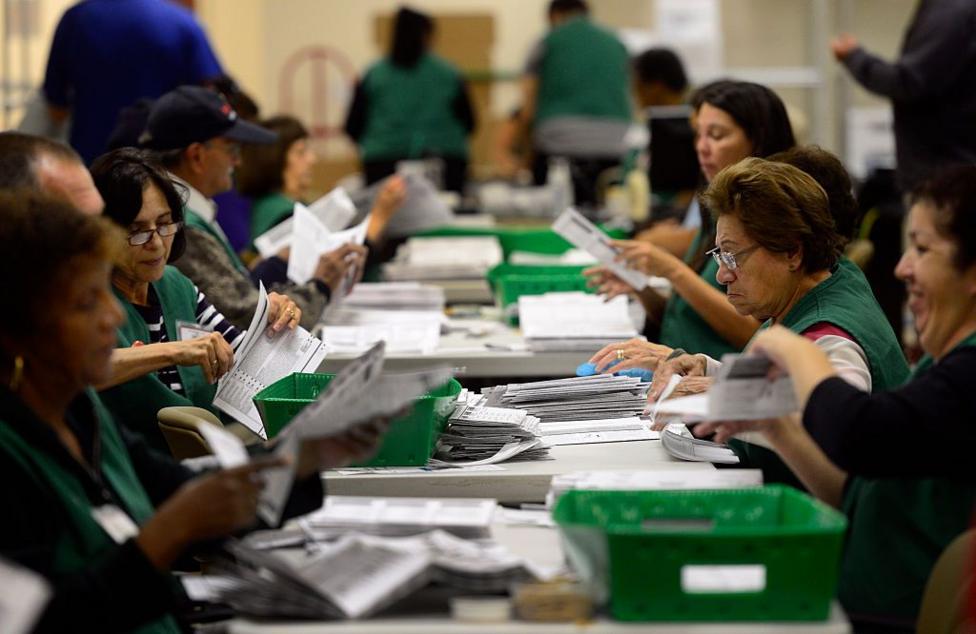 Image source, Bloomberg via Getty Images