The key facts
- More than 58 million ballots cast early, versus 45.9 million in 2022
- All 435 House seats, 35 Senate seats, and governorships in 36 states are up for grabs
- The new 120th Congress will convene on January 3, 2027
Record early turnout
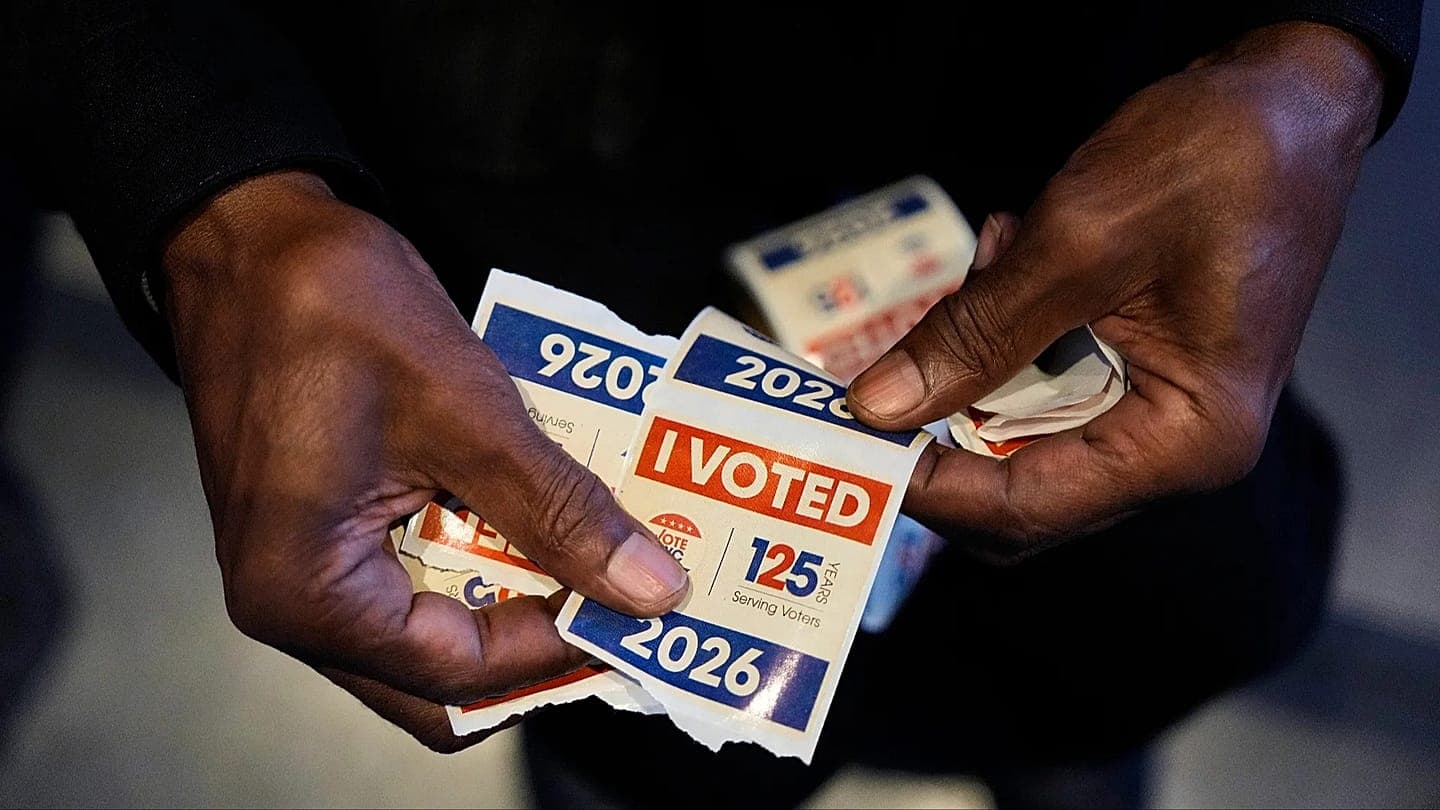
On November 3, 2026, the United States holds midterm elections that will determine which party controls Congress during the final two years of President Donald Trump's second term. According to the University of Florida (Election Lab), cited by Anadolu, more than 58 million ballots have been cast early — exceeding the roughly 45.9 million early votes recorded before Election Day in 2022. Early voting includes both in-person voting at polling places and ballots returned by mail.
Where turnout is highest
Texas leads in early turnout with more than 7.7 million ballots, well above its 2022 midterm figures. In Harris County, which includes Houston, more than 1 million people voted before early voting ended. As of Sunday, more than 5.4 million ballots had been cast in Florida, 2.8 million each in Georgia and North Carolina, and 1.8 million in Michigan. The University of Florida itself emphasizes that high numbers indicate rising participation but do not make it possible to predict which party will benefit.
Who votes early
In states that publish voters' party affiliation, about 43% of early ballots were cast by Democrats, about 32% by Republicans, and roughly 25% by independents and other voters. Registration, however, is not the same as voting: ballots are secret, and some states do not disclose party affiliation at all. By age, about 44% of early voters are people aged 65 and older, roughly 37% are voters aged 41 to 65, and only 6% are young people aged 18 to 25.
What is at stake
Voters will choose all 435 voting seats in the House of Representatives, 35 of the 100 Senate seats (33 regular elections and 2 special elections to fill vacancies), governors in 36 states, and — according to the National Conference of State Legislatures — 6,139 seats in the legislatures of 46 states. In 39 states and the Northern Mariana Islands, 146 statewide measures are on the ballot, ranging from taxation and government spending to amendments to state constitutions.
The electorate has grown and become more diverse
According to Pew Research Center estimates, about 249.75 million U.S. citizens aged 18 and older are eligible to vote in the 2026 elections — roughly 8.45 million (about 3%) more than in 2022. White Americans make up about 61% of those eligible to vote, Hispanics about 16%, African Americans 12%, and Asian Americans 5%. The Hispanic electorate has grown by about 5.25 million people since 2022, to 38.95 million, while Asian Americans are the fastest-growing group: their number has increased by roughly 20%, to 13.65 million. Importantly, being eligible to vote does not necessarily mean being registered or actually voting.
What comes next
Voting takes place on November 3; polling hours vary by state. Results will be announced as votes are counted, but close races and differences in counting procedures could delay final certification of the results. Elected members of Congress will take office on January 3, 2027, when the 120th Congress convenes. The next U.S. presidential election is scheduled for November 2028.