The key facts
- On November 2, Tucker Carlson said the US may carry out a nuclear strike on the Pickaxe complex using the B61-11, naming Netanyahu as the source of pressure
- On November 2, Tucker Carlson said the U.S. might carry out a nuclear strike on the Pickax complex using the B61-11, naming Netanyahu as the source of pressure
- On October 16, Trump publicly ruled out the nuclear option but allowed for a new attack on Pickaxe; according to AP, he has not made a final decision
- An Iranian delegation left Doha on November 2, but the draft agreement continues to be discussed through Qatari mediators
- The Iranian delegation left Doha on November 2, but the draft agreement continues to be discussed through Qatari mediators
Carlson's statement and Trump's position
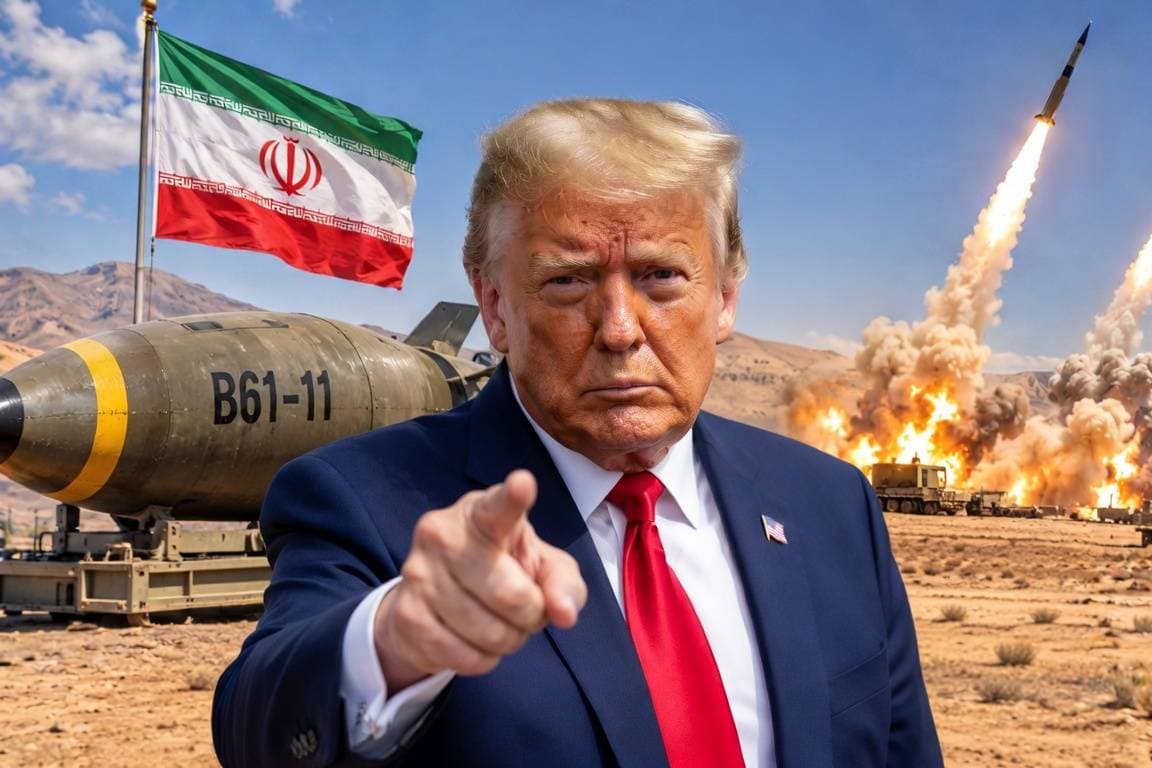
On November 2, American journalist Tucker Carlson, who had previously supported Donald Trump, published a warning on X: according to his account, Washington may be considering the use of nuclear weapons against an underground facility near the Iranian city of Natanz. Carlson claims that Israeli Prime Minister Benjamin Netanyahu is pressuring the president, and that conventional munitions are allegedly unable to destroy the structure beneath a thick layer of granite; as a possible means, he names the B61-11 bomb. Trump's own public statements do not confirm this scenario: on October 16, in an interview with Newsmax, he explicitly ruled out the need to use nuclear weapons, although he allowed for a new strike on Pickaxe Mountain, and on October 31 he said the US still had to 'deal with' one or two sites, without naming specific weapons.
What is known about Pickaxe and about the bomb itself
Pickaxe Mountain (Kuh-e Kolang Gaz La) is a tunnel complex located roughly two kilometers south of Natanz. In 2020, Tehran reported the construction there of an underground facility for assembling centrifuges; the IAEA has received neither information nor inspector access. There is no public confirmation that the complex is already being used for uranium enrichment. Depth estimates of 80–100 meters appear in publications, but CSIS's analysis of satellite imagery does not allow it to be determined precisely: in 2026, researchers recorded the reinforcement of entrances and an increase in construction activity, and the absence of signs of activity inside may mean the complex is not yet ready for enrichment. Therefore, the publication suggests treating the phrase about '90 meters of granite,' which Carlson cites, as an assumption.
Military options and the precedent of June 2025
The B61-11 is the only American nuclear bomb with an earth-penetrating function, but 'penetrating' does not mean capable of punching through dozens of meters of granite: according to researchers of the US arsenal, it penetrated frozen soil to a depth of roughly 3–6 meters, and the destruction of Pickaxe cannot be guaranteed. CSIS considers the B61-11, B61-13, and B83-1 as different options, but does not report a choice of a specific munition. Washington also has non-nuclear means: in Operation Midnight Hammer in June 2025, the US used 14 GBU-57 MOP bombs against Fordow and Natanz, but Pickaxe was not touched at the time — analysts consider it a particularly difficult target, since the exact depth and layout of the tunnels are unknown. It is also noted that Trump's public promises have already diverged from his actions: in June 2025 he spoke of a decision 'within two weeks,' after which the US attacked Fordow, Natanz, and Isfahan; The Washington Post reported that the announced deadline may have been part of misleading Tehran.
Negotiations, Iran's position, and Moscow's role
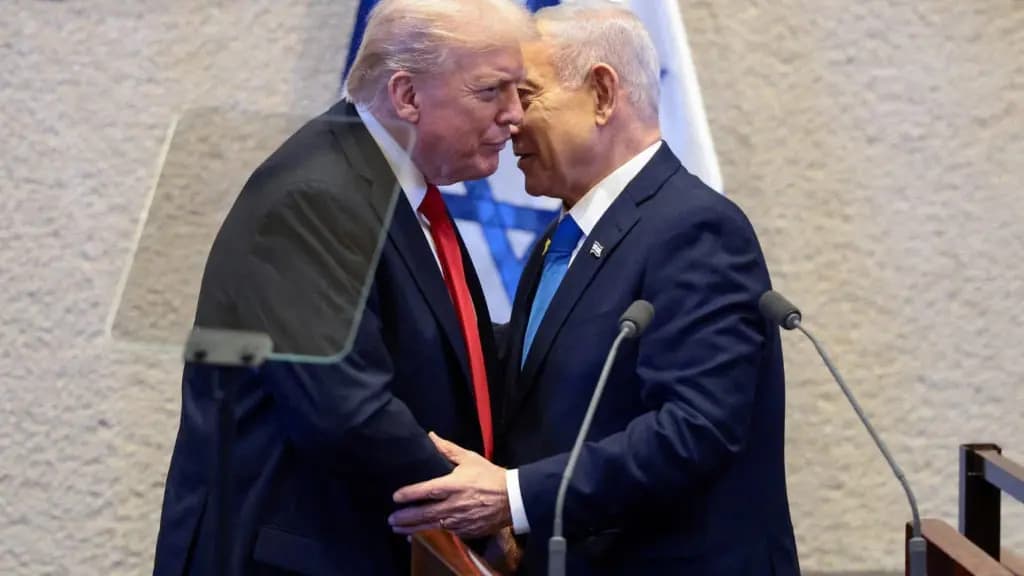
The Associated Press, citing sources, reported that American diplomats and the military warned several Middle Eastern countries of possible strikes after the U.S. elections on November 3 and of Iran's retaliatory actions; according to the agency, Trump had not made a final decision. On November 2, Reuters reported that the Iranian delegation had left Doha after consultations with Qatari mediators, but the draft agreement continues to be discussed and a new meeting is possible. On November 1, Iranian Foreign Minister Abbas Araghchi said consultations were ongoing and Tehran hoped Washington would choose diplomacy. On October 31, supreme leader Mojtaba Khamenei, according to a statement from his office, called on the military to ensure an 'immediate, effective response not limited by geography' to the threats. Tehran ties the reopening of the Strait of Hormuz to the end of the American naval blockade; a threat to shipping in the strait could raise the cost of shipping insurance and affect global energy prices. Moscow publicly advocates a diplomatic settlement: on October 19, Sergey Lavrov visited Iran and said Russia was ready to help find a mutually acceptable solution. At the same time, the strategic partnership treaty between Russia and Iran contains no automatic obligation to enter a war on the partner's side, so Russia's military assistance to Iran in the event of a new attack cannot be considered guaranteed.
What lies behind the dispute and why it matters
The context of the escalation is Israel's parliamentary elections on October 27, in which Netanyahu's bloc won 53 of 120 seats and now faces coalition negotiations. Axios, citing an American and an Israeli source, reports that Netanyahu insists on a swift resumption of military action after the U.S. elections on November 3, while Trump for now wants to continue negotiations; Carlson, meanwhile, claims the Israeli prime minister is pushing for a nuclear strike in order to hold on to power. Reliable information from Iran is hard to obtain: after the U.S. and Israeli strikes began in late February 2026, the authorities almost completely shut down the internet — according to Freedom House, the blackout lasted 88 days, with partial restoration beginning on May 26. A separate layer of meaning is the very discussion of the nuclear option: after Hiroshima and Nagasaki, nuclear weapons have not been used in combat, and the established 'nuclear taboo' is not enshrined in any official documents. If the United States breaks it, the consequences will be measured not only by the destruction in Iran but also by how other states come to judge the acceptability of nuclear weapons in future conflicts. For now, the key uncertainty remains: publicly, Trump ruled out the nuclear scenario, no final decision on a new strike has reportedly been made, and the negotiation channel through Qatar has not formally been severed.