The key facts
- Siljanovska-Davkova called Bulgaria's demand to change the constitution an obstacle to EU accession
- The amendments recognizing a Bulgarian minority did not even pass the first stage in the parliamentary constitutional commission
- The president recalled the 2018 agreement with Greece and said she will continue to seek a solution only through dialogue
Constitutional change requirement blocks the European path
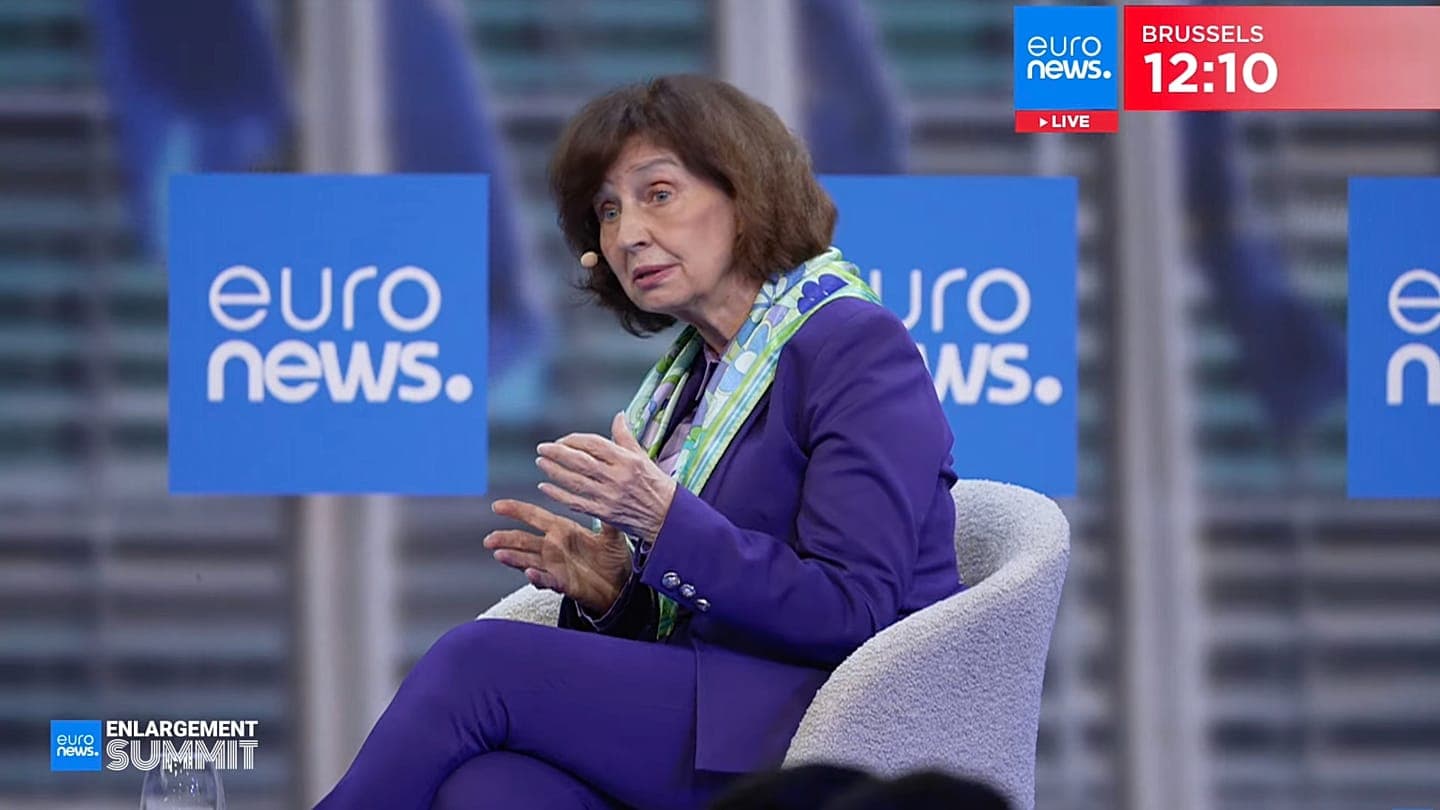
President of North Macedonia Gordana Siljanovska-Davkova said on the sidelines of the Euronews EU enlargement summit that her country's hopes of joining the European Union are being 'held hostage' by Bulgaria, which demands constitutional changes recognizing a Bulgarian minority. 'We are champions at changing the constitution — 26 times, with most of the amendments imposed,' she said, as reported by Euronews.
Why the amendments cannot be adopted
The demand to add Bulgarians to the list of the country's officially recognized communities was enshrined in the 2022 compromise, brokered by France, to unblock the accession process. However, such amendments require a two-thirds majority in parliament, which the conservative ruling coalition, in power since mid-2024, does not have. According to the president, the amendments did not even pass the first stage in the parliamentary constitutional commission, and 80% of citizens oppose the changes. 'My legitimacy comes from the citizens and belongs to them. How can I promise you that we will change the constitution?' Siljanovska-Davkova said.
Context of long-standing disputes with neighbors
Siljanovska-Davkova argues that the main obstacle to the country's European integration is not a lack of reforms or failure to meet EU requirements, but, in her words, the absence of political will among its neighbors. She recalled the 2018 agreement with Greece, under which the country changed its name from 'Republic of Macedonia' to 'North Macedonia,' which unblocked its NATO accession and European ambitions. In her view, the new constitutional requirement raises the question of how far an EU candidate country should go in making concessions on bilateral disputes before joining the bloc. The country applied for EU membership in 2004 and received candidate status in 2005, but progress has repeatedly been stalled by political complications.
A course toward dialogue without direct accusations
The president said she intends to continue seeking a solution exclusively through dialogue: she has met several times with previous presidents and the current prime minister, conveying to them 'the same feelings and the same frustration.' At the same time, she refrained from directly accusing Bulgaria of deliberately derailing accession, instead calling for 'pragmatism' and 'greater political readiness' from neighboring countries. North Macedonia, with a population of about 1.8 million, remains a candidate country whose path to the EU is still blocked by the long-standing dispute with Bulgaria.