The key facts
- Plenković linked the fate of EU enlargement to the 2027 French presidential elections
- In France, ratification of new members usually requires a referendum or a three-fifths majority in Congress
- Nine candidate countries are negotiating accession at different stages
A warning from the enlargement summit
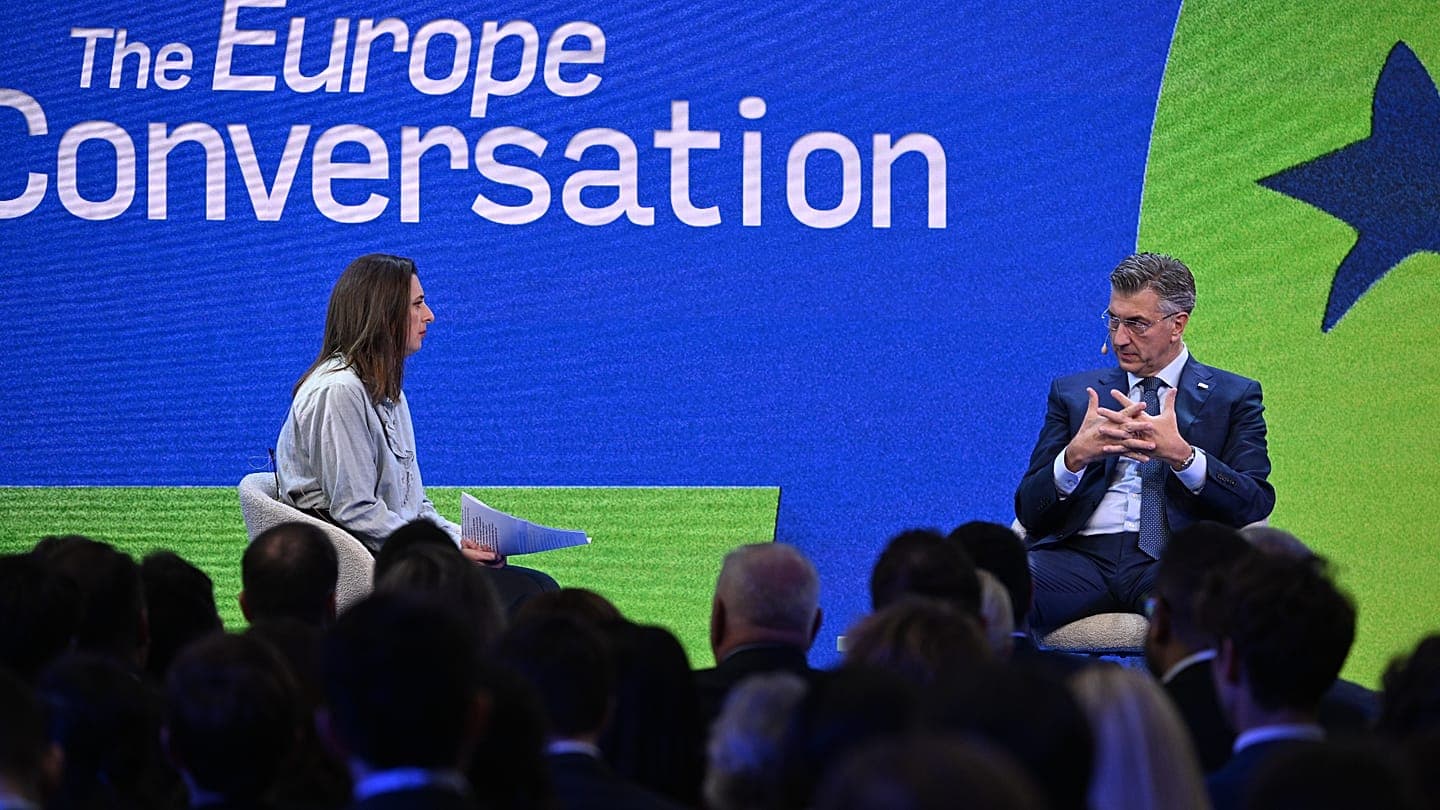
Presidential elections in France next year could derail the European Union's enlargement plans, warned Croatian Prime Minister Andrej Plenković, speaking at Euronews' enlargement summit on Tuesday. According to him, 'political events could affect enlargement far more than anyone can imagine today,' and 'some voters and parties are clearly opposed to this process.' The warning came against the backdrop of strong poll results for Eurosceptics on the far-right and far-left flanks — including Marine Le Pen and Jean-Luc Mélenchon — ahead of the 2027 elections.
The French constitution as a separate barrier
Beyond the rise of Euroscepticism, Plenković drew attention to France's constitutional requirements for approving new EU members. Under French law, enlargement of the union generally must be approved by referendum; the alternative is a parliamentary procedure — ratification by a three-fifths majority in Congress, the combined chambers of parliament. Euronews notes that this route may prove no less difficult given the country's deep political divisions. Plenković cited the experience of the 2005 referendum on the European Constitution: in his words, it showed that voters can be 'manipulated,' that they may rely on 'false information' and vote based on 'the current situation in France' rather than the substance of the question. He also warned that a change of political leadership in France in 2027 could radically alter the prospects for enlargement.
Who is seeking EU membership, and on what timeline
Nine candidate countries are currently seeking EU membership: Albania, Bosnia and Herzegovina, Georgia, Moldova, Montenegro, North Macedonia, Serbia, Turkey and Ukraine; the negotiations are at different stages. Plenković questioned the announced timelines: Montenegro expects to join by 2028, Albania to conclude negotiations at the end of 2027, and Moldova in early 2028. He called such a schedule 'not very smart,' warning that 'something unpredictable always happens, and processes get delayed.' Thus, the practical significance of the warning for candidate countries is that even a successful conclusion of negotiations does not guarantee accession: final ratification in France — a country with a mandatory referendum or a vote of Congress — could in itself become the blocking point.