The key facts
- A new species, Spinosoma reticulatus, about 538 million years old, has been described
- The best-preserved specimen is about 1.5 mm long, with the rear part of the body missing
- Silicon-bearing rocks and Raman spectroscopy were used
A new species from cherty rocks
Paleontologists at Peking University studied remains found in silicon-rich rocks in China and described a new species of ancient animal — Spinosoma reticulatus. The results are published in the journal Communications Biology, Kun.uz reports on the discovery. The age of the layers in which the remains lie is estimated at about 538 million years; the dating took into account the position of the layers in the geological section and microscopic fossils found together with the specimen.
What exactly was found and how it was studied
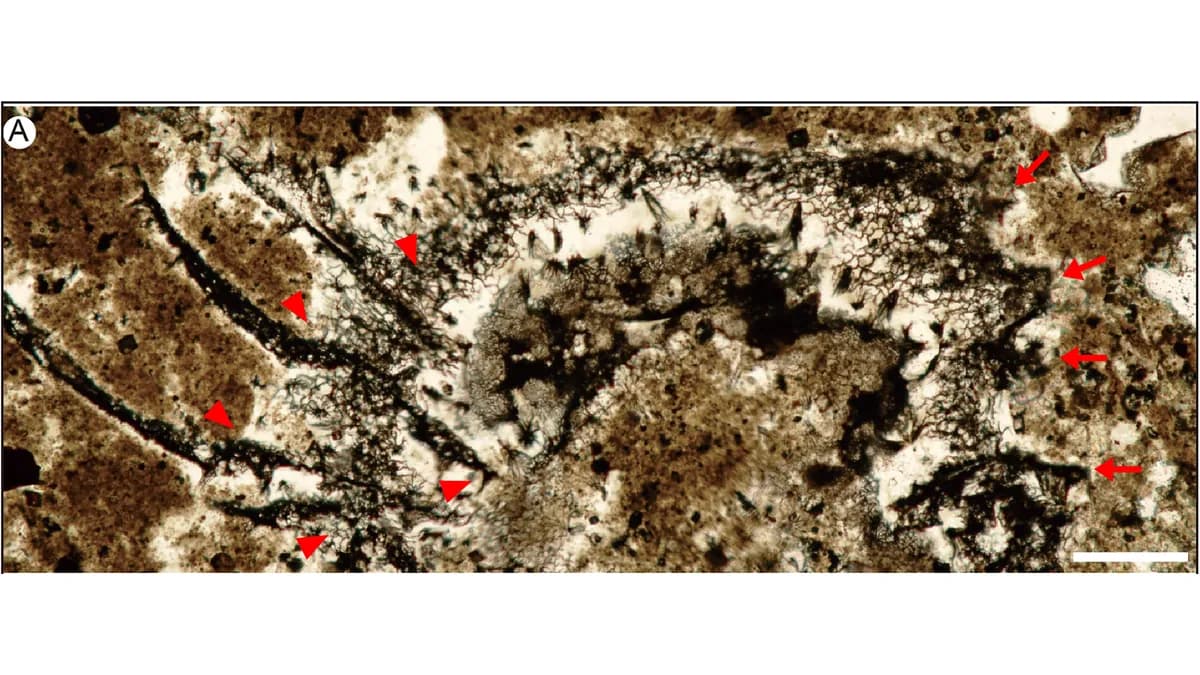
The best-preserved specimen is about 1.5 mm long, but the rear part of its body is missing — meaning the animal was larger in life. In addition to this specimen, the scientists analyzed numerous individual fragments of the outer covering. The remains were examined under a microscope, comparing the overall shape, the arrangement of tubercles, and the structure of the covering; Raman spectroscopy was used to verify the chemical properties of the preserved carbonaceous material. Spectra from the remains were compared with spectra of fossilized algae and cyanobacteria found nearby — this helped distinguish original biological differences from changes that arose during the burial of the remains and the heating of the rocks.
Why the discovery matters
As early as the beginning of the Cambrian period, the seas contained animals with complexly structured outer coverings, but their soft tissues are preserved extremely rarely, so knowledge of the earliest animals largely depends on which tissues were preserved in which rocks. Such finds are especially important for studying the origin of moulting animals — a large evolutionary group that includes modern arthropods, roundworms, and other organisms whose common feature is the shedding and renewal of the outer covering during growth. Chinese scientists have previously studied the remains of ancient worm-like animals and found evidence of moulting, but most such finds are associated with shallow-water environments, where tissues were preserved through replacement by phosphate minerals. The new work differs in its material: the remains come from cherty rocks, which expands the set of known conditions for the burial of soft tissues.