The key facts
- The Republican Party is going into the midterm elections having failed either to win the war with Iran or to resolve it diplomatically
- The Republican Party is heading into the midterm elections without having either won the war with Iran or resolved it diplomatically
- The analysts differ in their assessments: some see a high risk of escalation, others a chance for a deal before January 2029
- The war, started by the United States and Israel in late February, is in its ninth month
- The war launched by the United States and Israel in late February is in its ninth month
Elections as the backdrop of a protracted war
The Republican Party is heading into the congressional midterm elections under Donald Trump's administration, which, in the words of Deutsche Welle, «appears unable either to win or to diplomatically resolve the war with Iran». If the Republicans lose control of Congress, the administration will have to operate in a completely different political environment until the end of Trump's second term, yet the course of the war is decided not only in Washington and not only in Tehran. DW discussed with three analysts eight factors that could tip the balance toward war or peace.
What the elections will change — and what they will not
A victory for the Democrats, in the view of Omid Memarian of the Washington-based think tank DAWN, would force Trump to focus on domestic issues and would likely expose in Congress the financial costs of the war. Nevertheless, Trump could continue limited strikes on Iran without a formal declaration of war, and after Tuesday's elections he will be looking for a way out that «saves face». Babak Rezaei Daryakenari, a professor of international relations at Leiden University, adds: the president has broad powers in foreign policy and military operations, so a Republican defeat, even with increased pressure from Congress, «will not necessarily stop new strikes». During the campaign, Trump said he expected a deal with Iran shortly after the elections; Reuters, citing three senior Iranian officials, reported that Tehran had deliberately stalled the negotiations in order to weaken Trump politically.
The deadlock in Israel and the nuclear dispute
Israel's elections on October 27 ended in a draw: neither the coalition of incumbent Prime Minister Benjamin Netanyahu nor the camp of former chief of staff Gadi Eisenkot won an absolute majority. Memarian warns that political uncertainty could push Netanyahu toward drastic decisions while he holds on to power — the transition period becomes «the most fragile and dangerous» time for a new escalation. A change of government, in his assessment, will not fundamentally alter Israel's Iran policy: Eisenkot «may be more accommodating to America», but his ties with Trump are not personal, unlike Netanyahu's. Daryakenari stresses that Israel's concerns about Iran «are not limited to Netanyahu himself».
The nuclear program, the Strait of Hormuz and the Houthis
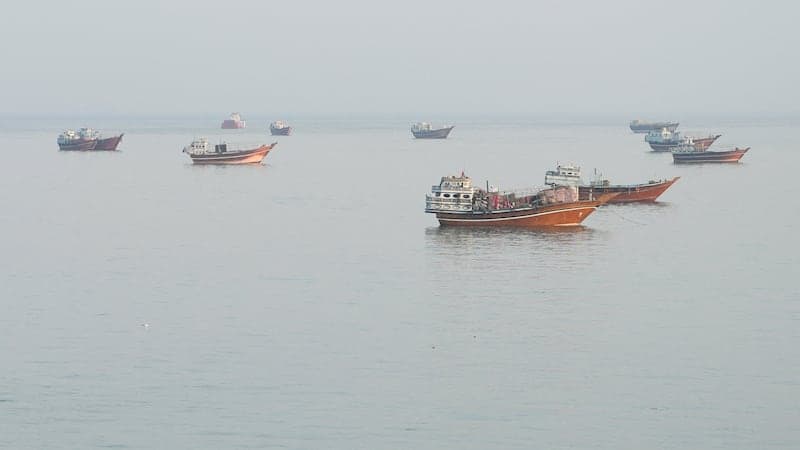
Iran's nuclear program remains the main open question: the United States rejects the Iranian claim that the program is intended only for civilian use. The sides also differ on the format of negotiations: Washington wants to start them with concessions from the very beginning, while Tehran demands the lifting of sanctions and the unfreezing of assets before talks begin. Until an agenda is agreed, according to Memarian, the sides will keep «climbing the ladder of escalation». Before the war began in late February, about 20% of the world's oil passed through the Strait of Hormuz; since then Iran has sharply reduced its energy exports through this chokepoint, using it as leverage against the United States and Israel, but on its own it will not trigger an escalation — any incident could serve as a pretext if Washington decides a larger attack is needed. The Houthis in Yemen, who attack energy flows in the Red Sea, act pragmatically in Memarian's assessment, and their moves do not necessarily mean an escalation between Iran and the United States; Daryakenari, however, believes their attacks could both widen the war and accelerate the formation of a coalition against the Islamic Republic.
The economy: neither side is at the critical threshold
The war is in its ninth month, and high oil prices, shipping risks and economic strain are pressuring all parties involved. 'The economy is the Achilles' heel of every side in this war, and that applies even to countries beyond the region,' says Finnish political scientist Leila Morovati, noting that energy prices and the expectations of the American public have become one of the Trump administration's problems. At the same time, the Arab countries do not act as a unified bloc toward Tehran: joint action is possible only under serious pressure, which has not yet materialized. Memarian sees economic costs as an incentive for a deal, but points out that each side believes that inflicting greater pain on the adversary will strengthen its position in future negotiations — this easily turns the conflict into a war of attrition, which is exactly what has been happening in recent months. Neither side has yet reached the point where compromise seems inevitable.
Diverging assessments of the prospects
The analysts' conclusions differ markedly. Daryakenari believes that in the coming months the 'factors of escalation' will prevail and the likelihood of a military aggravation is high: Tehran can avoid a new round of war only through a fundamental change of course and concessions that the Iranian leadership would consider tantamount to capitulation — but such a retreat, in his words, would threaten the regime's survival. Memarian, by contrast, calls the current moment the 'best opportunity' to end the confrontation before Trump leaves office in January 2029, warning that Trump could deliver a massive strike, inflict serious damage, and declare victory. Indirect talks between Washington and Tehran have reached a deadlock, and attention has shifted to Qatar, Oman, Pakistan, and Saudi Arabia — countries that, according to Memarian, are close to the United States but want to maintain ties with Iran and build regional alliances to prevent future conflicts.