The key facts
- Women in Batticaloa, eastern Sri Lanka, have held a continuous protest for 1,604 days demanding truth about those who disappeared during the 1983–2009 civil war
- The Office on Missing Persons (OMP) has registered 22,000 cases, while the UN estimated up to 100,000 disappearances; only 24 individuals have been located in three years
- President Anura Kumara Dissanayake, elected in 2024, promised an independent prosecution service, but Human Rights Watch states impunity remains unaddressed
1,604th day of protest
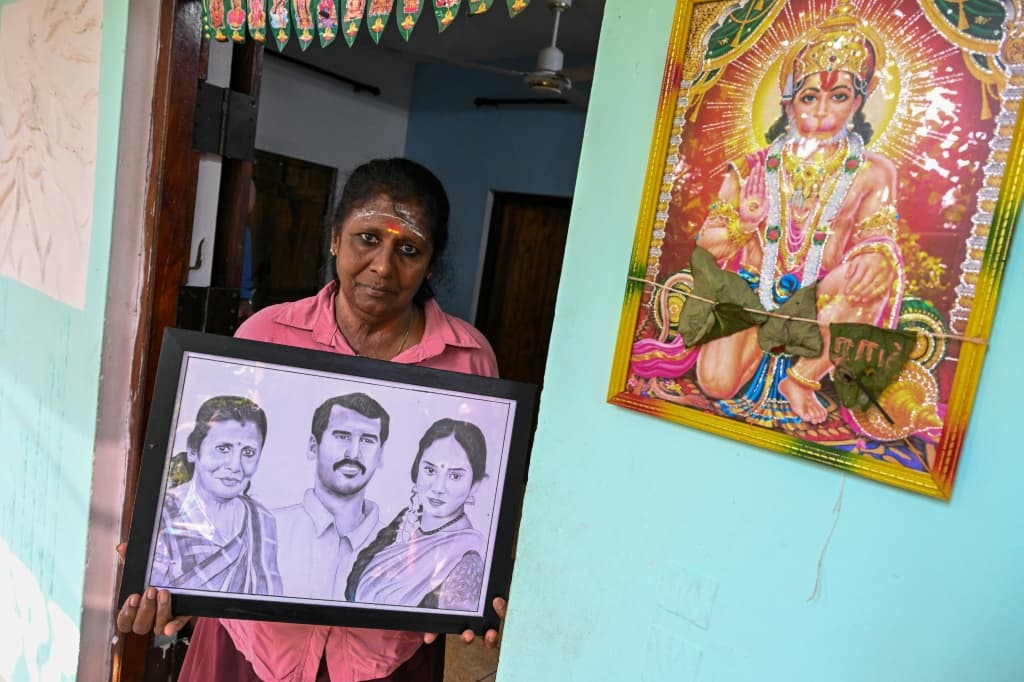
In the eastern city of Batticaloa, a small group of women held a 'March for Justice'—marking their 1,604th consecutive day of protest. One participant, Sarathadevi Thadkanamurthi, read aloud four handwritten pages listing the names of 124 husbands, fathers, and brothers who disappeared during the civil war. This was reported by AFP.
War context and family fates
From 1983 to 2009, Sri Lanka was torn apart by war between government forces representing the Sinhalese majority and Tamil separatists. According to UN estimates, over 100,000 people died, tens of thousands disappeared, were abducted, tortured, or killed by security forces or the Liberation Tigers of Tamil Eelam (LTTE). More than 15 years after the war ended, the fate of most of the missing remains unknown. The stories of the march participants illustrate the scale of the problem: Thadkanamurthi's husband was found shot dead in 1992, and her 19-year-old son disappeared in 2000; in 2016, authorities responded to her inquiry only with a certificate of disappearance. Lakshmi Silva received her husband's death certificate in 1994 with the cause listed as 'unknown,' while Rajeshwari Chithiravadivel refused to accept the body presented by the Red Cross in 2000 and continues to hope.
Limited institutional progress
Established in 2018, the Office on Missing Persons (OMP) has registered 22,000 cases, whereas the UN cited figures of up to 100,000 disappearances. Over the past three years, the office has traced the fate of only 24 individuals. Its official, Mirak Rahim, acknowledged that for families waiting two to three decades, 'things are not moving fast enough': finding witnesses is increasingly difficult, and many documents have been lost. The election in 2024 of Anura Kumara Dissanayake, the country's first left-leaning president, revived hopes: his election platform promised to investigate political killings and disappearances and establish an independent national prosecution service. However, as Human Rights Watch noted in September, although some progress has been made, the government has not addressed the 'urgent task of ending impunity'; the Ministry of Justice did not respond to AFP's questions regarding an independent prosecution service. Tamil opposition MP Rasamanickam R. Shankian stated that while some investigations are underway in 'landmark cases,' there is 'zero movement' on enforced disappearances, and successive governments fear taking steps because senior security officials know that investigations 'will come back to them'.
Persistence despite lack of results
The march participants compare their struggle to that of the 'Mothers of the Plaza de Mayo' in Argentina, who for years demanded answers about those who disappeared during the 1976–1983 dictatorship. 'We secretly hoped thousands would join us, but obviously that did not happen,' said activist Sarala Emmanuel. 'But nothing has changed—there is still a great silence.' Thadkanamurthi vows to continue the march: 'We do not want money, only truth and justice. I refuse to let our suffering be passed on to the next generation.'