The key facts
- About 99% of private residences in Singapore are equipped with air conditioners — the highest rate in Southeast Asia
- Systems in the Paya Lebar Green building cut energy consumption by more than 30%, according to DP Architects
- By mid-2026, ACT had been installed in at least 33 public and 14 private buildings; the goal is net-zero emissions by 2050
'Air-conditioned nation' looks for alternatives
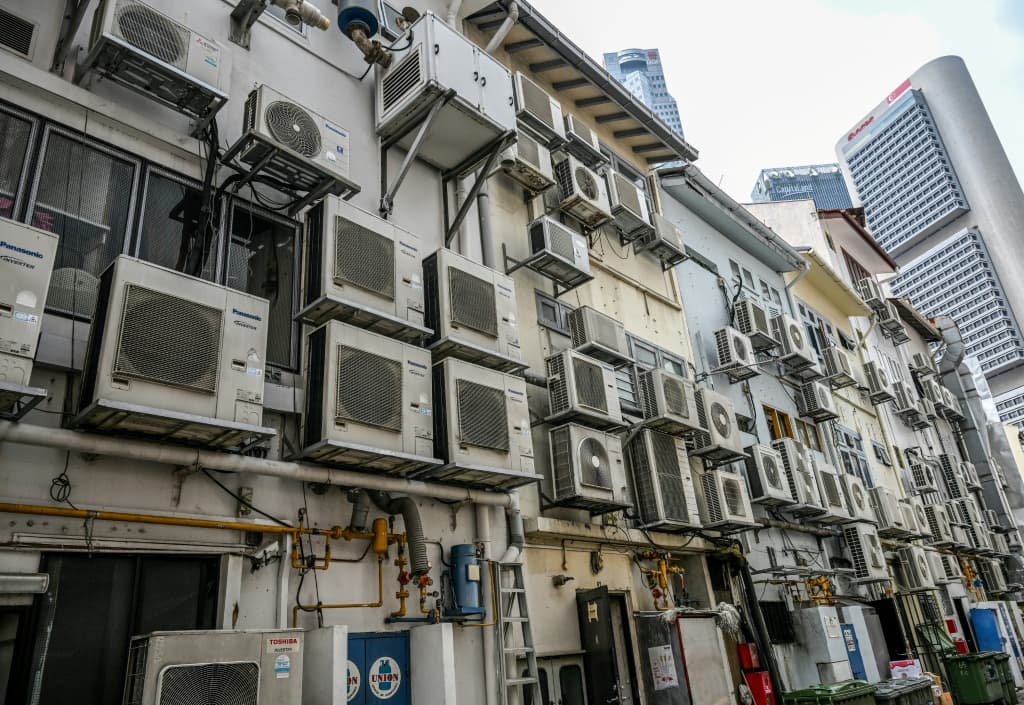
Singapore, long dubbed the 'air-conditioned nation', has begun testing alternative ways of cooling buildings to reduce its reliance on energy-hungry air conditioners, AFP reports. The country has the highest air-conditioning penetration per capita in Southeast Asia: about 99% of private homes are equipped with them. The construction sector accounts for a fifth of the country's emissions, while cooling alone accounts for 40 to 60% of a building's energy consumption, according to research figures.
How the new systems work
One option is active chilled beams: perforated ceiling panels with cooling coils. A chiller on the top floor cools water to 9°C and feeds it into the coils, while jets of air create a low-pressure zone that draws warm room air in. In the eight-storey Paya Lebar Green building in eastern Singapore, the system maintains a temperature of 24°C and runs noticeably quieter than conventional air conditioners. According to the designers DP Architects, it cut energy consumption by more than 30% compared with conventional air conditioning. Office staff, according to 30-year-old HR specialist Renugha Shekar, initially took the exposed pipes and ceiling panels for a 'warehouse look' and only months later realised what was cooling the space.
Other technologies and state support
The port authority building in the western port of Tuas uses passive displacement cooling: ceiling coils cool the air, which sinks and rises back up as it warms, reducing the need for fans. Another option is radiant cooling, where water at 14–18°C flows through pipes or panels and absorbs heat from people and objects. The search for solutions is backed by the state: a 2024 study showed that alternative cooling technologies could save the city up to 48% of energy. By mid-2026, according to the building authorities, they had been installed in at least 33 public and 14 private buildings; the country aims to reach net-zero emissions by 2050.
Limitations
The scale so far is small, and users accustomed to tried-and-tested air conditioners can find it hard to accept the new systems. The most popular alternative method is hybrid cooling: raising the air-conditioner temperature to 25.5–27°C combined with fans. 'Everyone is used to air-conditioned offices, and for them to suddenly accept 26 degrees, the shift in mindset has not yet reached the threshold of universal acceptance,' said Chua Zi Zijun, a director at DP Architects. Advocates of the new systems admit that installation costs more, but that this is offset by low operating costs. Wang Man Pun, a cooling technology expert at Nanyang Technological University, called the technologies 'a step in the right direction' but noted that 'we still have not found alternative cooling methods with a higher efficiency coefficient than vapour compression'. Meanwhile, demand for cooling is growing as temperatures and humidity rise.