The key facts
- Buckingham Palace: the King will speak about the slave trade with 'unflinching honesty' and 'sincere sorrow'
- Prime Minister Andy Burnham has for the first time allowed for an official British apology for the country's role in the slave trade
- The Palace knew of Burnham's comments in advance but did not change the King's speech
Speech on the slave trade at the Commonwealth summit
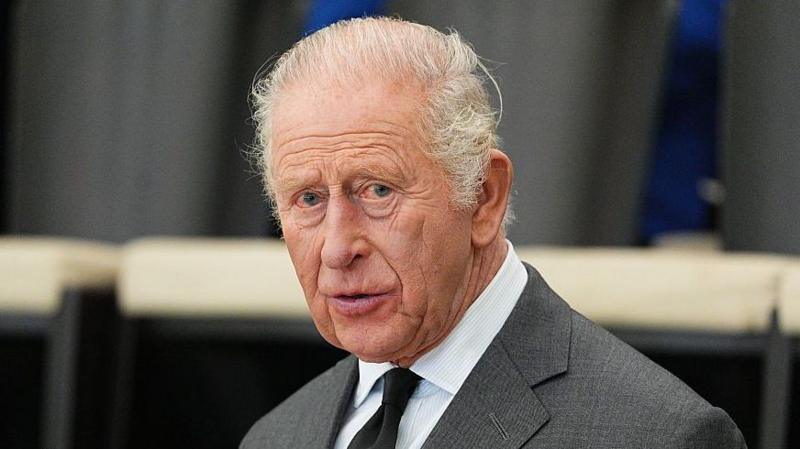
King Charles III will speak on Tuesday at the Commonwealth Heads of Government Meeting (CHOGM) in Antigua, where he will address the subject of the transatlantic slave trade. According to a Buckingham Palace spokesperson, the King 'will not shy away from confronting the most shameful chapters of the past' and will address them with 'unflinching honesty, sincere sorrow and respect for the broader discussions' between governments at CHOGM and beyond. This is reported by BBC News, whose correspondent is in Antigua.
A shift in the government's position
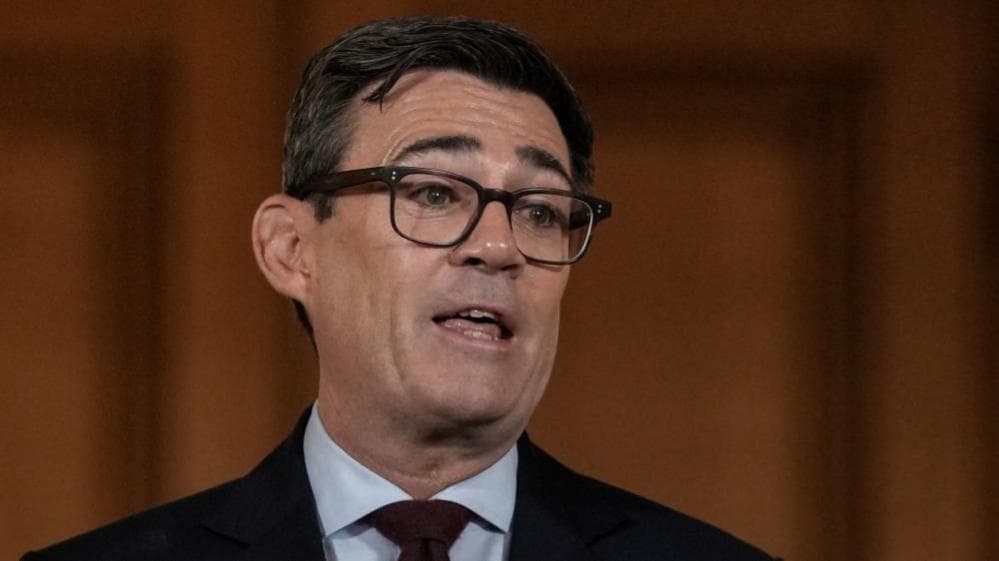
The Palace's statement follows a notable shift in the British government's position. Prime Minister Andy Burnham, in an article for The Guardian on Friday evening, called the transatlantic slave trade 'a cruel and barbaric violation' and said that Britain 'must face its past'; he also said he was 'open' to the possibility of an official apology for the country's role in the slave trade. Previously, Burnham had followed the line of his predecessors and did not even allow consideration of reparations payments. The British government has never officially apologised for the slave trade nor offered reparations. According to the BBC, the Palace was informed in advance of Burnham's comments, but the King made no changes to his speech. Asked about the King's reaction, a Palace spokesperson replied that it would be 'inappropriate' for the monarch to comment on politics related to the position of the UK government; royal sources stressed that decisions about apologies are a matter for the government, not the Palace.
Context of the tour and personal circumstances
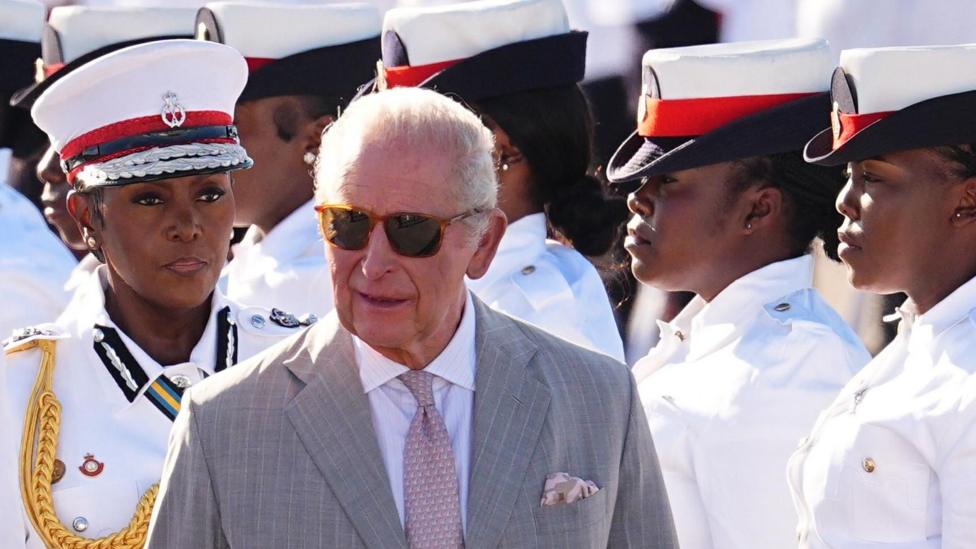
The Caribbean tour has once again placed the King at the centre of complex debates about Britain's colonial legacy in the region. At the first stop in the Bahamas he spoke of 'the sufferings of the past', and in Guyana visited the site of a slave uprising, where hundreds of enslaved people were killed; the Palace described it as an opportunity to learn more about the history of slavery and resistance. The tour programme also covered the environment, opportunities for young people and trade ties with Britain; in total, over nine days the King will carry out around 36 engagements. A royal aide noted that the monarch is 'trained to walk a diplomatic tightrope' and sees his role as 'playing for Britain, the Realms and the wider Commonwealth'.
The King's personal background
The BBC also provides context on the King's personal circumstances: recent months have not been easy due to events surrounding his brother Andrew Mountbatten-Windsor and the publication of a book by his former brother-in-law, Earl Spencer. In August, his son Prince Harry, together with his wife Meghan and their two children, unexpectedly returned to the UK. Regarding the serious allegations concerning Meghan's father, Thomas Markle, the Palace declined to intervene publicly, stating that it 'does not comment on private family matters'. The King is still undergoing treatment for cancer — the diagnosis was made in early 2024, and, according to the Palace, the progress remains 'positive'. He will soon turn 78.
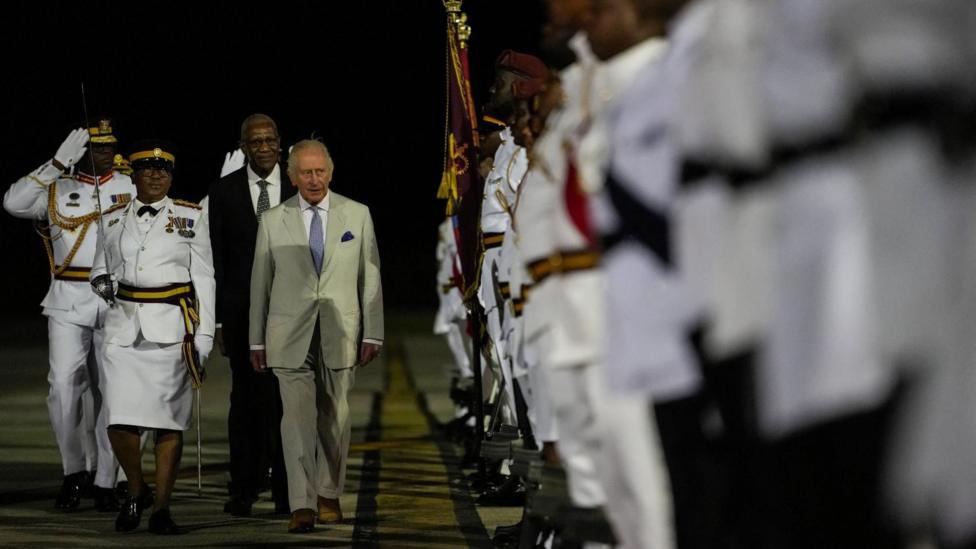 Image source, Reuters
King Charles arrived in Antigua on Friday evening
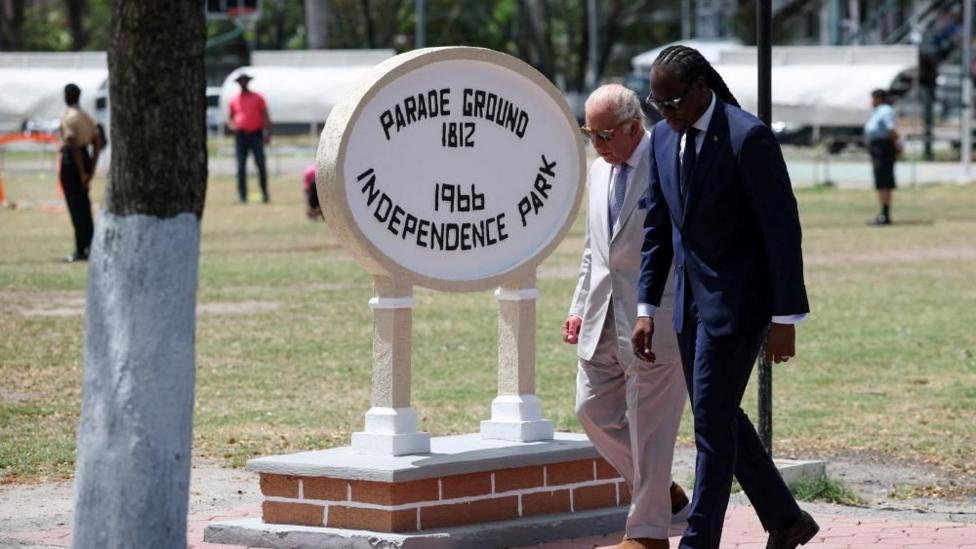 Image source, PA
The King and Steven Jacobs from Guyana's culture ministry visited Independence Park, which marks the site of public executions following the 1823 Demerara Slave Rebellion