The key facts
- The evacuation of Oleshky residents took place on Friday under a local truce in effect until the evening of Sunday, 1 November
- The evacuation of Oleshky residents took place on Friday under a local ceasefire in effect until the evening of Sunday, November 1
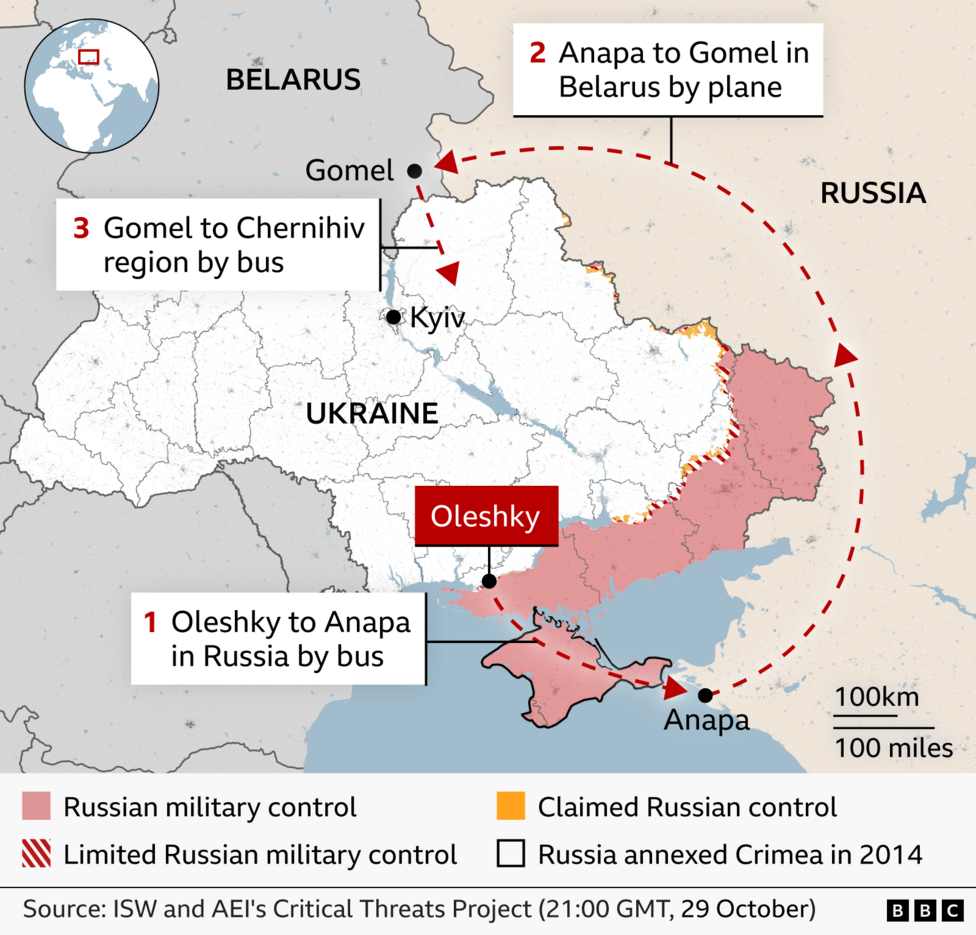
- The evacuees arrived in Gomel (Belarus) on four planes and are heading to the Ukrainian border
- Some residents refused to leave: according to Kyiv's estimates, about 2,000 people remained in the city out of a pre-war population of 24,000
- Some residents refused to leave: according to Kyiv's estimates, about 2,000 people remained in the city out of 24,000 pre-war residents
Evacuation via Gomel
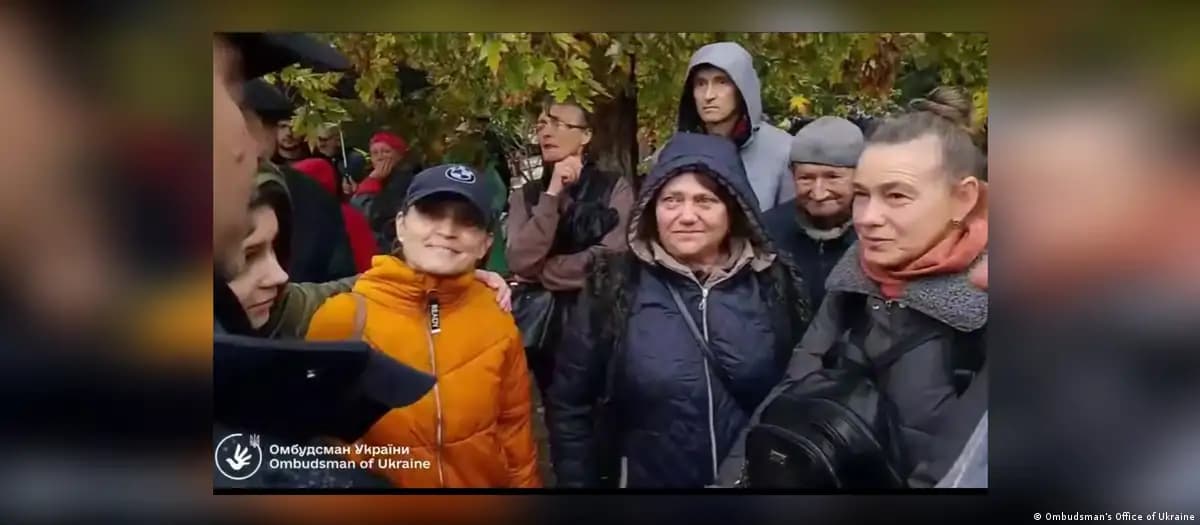
Residents of the destroyed, occupied Oleshky in Kherson region, evacuated on Friday during a local humanitarian truce, arrived in the Belarusian city of Gomel on Saturday morning. The fourth and final plane carrying the evacuees landed there, Ukrainian politician Davyd Arakhamia reported: within a few hours, all Ukrainian citizens, together with the Ukrainian delegation, were expected to be on Ukrainian territory. The state agency BelTA reported that a column of buses had left Gomel airport heading towards the Ukrainian border. Ukrainian ombudsman Dmytro Lubinets posted videos of the residents after landing, noting that their pets were being evacuated with them. Russia's Defence Ministry also confirmed the flight of Oleshky residents who wished to leave to Gomel.
How the evacuation was carried out
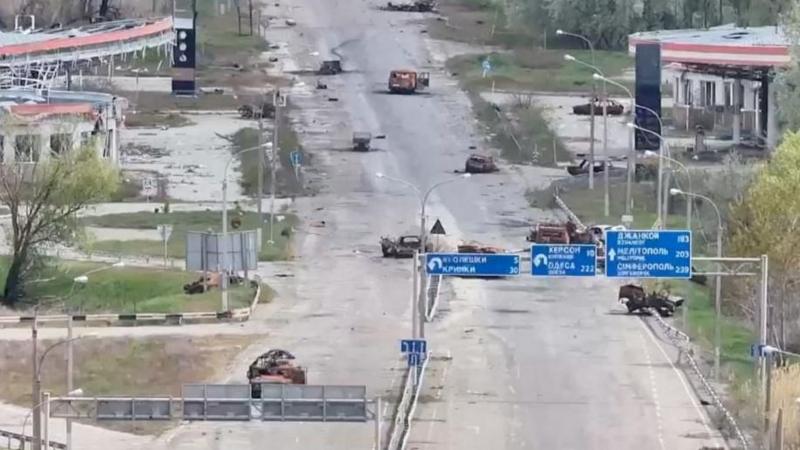
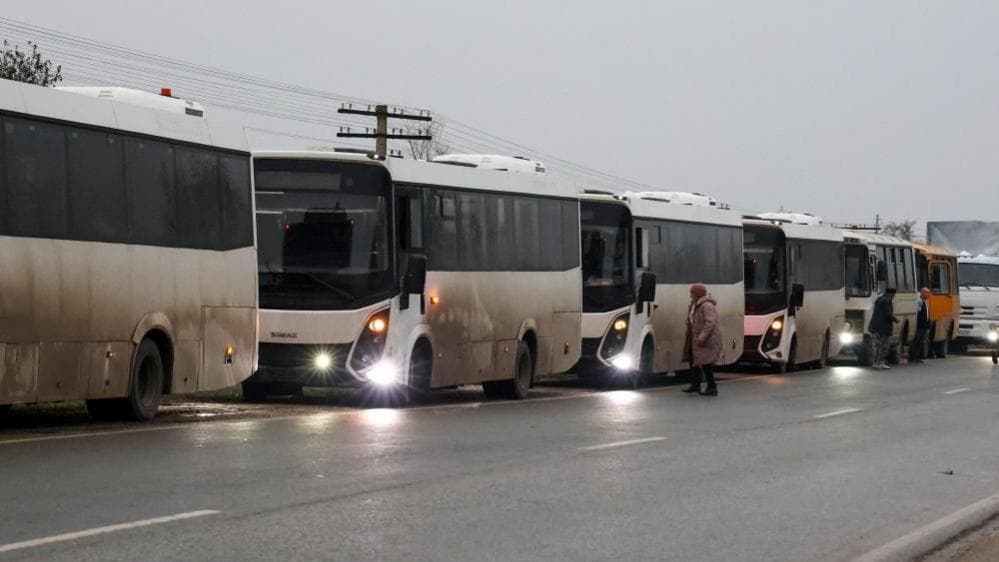
The humanitarian truce in Kherson region has been in effect since Tuesday and has been extended until the end of Sunday, 1 November — the first days of calm in the region in four years. According to the BBC, the truce made it possible to clear the road out of the city: before that, the escape routes were mined and under drone fire, and one resident who fled three weeks earlier said he had walked 24 km across minefields. On Friday, residents had a four-hour window to leave the city with a column of 25 buses with a capacity of 750 people and ambulances for people with reduced mobility. US First Lady Melania Trump, according to her, helped negotiate the truce and stated that the column was ready to take out more than 750 people 'who would voluntarily choose to leave Oleshky'; it included 50 medical workers and ambulance vehicles.
Who stayed and why the route went through Russia
Oleshky, whose pre-war population was 24,000, has been occupied by Russian forces since the first days of the full-scale invasion in 2022. According to Kyiv's estimates, about 2,000 residents remained in the city by the time of the operation; for months they had been short of food, water and medicine, and some, according to former residents who spoke to AFP, were forced to hunt pigeons. Neither Moscow nor Kyiv named the number of evacuees; both sides previously indicated that many residents want to stay even if fighting resumes. Those who stayed, according to Lubinets, will be provided with all necessary humanitarian aid; Russia reported preparing 'dozens of tonnes' of aid for them.
Rare cooperation and its criticism
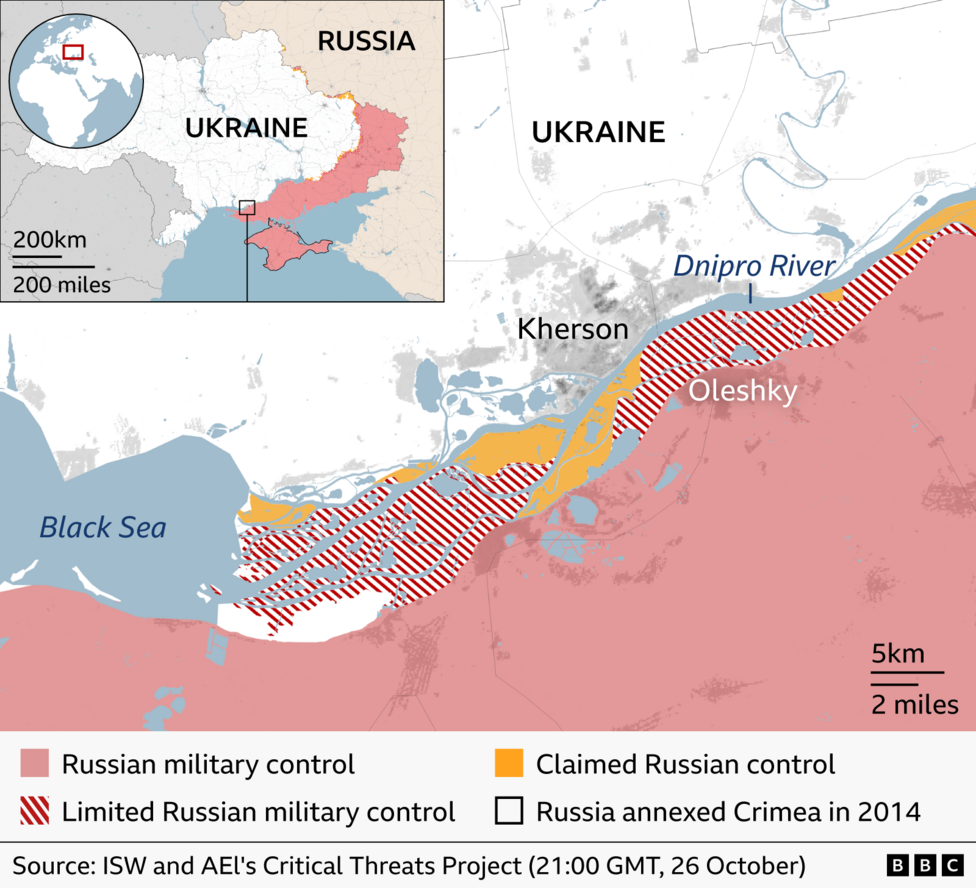
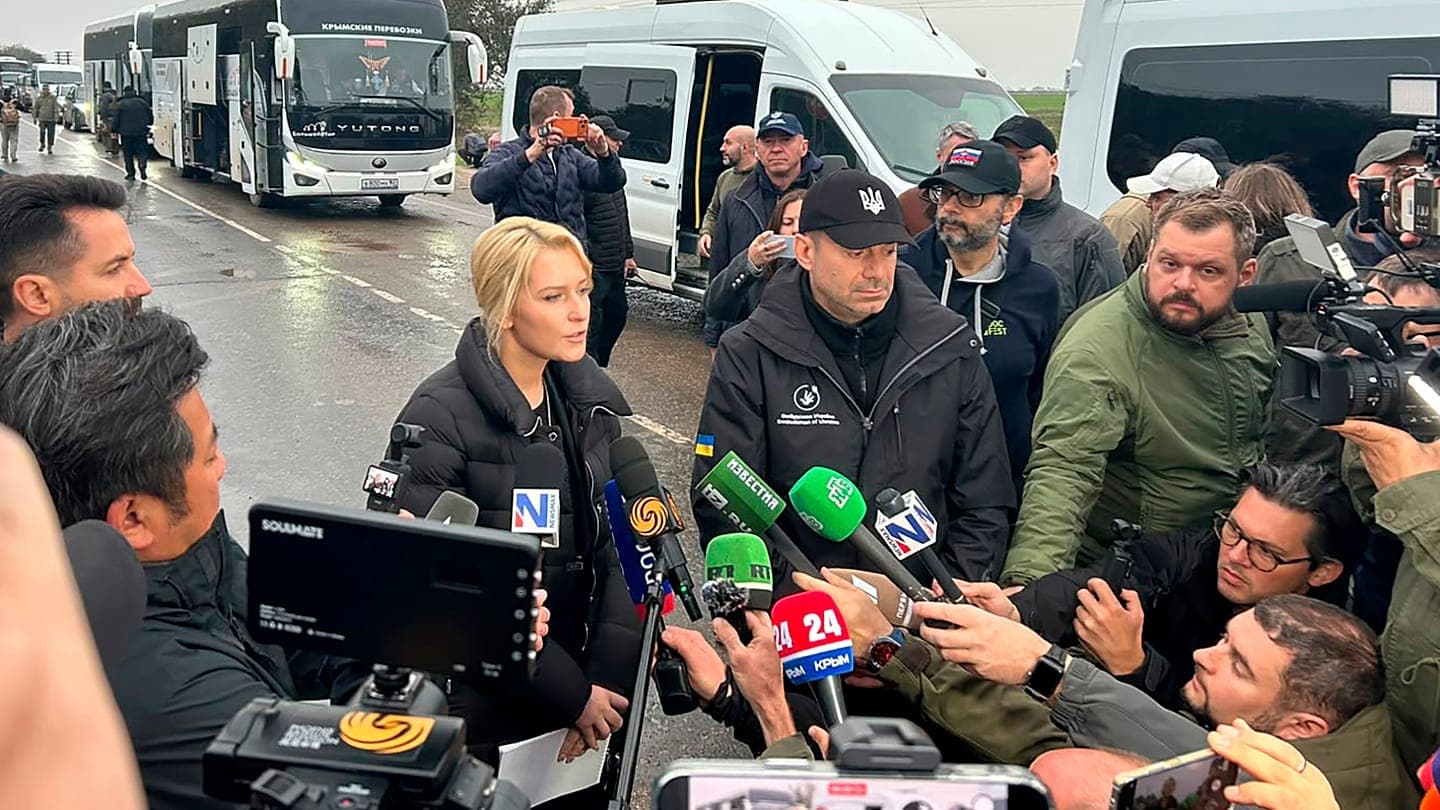
The evacuation route turned out to be indirect: Ukrainian military positions are only 5 km from Oleshky, but the bridges across the Dnipro are destroyed and the riverbank is mined, so the evacuees were first taken across occupied territory to Anapa, from where they were flown to Gomel. On Friday, Lubinets, together with his Russian counterpart Yana Lantratova, travelled to Oleshky from Armiansk in occupied Crimea — according to the BBC, Lubinets became the first Ukrainian official to visit the occupied territories since the start of the war. He himself called the cooperation with Lantratova necessary to save lives, but in Ukraine the appearance of a Ukrainian official alongside a representative of the occupation authorities drew criticism.
Context: the truce and the rest of Ukraine
AFP calls this truce the longest lull between Russia and Ukraine on any section of the front since February 2022. Meanwhile, fighting continues in the rest of Ukraine: overnight into Saturday, according to the Ukrainian Air Force, Russia launched more than 100 drones, and President Volodymyr Zelensky reported roughly 280,000 households without electricity after strikes on energy infrastructure — about 200,000 in Dnipro and the surrounding region, and at least another 80,000 in Kyiv region. According to AFP, mediation talks between Russia and Ukraine with US participation are to resume in November after being effectively frozen since February.
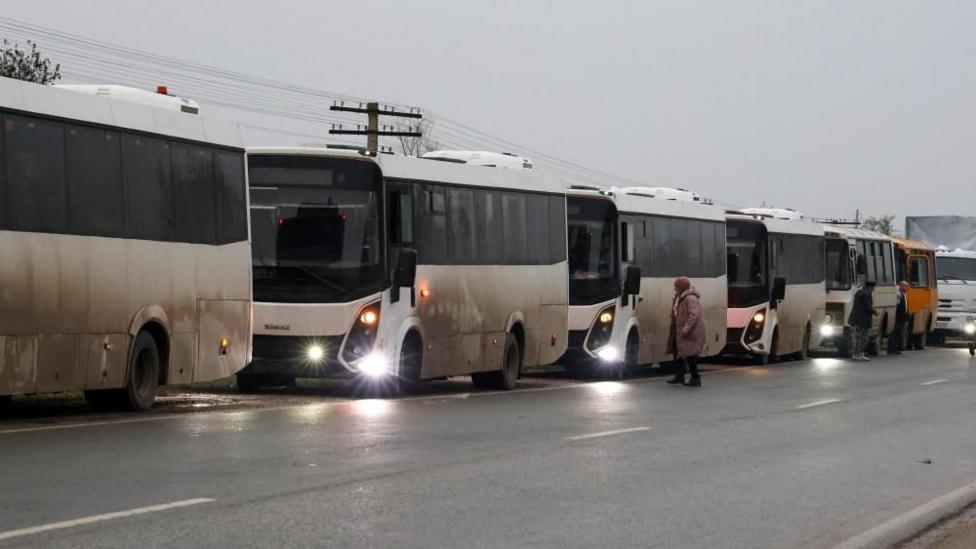 Image source, Reuters
A convoy carrying residents from Russian-controlled Oleshky first travelled through Crimea