The key facts
- On 30 October 2026, judge Anna Korwin-Piotrowska announced a one-month suspension of the powers of tribunal president Bogdan Święckowski and vice-president Bartłomiej Sochański and took over the management herself
- On 30 October 2026, judge Anna Korwin-Pietrowska announced a one-month suspension of the powers of tribunal president Bogdan Święckowski and vice-president Bartłomiej Sochański and took control herself
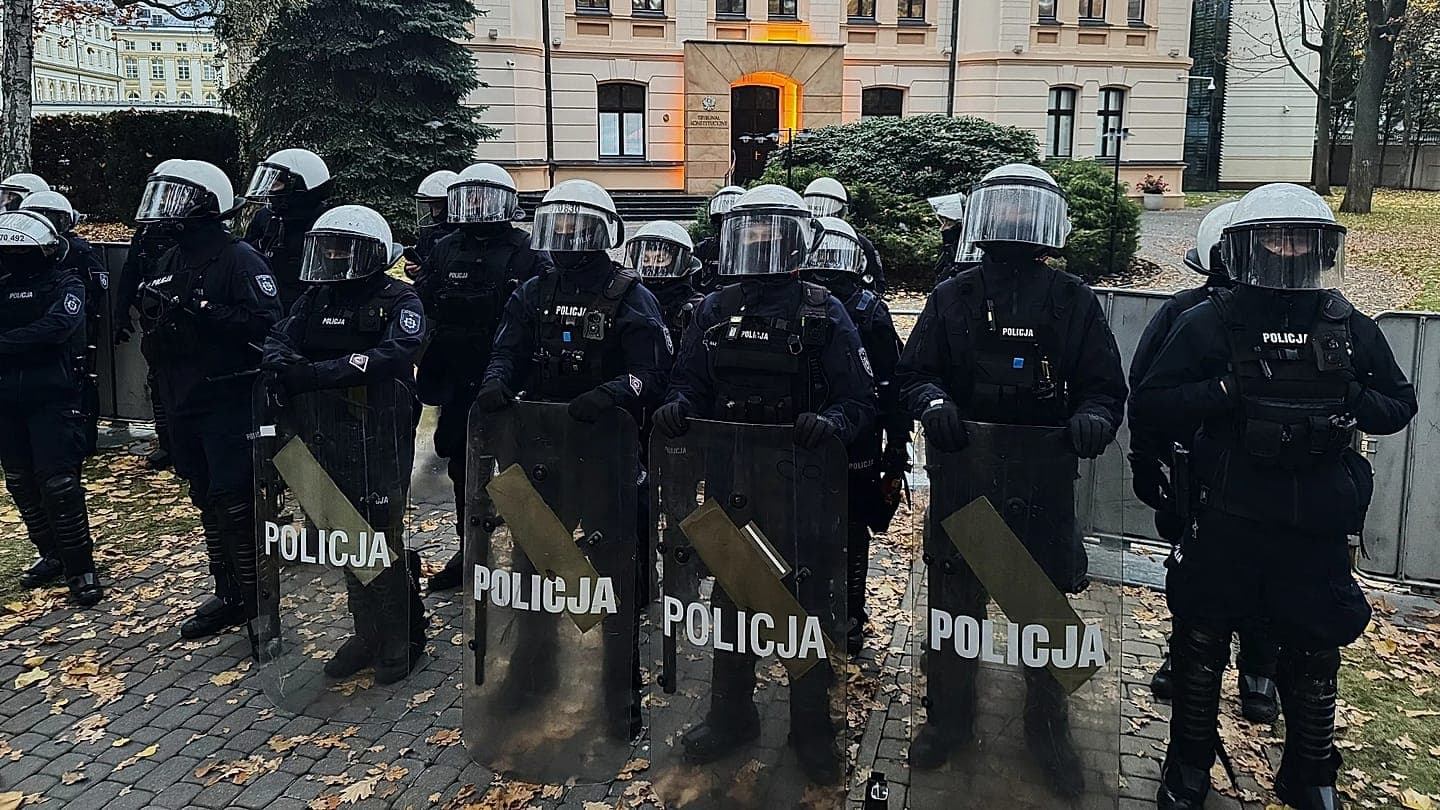
- The current leadership rejected the decision as unlawful; at night, seven judges entered the tribunal building with State Protection Service officers, and scuffles broke out
- The current leadership rejected the decision as unlawful; overnight, seven judges entered the tribunal building with State Protection Service officers, and scuffles broke out
- President Karol Nawrocki called the events an attempt to seize a constitutional institution and called for urgent consultations with political leaders
Confrontation inside the tribunal
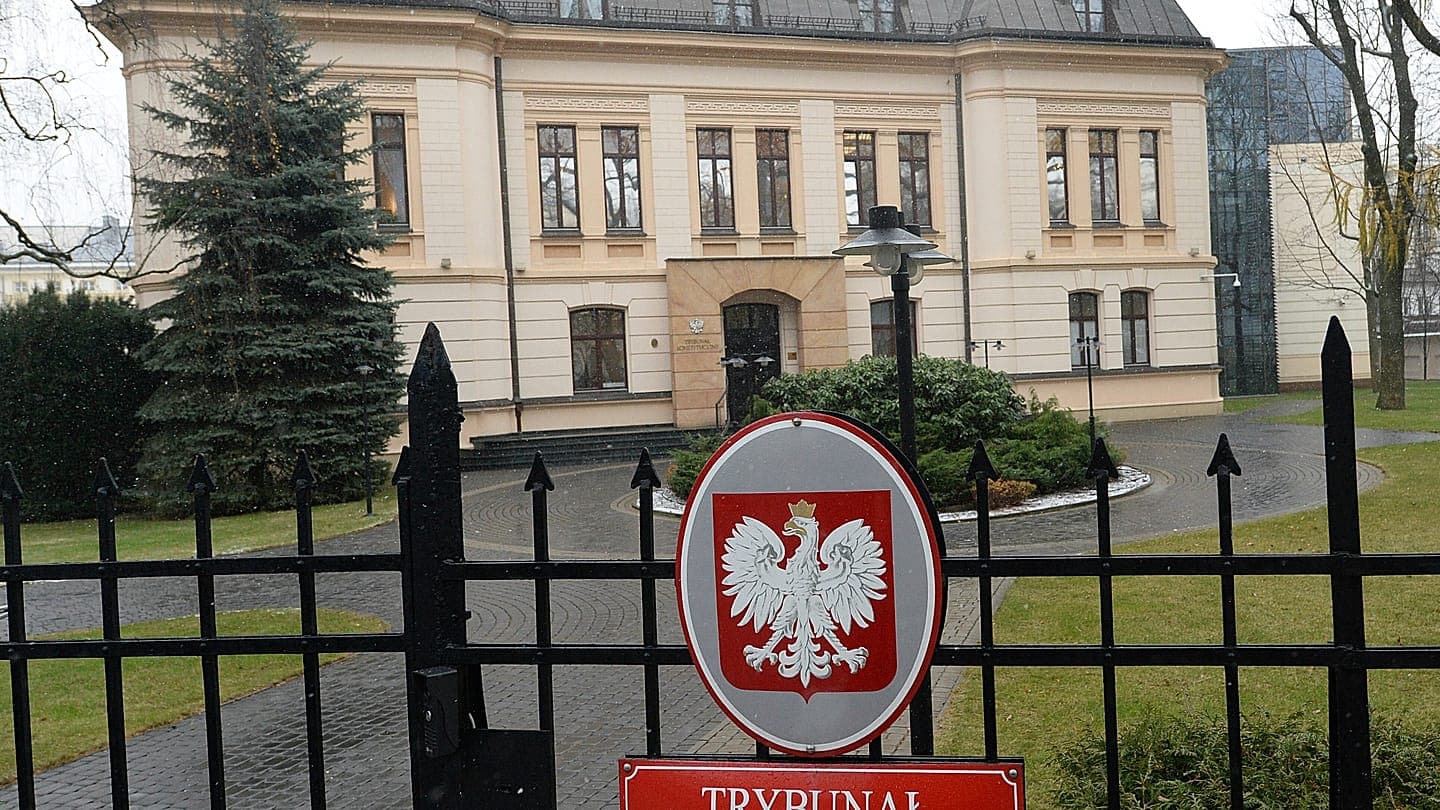
At the end of October 2026, the conflict surrounding Poland's Constitutional Tribunal escalated into a physical confrontation inside its building. On 30 October judge Anna Korwin-Piotrowska ordered a one-month suspension of the powers of the tribunal's president Bogdan Święckowski and vice-president Bartłomiej Sochański, citing provisions on the temporary suspension of judges, and took over the management of the institution herself. She stated that this was necessary to restore the tribunal's functioning and to allow all judges elected by the Sejm to take up their duties. The current leadership rejected the decision as unlawful, pointing out that there is no legal basis for suspending the president and that judges sworn in outside the presidential procedure are not full members of the tribunal.
Scuffles at the building and the president's reaction
Afterwards the confrontation moved inside the building: when seven judges entered the tribunal's headquarters accompanied by officers of the State Protection Service, scuffles broke out. President Karol Nawrocki arrived at the scene at night and described what was happening as an attempt to seize a constitutional institution, calling for urgent consultations with political leaders. On Saturday, Święckowski said that he and the remaining judges would seek to regain control of the tribunal, while Korwin-Piotrowska announced the convening of a General Assembly of Judges on 3 November.
The immediate trigger: the oaths of four judges
The immediate trigger for the escalation was President Nawrocki's refusal to take the oaths of four of the six judges elected by the Sejm in March 2026: Krystian Markiewicz, Anna Korwin-Piotrowska, Maciej Taborowski and Marcin Dzurda. His chancellery cited procedural issues, including deadlines and the requirement of an individual vote, and argued that the president is not obliged to accept appointments automatically. The government insisted that the election of judges is a constitutional prerogative of the Sejm and that the president cannot block appointments. On 9 April, the four judges took their oaths before a notary in parliament, but the presidential chancellery and Święckowski rejected this step, insisting on an oath taken in the president's presence. On 12 May, the tribunal itself, in case K 3/26, ruled that the president is not obliged to accept every appointment and must be personally present at the oath-taking; the government challenged this ruling, pointing to the disputed status of the judges on the panel. In May, the European Court of Human Rights issued an interim measure requiring that the four judges not be prevented from taking up their duties, while the Venice Commission stated that the president's role in the oath should be ceremonial.
The roots of the crisis: since 2015
As Euronews explains, the conflict dates back to 2015, when the outgoing PO-PSL coalition amended the law, allowing parliament to elect five judges before the October elections. President Andrzej Duda refused to take their oaths, and the new Sejm under PiS declared the appointments invalid and elected alternative candidates. The tribunal, however, ruled that three of the previous parliament's appointments were constitutional — the PiS-appointed judges to those seats, Mariusz Muszyński, Henryk Cioch and Lech Morawski, were nicknamed the 'replacement judges'. Between 2016 and 2023, PiS changed the tribunal's rules of operation, which critics described as undermining the court's independence, and in 2021 the ECtHR found that the composition of the tribunal, including Muszyński, did not meet the requirement of being a tribunal 'established by law'. After Donald Tusk's coalition came to power in 2023, the Sejm in March 2024 challenged the status of the three disputed judges and the powers of the then tribunal head Julia Przyłębska, while Duda blocked two reform bills by sending them to the tribunal itself for review, and in December 2024 appointed Święckowski — a close ally of Zbigniew Ziobro — as its president. The government, meanwhile, restricted the publication of the tribunal's rulings in the Journal of Laws, while the tribunal's leadership declared its rulings still binding.
What is at stake
According to Euronews, the dispute has long gone beyond appointments and the management of the institution: it touches on the separation of powers, the independence of the judiciary, and the authority of constitutional rulings. When rulings go unpublished and state bodies disagree on their legal force, the uncertainty extends to laws affecting citizens, business, taxation, and public services. Over more than a decade, successive governments and presidents have failed to agree on a common solution: each change of power has brought new legal interpretations and new disputes over who has the authority to decide.