The key facts
- The novella «Hind sayyohining qissasi» was published in Istanbul in 1912
- The traveller in the work is a literary mask of Fitrat himself
- The «5 daqiqa» episode examines the episodes about the judge, the bribe of two thousand tanga, and the crafts in Karshi
What the novella is about
Another episode of the «5 daqiqa» column on Kun.uz is devoted to an analysis of Abdurauf Fitrat's novella «Hind sayyohining qissasi» («The Tale of an Indian Traveller»), published in Istanbul in 1912. The narrative is told from the perspective of a Muslim from India, but, as the outlet notes, the traveller is a literary mask of Fitrat himself: the author looks at his native land through the eyes of a seemingly outsider.
Bukhara through the eyes of a newcomer
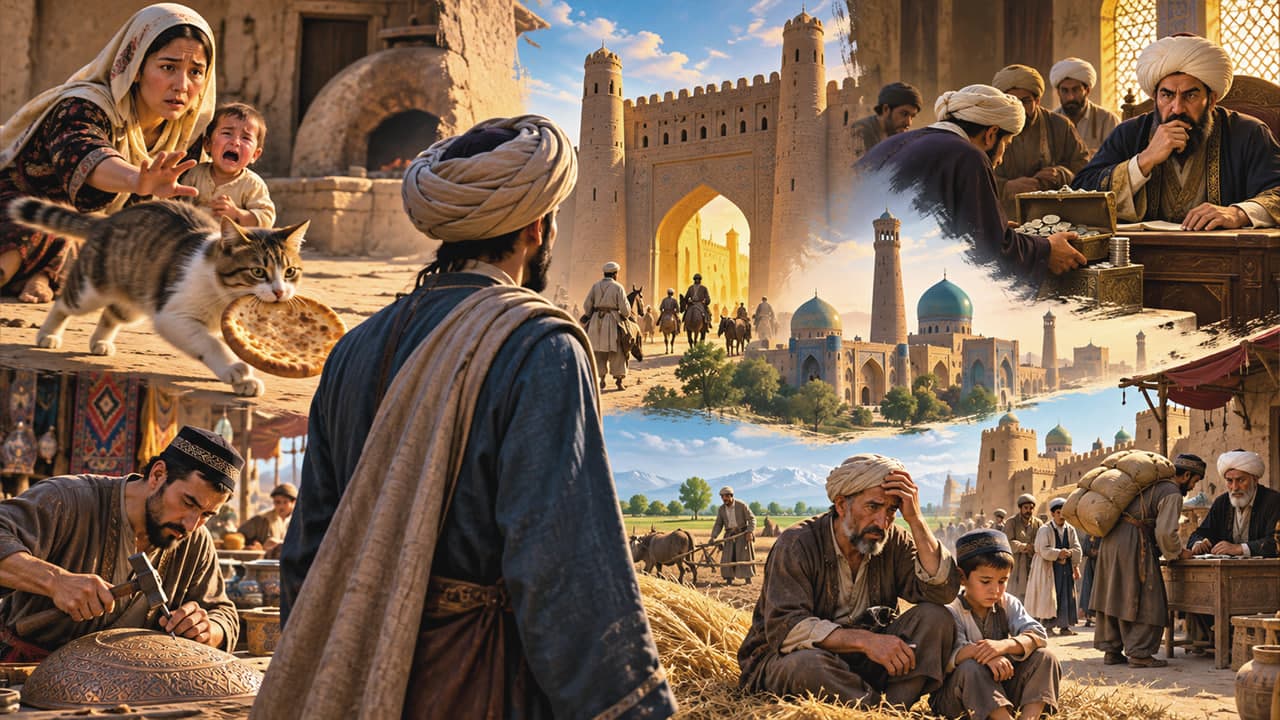
Before arriving in Bukhara, the hero had heard much praise of the city, but questions arise already at the gates: because night is falling, he is left outside the gates, and while Muslims are not let in, Armenians and Jews are allowed through — even an Armenian's dog passes through the gates. When asked about the reason for this situation, a young man answers with a single word: «Ignorance!» (jaholat).
Three estates and the court
The traveller divides the population of Bukhara into three groups: ulamo (the clergy), umaro (rulers and officials) and fuqaro (the common people); the plot reveals the place, responsibility and interrelations of these strata. According to Kun.uz, Bukhara, which once gave the world Ibn Sina and Farabi, devalued knowledge: some clerics who had studied for twenty years and taught for another twenty were not familiar with modern science. Rulers and officials were busy fighting for positions, appropriating the people's property and infringing on the rights of ordinary people, while the townsman, caught between these two strata, could barely defend his rights.
The episode with the judge and the bribe
The episode also retells a court case: the qazi first decides to punish the husband whom a woman had complained about, but she asks him not to execute him. The next day it turns out that during the night the qazi himself was given two thousand tanga, and his associates, the rais and other persons — one and a half thousand; only after that was the husband released. To raise this sum, that same poor family sold their land.
Crafts and agriculture
In Karshi, the traveller talks with a craftsman whose business was going well, but who never thought about what to do so that his craft would survive through the years. The interlocutor reminds him: once in Turkestan everything — from clothing to tableware — was produced locally, but cheap and beautiful goods from European factories captured the market and deprived local artisans of their craft. Agriculture in Karshi, according to the outlet's account, was also in decline: the lands were fertile, but the arbitrariness of tax collectors, old methods and the lack of modern knowledge prevented them from being used to their full potential.