The key facts
- LPs describe the situation as a 'yellow light': funds return for new money every 12–18 months instead of the usual 24–36
- Concentration of portfolios around OpenAI and Anthropic is considered the norm of the power law, but the speed at which it emerged is unusual
- Liquidity is growing: M&A deals above $10 billion, the Cerebras exit, the $60 billion Cursor deal
'Money chasing money' in an unusual situation
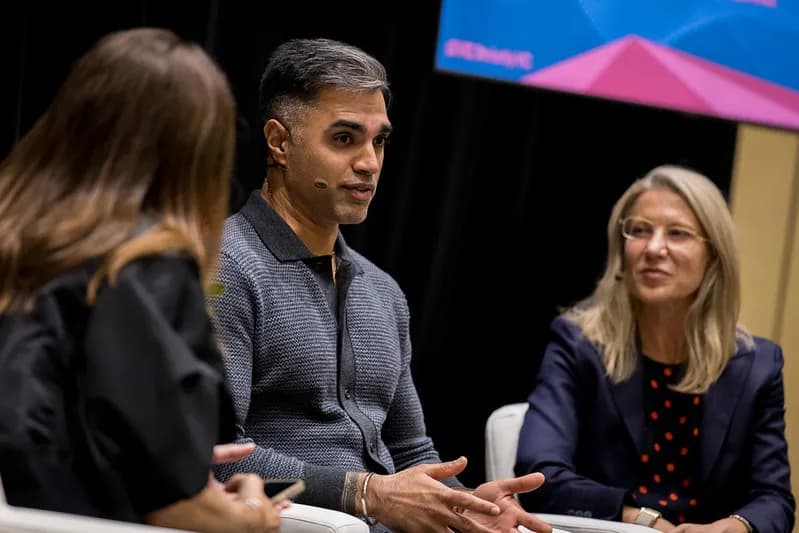
Limited partners — the investors who provide capital to venture funds — are going through an unusual period. This is discussed in a major TechCrunch interview with Beezer Clarkson of LGT Capital Partners and Amit Bhatti of TrueBridge. According to them, the classic rule of diversification has effectively stopped working: due to the rapid growth in the valuations of OpenAI and Anthropic, almost all funds have invested in the same two companies, often within a single fund, contrary to the tradition of avoiding conflicting investments. The LPs are not complaining — they expect a large payoff — but they describe the situation as a 'yellow light.'
Concentration and an accelerated pace
Bhatti considers concentration normal for venture capital as a 'power-law' business: TrueBridge's older funds have already consolidated around Databricks, SpaceX and Stripe, and he expects the same with Anthropic and OpenAI. What is unusual, he says, is the speed at which this happened. Clarkson notes that at early stages, diversity of opportunities remains. The pace is what causes concern: if raising a new fund every 24–36 months used to be the norm, then 12–18 months is now 'not crazy,' and some funds are returning after just a year. Many funds are also increasing their size mid-cycle — partly because rounds have grown and seed round sizes have nearly doubled. Bhatti explicitly calls this a 'yellow light' that gives 'heartburn,' but emphasizes the difference from the previous acceleration: back then, money went into crypto projects with no revenue, whereas now companies go from zero to $100 million in revenue, which was previously unheard of.
Liquidity is returning — not only through IPOs
According to Bhatti, liquidity has accelerated over the past two years: SpaceX became the main event, Cerebras completed a major exit this year, several IPOs took place, and there were M&A deals exceeding $10 billion, including a $60 billion deal involving Cursor. Secondaries, according to both interviewees, have turned from a 'dirty word' into a third channel of liquidity alongside IPOs and M&A: managers sell portions of positions, LPs sell fund stakes, and the taboo around this has weakened. Clarkson adds that secondary deals are concentrated in a handful of top companies but have become noticeably more widespread. Speaking about the 2021 vintage, Bhatti would not bet on it as the best in his portfolio over 15 years, but he expects breakthroughs from it — OpenAI and Cursor began in that era.
Emerging managers and check rules
Despite the fact that a handful of large funds takes most of the LP capital, new managers, according to Clarkson, are still raising money — their funds are just smaller: with an average first fund of $25–50 million, their combined total can reach $1 billion. Bhatti gives the example of very young GPs aged 22–23 who raised an accelerator affiliated with MIT, Harvard and Stanford, whose first cohorts included Cursor and Mercor. As for check sizes: Clarkson typically writes checks from $5 million and no more than 20% of a fund, while Bhatti writes $3–5 million but, in suitable cases, is ready to take half or the entire fund, advising GPs to diversify their LP base.