The key facts
- Alphabet, Amazon, Meta and Microsoft plan more than $740 billion in capital expenditures in 2026
- Alphabet, Amazon and Meta reported negative free cash flow; Microsoft is the only one with a positive one ($18.6 billion)
- Five companies led by Microsoft, Alphabet, Amazon, Meta and Oracle raised $326 billion in debt in 2026 — three times more than a year earlier
The market has stopped rewarding big spending
Against the backdrop of earnings season Alphabet, Amazon, Meta and Microsoft collectively announced plans to spend more than $740 billion on capital expenditures this year — Wall Street reads these figures as spending on AI infrastructure, including data centers and chips. As TechCrunch notes, in the early stages of the AI boom investors saw such spending as a sign of confidence in growth, but by the fourth quarter enthusiasm gave way to concern: negative free cash flow, a growing debt burden and doubts about the return on investment.
What the earnings reports showed
The most telling example is Alphabet: in the third quarter the company posted negative free cash flow of $9.1 billion (its second unprofitable quarter in a row) with capital expenditures of $51.4 billion for the quarter. For the year, Alphabet expects spending of up to $205 billion and forecasts further growth in 2027. The problem is that the success of AI Mode — the AI assistant built into Search — is undermining the main source of revenue: growth of the advertising business in Search, which accounts for about half of revenue, slowed to 12%, the weakest pace in five quarters.
Amazon, Meta and the exception of Microsoft
Amazon is in a similar situation: over the past 12 months negative free cash flow amounted to $42.4 billion, versus positive $14.8 billion a year earlier, and the capital expenditure plan for the year is $220 billion. AWS revenue grew 39%, but the stock fell 7% after the report. Meta reported negative free cash flow of $2.1 billion in the third quarter with a plan of up to $145 billion in capital expenditures for the year; the company notes that its free AI agent Muse is
Microsoft was the only exception in terms of free cash flow — it posted $18.6 billion in the positive, with capital expenditures of $45.2 billion, less than the planned $50 billion. The company denies deliberately cu
Microsoft was the only exception in terms of free cash flow — it posted $18.6 billion in the positive, with capital expenditures of $45.2 billion, less than the planned $50 billion. The company denies deliberately cutting AI spending, citing capacity delays at third-party providers. On this news, according to CNBC, shares of small companies that rent out AI computing capacity fell.
Debt instead of profit and the consequences for Anthropic
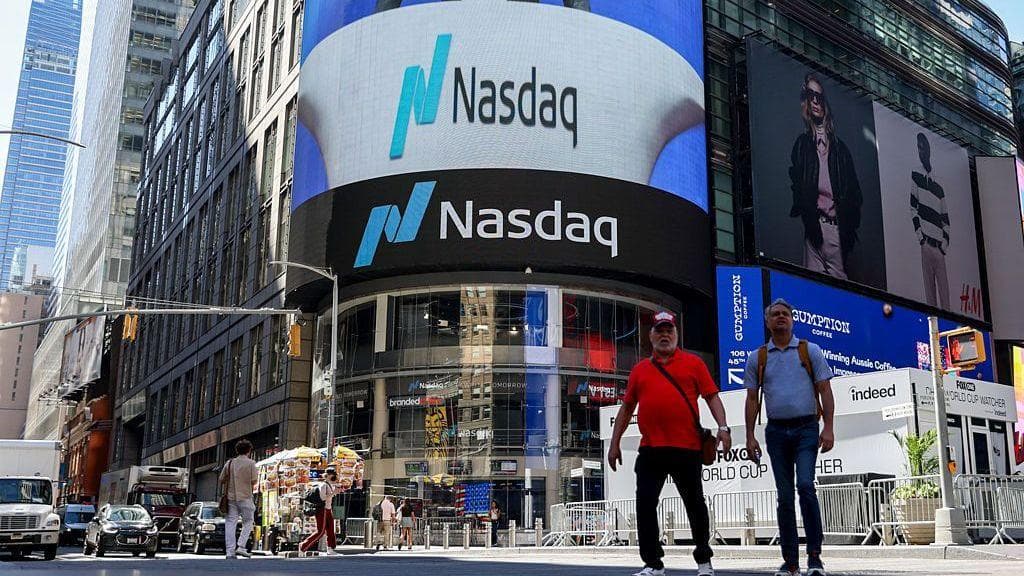
The boom is being financed not only by profits: according to S&P Global Market Intelligence, Microsoft, Alphabet, Amazon, Meta and Oracle raised a combined $326 billion in debt in 2026 — three times more than a year earlier. Demand for AI computing remains high — the cloud businesses of Google, Amazon and Microsoft are growing — but investors are alarmed by the price of that demand. On Friday the Nasdaq fell 2.9%, Nvidia 4%, Broadcom more than 5%, Qualcomm 11%; Alphabet, which lost 12% the day before (its worst day in history, about $500 billion in market capitalization), continued to decline.
The uncertainty extends to startups as well: Anthropic filed for an IPO this week, and its growth depends on access to vast computing power. According to the Financial Times, Blackst
The uncertainty extends to startups as well: Anthropic filed for an IPO this week, and its growth depends on access to vast computing power. According to the Financial Times, Blackstone warned investors that after the IPO the company may not receive an investment-grade credit rating — and would then have to rely even more heavily on hyperscalers and third parties to finance its infrastructure.