The key facts
- On October 31, 320,000 people protested across France, including 70,000 in Paris — fewer than in the previous two Saturdays (410,000 and 550,000)
- More than 290 people were detained; police conducted over 1,200 checks at Paris train stations
- The authorities feared a repeat of the October 17 riots and the use of Halloween masks to conceal identity
Third Saturday of protests: fewer people, but tense endings to the marches
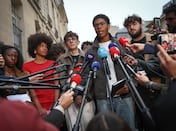
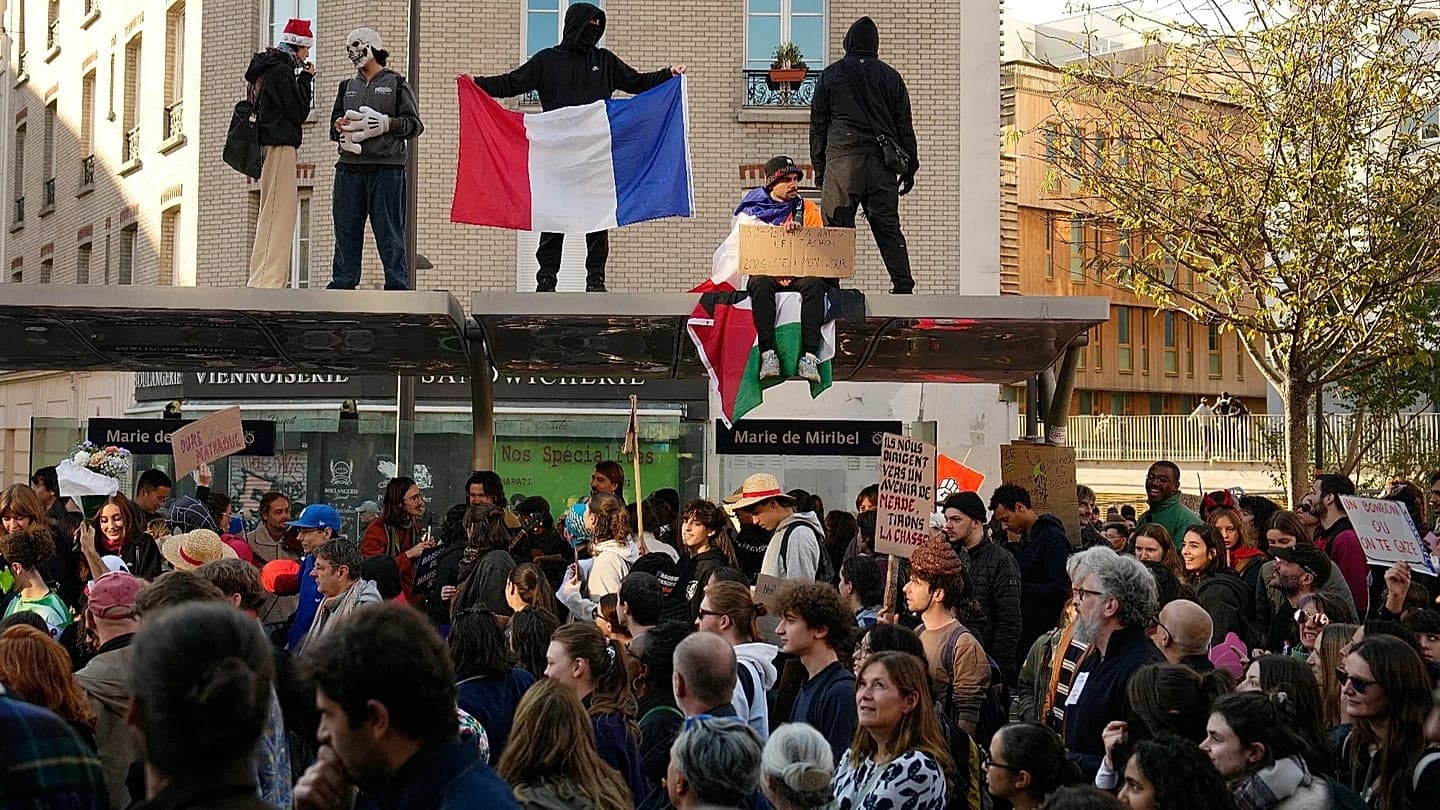
October 31, which coincided with Halloween, marked the third consecutive Saturday of mass protests in France. Demonstrations against the rising cost of living, high fuel prices, inflation, and the policies of Emmanuel Macron's government brought together students, trade unions, and a relatively small group of participants from the 'yellow vests' movement. According to the French Interior Ministry, cited by The National and Deutsche Welle, the protests drew 320,000 people across the country, including 70,000 in Paris — noticeably fewer than a week earlier (410,000) and on October 17 (550,000).
What happened on the streets
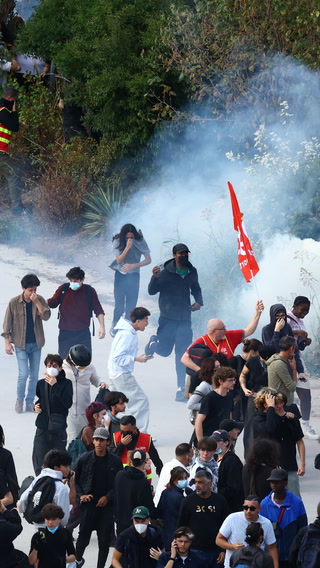
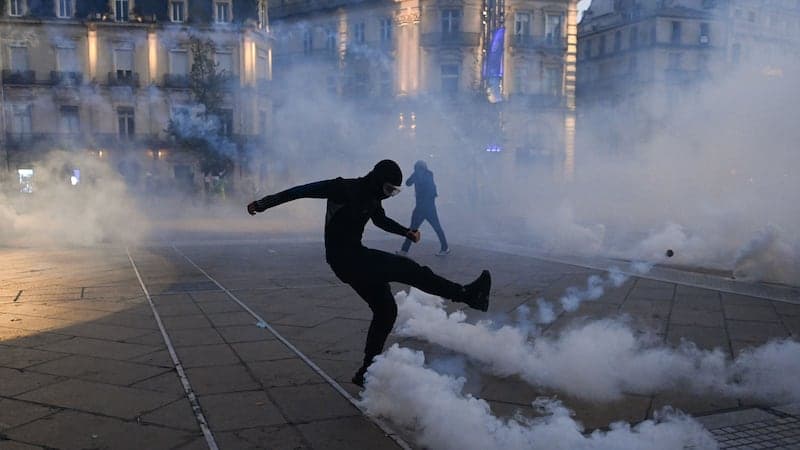
For most of the day the marches remained peaceful, but tension rose toward evening. In Paris, police dispersed small groups of troublemakers and used tear gas; similar actions followed in Lyon and Toulouse, while in Marseille tensions arose during unauthorized gatherings. BFMTV showed footage of firecrackers and incendiary devices being thrown at police in Marseille and Rennes, with cars burning in the streets. The Interior Ministry said that 'radical elements' attempted to break away from the marches in Bordeaux, Toulouse, Lyon, and Marseille to engage in vandalism and looting, but were stopped by law enforcement. According to police, more than 290 people were detained across France.
How the authorities prepared for Halloween
The authorities feared a repeat of the October 17 riots, when pogroms and looting caught law enforcement off guard and damaged shops and public buildings. Around 70,000 police officers and gendarmes were mobilized in advance, and march routes in Paris and other cities were moved away from city centers. The Paris prefecture conducted more than 1,200 checks at train stations and surrounding areas in the morning to prevent firecrackers, knives, and other prohibited items from being brought in; the situation was monitored from the air, including camera-equipped drones. Interior Minister Laurent Nuñez described the risk as 'very high' and warned that Halloween masks could be used to conceal identity: according to him, existing laws allow bans on wearing masks when public order is threatened. A number of cities imposed curfews and restrictions, including for minors.
The route in Paris and the political backdrop
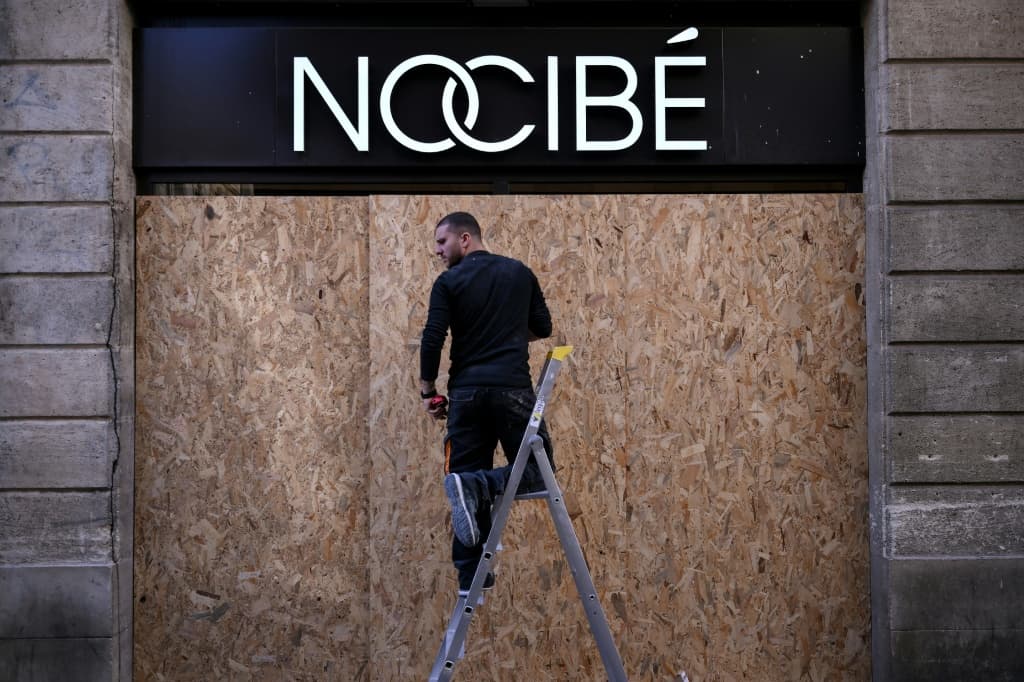
France's highest administrative court rejected the unions' lawsuit and upheld the ban on marching between the Nation and Bastille squares; the authorities approved a route along the boulevards on the eastern outskirts of the capital, away from the central shopping districts. The protests began in late September with student demonstrations against the state of schools, overcrowded classrooms, and, in the participants' view, an unfair university admissions system; from mid-October, trade unions and the 'yellow vests' joined them. The government's promises to reform education and lower fuel costs did not dispel the discontent. Amid the unrest, the chamber of commerce estimates retailers' losses at more than €1 billion, while other estimates are twice as high when uninsured damage and lost revenue are taken into account; along Paris's main shopping boulevards, shop windows are covered with protective panels. Additional pressure on the government came from the Fitch agency's decision on Friday to unexpectedly revise its outlook on French debt to 'negative': with public debt approaching 120% of GDP and rising borrowing costs, the ability to increase spending is limited. The National also notes that the unrest has strengthened the position of far-right leader Marine Le Pen, who leads the polls ahead of the presidential election in April. The protests spread beyond France as well: on Saturday, youth protests took place in several German cities and in Italy.