The key facts
- About 150,000 people have registered for protests in roughly 30 German cities, including Berlin, Frankfurt and Cologne
- The 'GenZ regelt!' movement calls itself non-partisan and declares its rejection of violence; police are nevertheless deploying thousands of officers
- The triggers are the cost of living, cuts to education and healthcare spending, and fears of the return of compulsory conscription
The scale of the action and the participants' demands
On Saturday, coinciding with Halloween, youth demonstrations organized by the movement 'GenZ regelt!' ('Generation Z will sort it out!'), which describes itself as a non-partisan alliance, will take place in Germany. According to AFP, around 150,000 people have registered to take part in actions in roughly 30 cities, including Berlin, Frankfurt and Cologne, about 150,000 people have registered, according to AFP. The organizers list a wide range of grievances: rising cost of living, poor condition of schools, cuts in government spending — from education and culture to healthcare — and a general feeling that politicians make decisions without regard for the young generation. The movement's statement says: 'We are young people who no longer want to sit idly by and watch decisions about our future being made without us being heard.' Separately, participants are protesting against plans to strengthen the military through a new voluntary service model and fear the return of compulsory conscription.
Fears of violence and the authorities' response
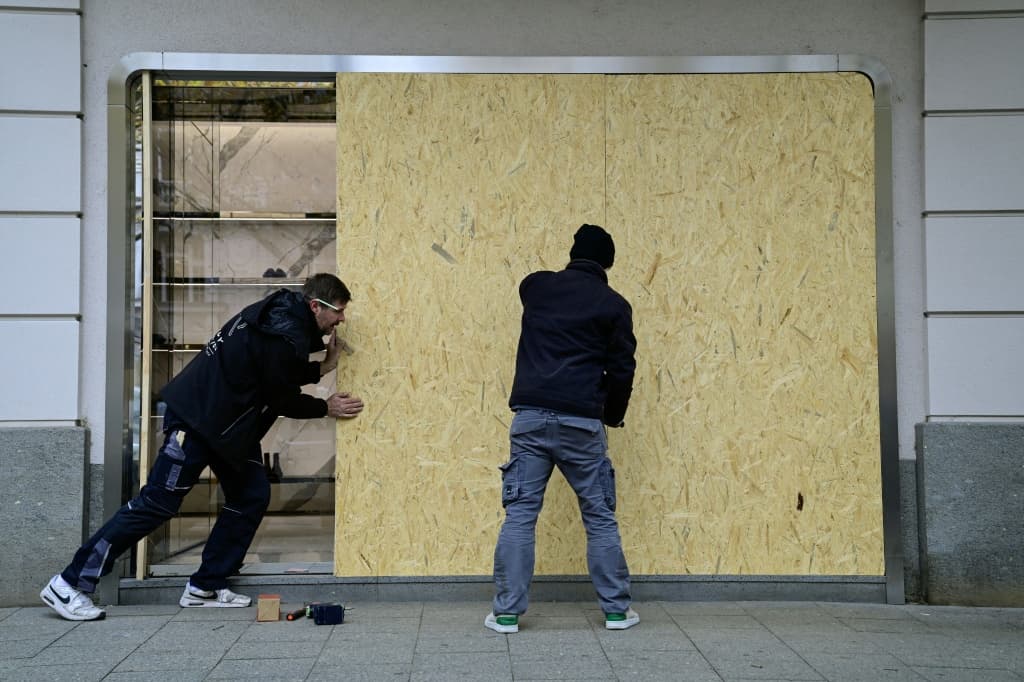
The movement emphasizes that it rejects any violence and states that 'extremist groups, anti-constitutional symbols, racism and hate speech have no place with us — no matter which side they come from.' Nevertheless, police are deploying thousands of officers, and some jewelry and clothing stores are boarding up their windows in case of riots. The authorities cite the experience of neighboring countries: in France, nationwide demonstrations on October 17 escalated into some of the most serious riots in recent years. Berlin is maintaining contact with officials in France and Italy over fears that radicals from abroad may join the actions. CDU lawmaker Marc Henrichmann warned in an interview with Handelsblatt that 'the international interplay of the far-left extremist scene is coordinated,' but the German Interior Ministry insists on the distinction between 'peaceful student protests' and the 'violent extremist scene' that may attempt to hijack the demonstrations. According to the authorities, there is so far no evidence of concrete plans for violence.
The context of the pan-European wave and assessments
The actions in Germany become part of a wave of youth protests that has swept across France, Italy and Spain in recent weeks, where demonstrations were in places accompanied by serious violence. Christian Volk, a researcher of protest movements at Humboldt University of Berlin, commented to AFP that 'enormous pressure is building up' and that young people demand that their political experience and expectations for the future be heard. At the same time, according to him, the situation in Germany differs from the French one, where there is 'a completely different tradition of confrontational forms of protest.' It remains unclear whether the organizers will manage to keep the actions peaceful: the authorities have no data on impending riots, but are taking measures with the experience of other countries in mind.