The key facts
- Transport Minister Óscar Puente refused to resign, saying he has «nothing to hide»
- Preliminary report: the Renfe train crashed into the stationary Iryo train at a speed of 160–200 km/h
- This is the second major disaster on the Madrid–Seville route in a year: in January, 46 people died in Adamus
Minister refuses to resign
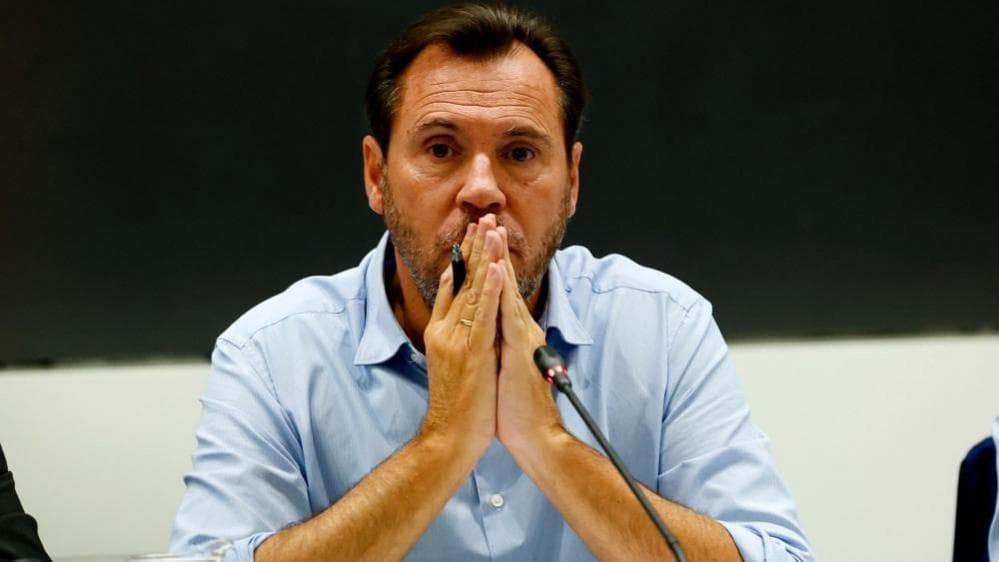
Spain's Transport Minister Óscar Puente said at a press conference in Madrid that he will not resign following the collision of high-speed trains that killed at least 69 people. «My duty right now is not to talk about whether I should stay in office, but to solve the problem,» he said, adding that he has «nothing to hide». As BBC News reports, the minister faced opposition from political opponents, the CSIF trade union and demonstrators outside the ministry building on Wednesday evening. Puente stressed: «The easy path for me would be to resign, but that does not match my character and is not what the prime minister asked for».
What is known about the disaster
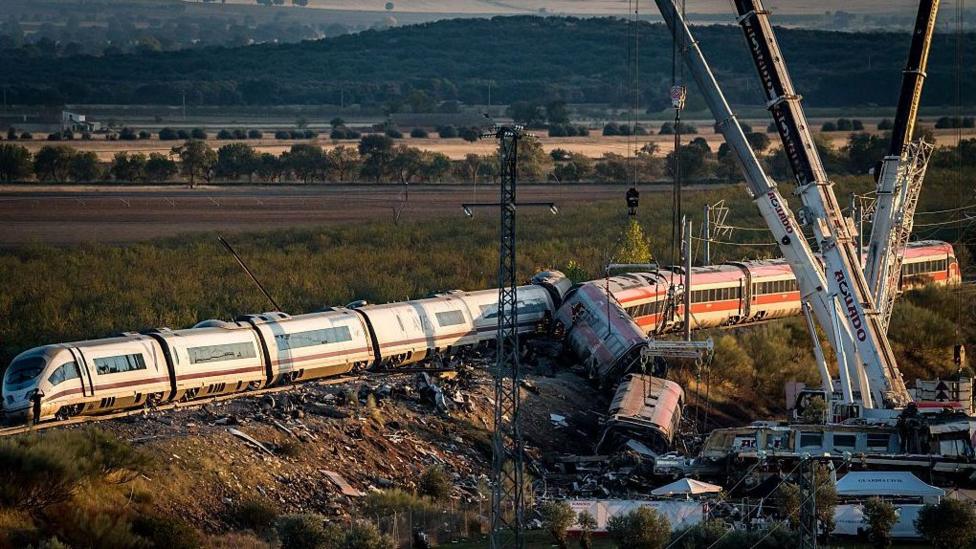
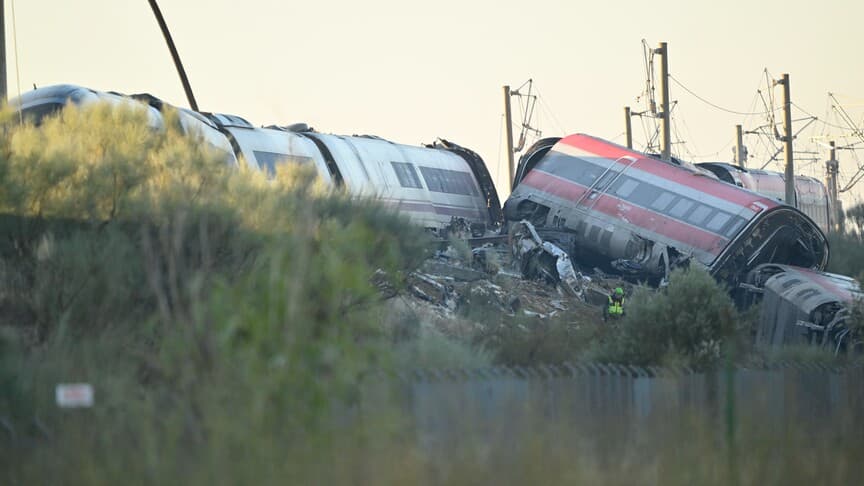
The collision occurred on Wednesday morning near the town of Urda in the province of Toledo: a state-owned Renfe high-speed train crashed into the rear of a stationary train belonging to the private company Iryo. According to a preliminary report by transport investigators released late on Thursday, the Renfe was travelling at a speed of 160 to 200 km/h when its lead carriage struck the back of the stationary train. Prime Minister Pedro Sánchez said on Friday that trust in Spain's high-speed rail network has been undermined and that it is «unacceptable» that two similar tragedies occurred within a year: in January, on the same Madrid–Seville route, a collision in Adamus claimed the lives of 46 people. Wednesday became the worst rail disaster in Spain since 2013 and one of the deadliest in recent European history. Three days of national mourning have been declared in the country.
Audio leak and political dispute
Spanish media saw leaks of audio recordings of the drivers' conversations with the control centre in Madrid made minutes before the accident. According to their content, the three recordings showthat one high-speed train was given permission to proceed even though another train was standing on the track about 25 km ahead. Puente earlier described the decision to let the trains proceed without speed restrictions as «inexplicable», and on Wednesday reported that a computer failure at around 08:30 halted six trains, including both of the ones that collided. The leak of the recordings sparked disputes: Alberto Ibáñez, a deputy from the left-wing Sumar platform, called it «despicable» on X, while Podemos' candidate for prime minister Irene Montero said that responsibility cannot be placed on a single worker, noting that drivers and experts had been warning for years about the liberalisation of the railway sector. Puente replied that he «will not use any worker as a shield» and promised to look into the questions that have arisen «one by one»: «If the investigation shows human error, we will take appropriate measures».
 Image source, EPA
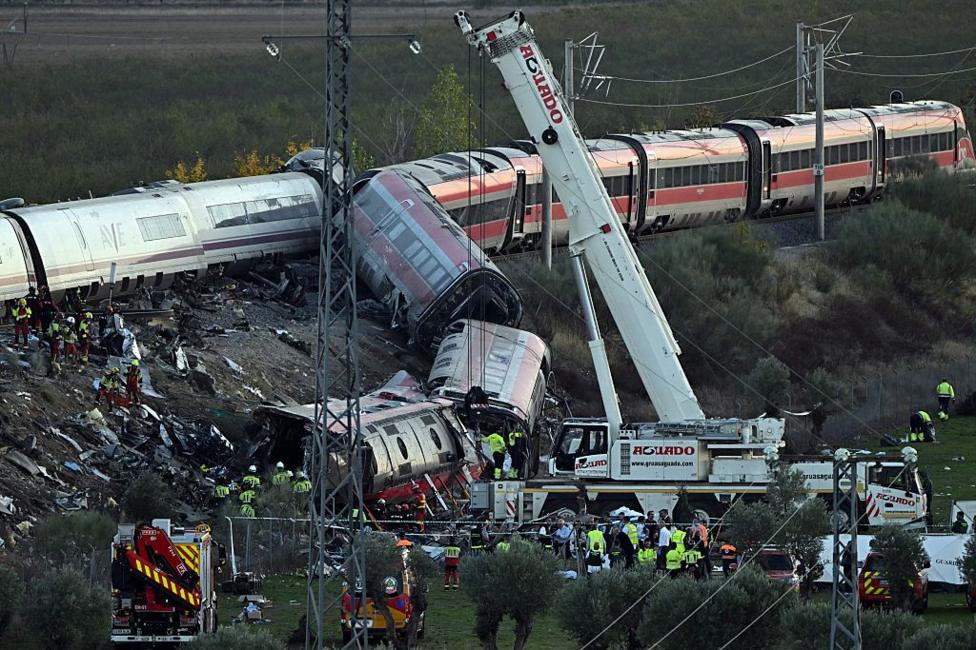 Image source, AFP via Getty Images