The key facts
- The death toll has risen to 69; 50 people remain in hospital according to Castilla-La Mancha authorities
- An LZB system failure at 8:30 halted six trains; at 8:36 the Renfe AVE train was cleared to proceed without a speed restriction
- National mourning has been declared in Spain from October 29 to 31; Renfe drivers held a previously scheduled strike
The deadliest rail disaster in 13 years
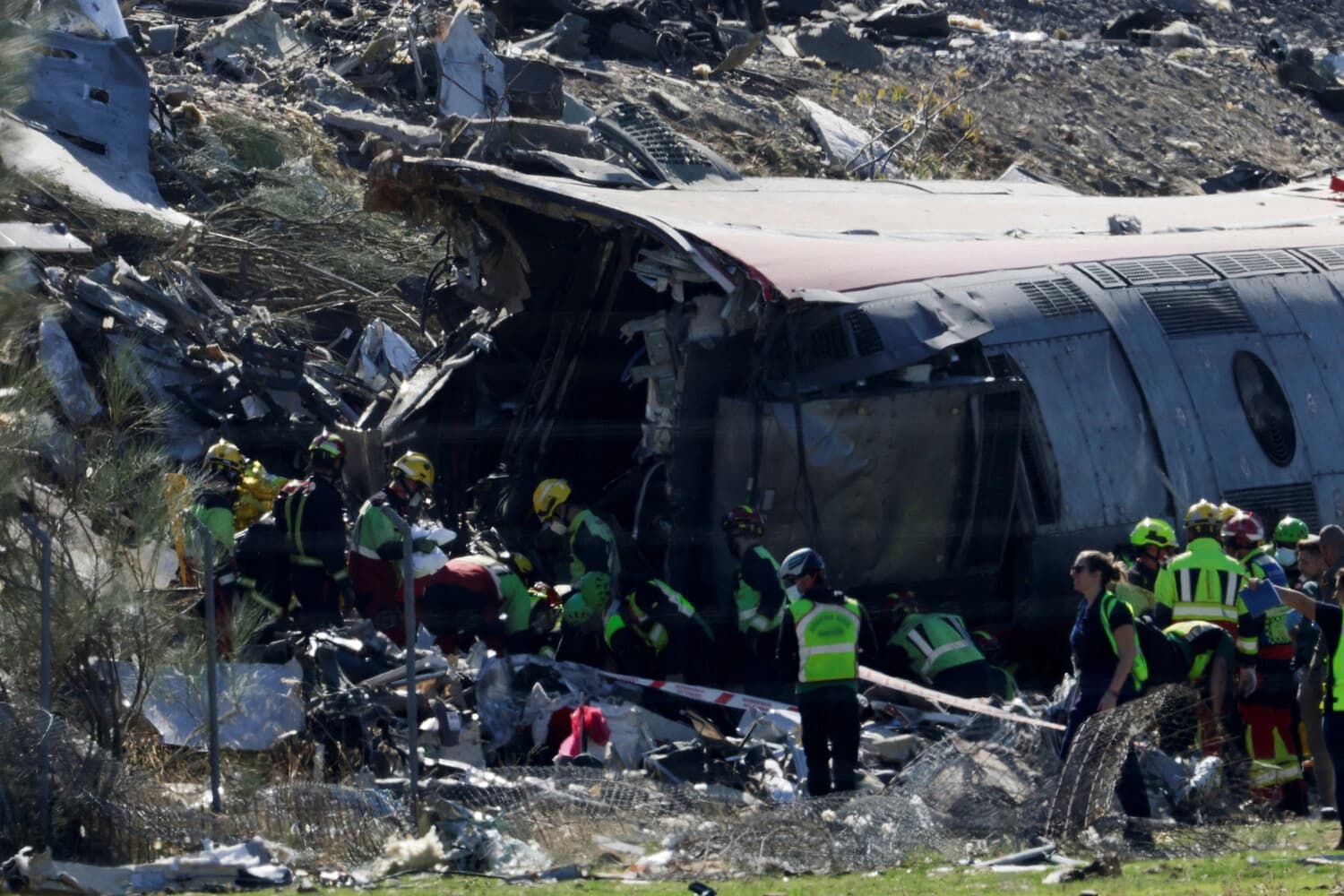
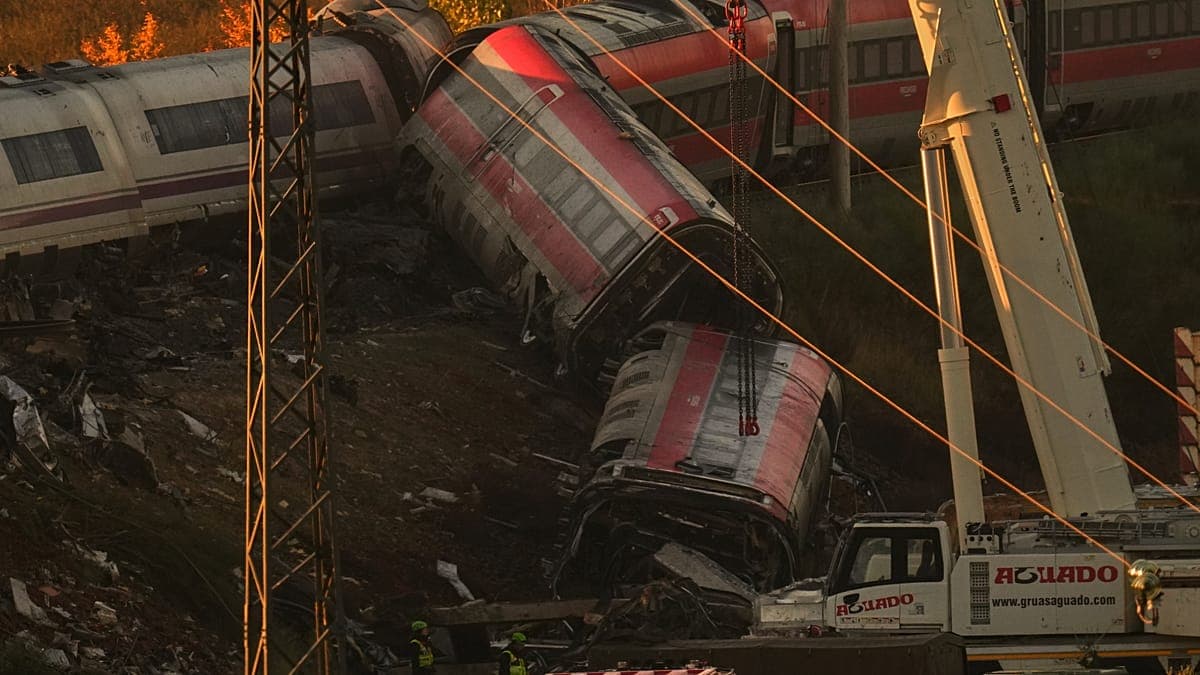
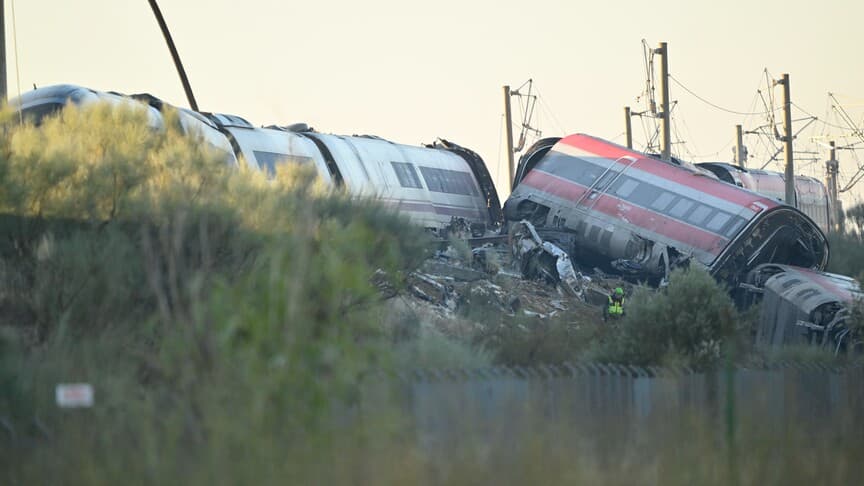
On the morning of October 28, in the province of Toledo, roughly 130 km south of Madrid, an AVE train operated by the state-owned Renfe, travelling from Madrid to Seville, crashed at full speed into the rear of a stationary train belonging to the private operator Iryo. The impact derailed several carriages, one of which caught fire. The Renfe train carried 397 passengers, the Iryo train 147. By Thursday the death toll had risen to 69, making this the deadliest rail accident in Spain in 13 years and one of the worst in Europe since the 2013 derailment near Santiago de Compostela. This is reported by The National, Anadolu and Gazeta.uz citing Spanish authorities.
What is known about the causes
According to Spain's Transport Minister Óscar Puente, at 8:30 the automated LZB train speed control system failed, causing six trains, including both of the trains involved, to halt on the section. Control of the section passed to the Adif dispatch centre in Madrid, and at 8:36 the Renfe AVE train was cleared to proceed without a speed restriction — up to 200 km/h — even though the Iryo train was standing on the tracks 25 km ahead. Audio recordings published by Spanish media show that the Iryo driver reported being unable to restart the train and reconnect to the LZB, and the dispatcher, according to BBC News's assessment, had been informed of the stationary train before the Renfe AVE approached. Puente called the dispatch centre's decision 'inexplicable' but stressed that the conclusions must be drawn by the investigation; the dispatcher, according to media reports, has been questioned by police. Gazeta.uz presents this account citing BBC News.
A systemic safety question
The disaster has intensified a long-running debate about the safety of Spain's railways. According to the railway accident investigation commission, cited by Cadena SER, after a 2024 incident in Cuenca it had warned that the only barrier preventing a collision was the dispatcher's visual check that the section was clear — a safeguard entirely dependent on human judgement — and it recommended technical means. El País also cited European Commission data: in 2022 Spain spent about €95,860 per kilometre on railway maintenance — roughly half the EU average — even though passenger traffic on high-speed lines reached 44.5 million last year, doubling since 2019. Engineer Jordi Vinyolas Prat told the outlet that the system itself 'worked perfectly' by stopping the trains, and that the key question lies in the protocols that allowed such an error to occur.
Reaction and consequences
The government declared three days of national mourning from October 29 to 31; a minute of silence was observed across the country, including at Madrid's Atocha station. Toledo's morgue, designed for 30 bodies, was insufficient: the city received 52 of the dead, and the army set up a temporary facility, reports AFP. Among the victims was former labour minister Fátima Báñez, as confirmed by the CEOE business association. According to Spain's Foreign Ministry, 42 foreign nationals from seven countries were involved in the accident; one was killed and at least seven injured. Prime Minister Pedro Sánchez, whose campaign ahead of the snap election on November 29 has been suspended, promised to 'establish every detail of this tragedy' and to strengthen safety; King Felipe VI, after visiting the injured, called for measures to ensure this never happens again. Opposition People's Party leader Alberto Núñez Feijóo demanded a 'full and independent audit' of the network and accused Puente of trying to shift the blame onto a single dispatcher. Renfe drivers held a previously scheduled strike on Thursday in defence of railway safety; Semaf union leader Diego Martín said attention was 'wrongly focused on finding those to blame' while workers operate with 'degraded systems'. The President of Uzbekistan sent condolences to the King of Spain.