The key facts
- Agca: the population of Tashkent and New Tashkent could grow to 5–6 million over 100 years
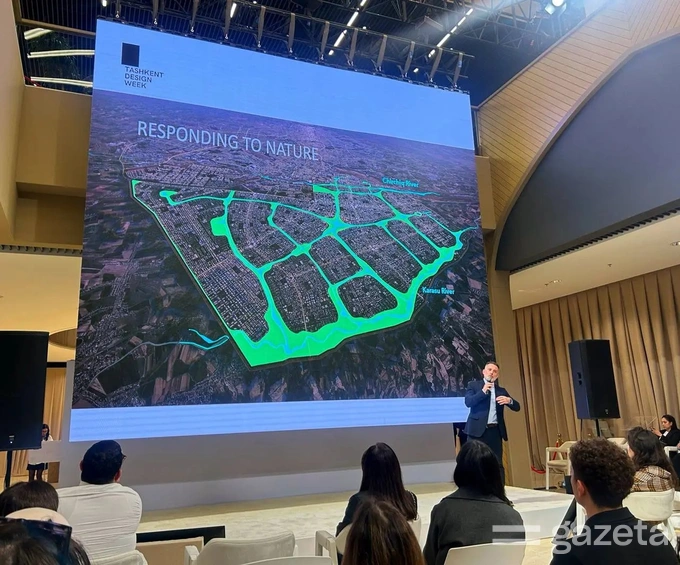
- About 28% of the territory will be allocated to open spaces; canals will be created using the level difference between the Karasu and the Chirchik
- Cross Works has opened an office in Tashkent so that buildings are designed by Uzbeks
Speech at Tashkent Design Week
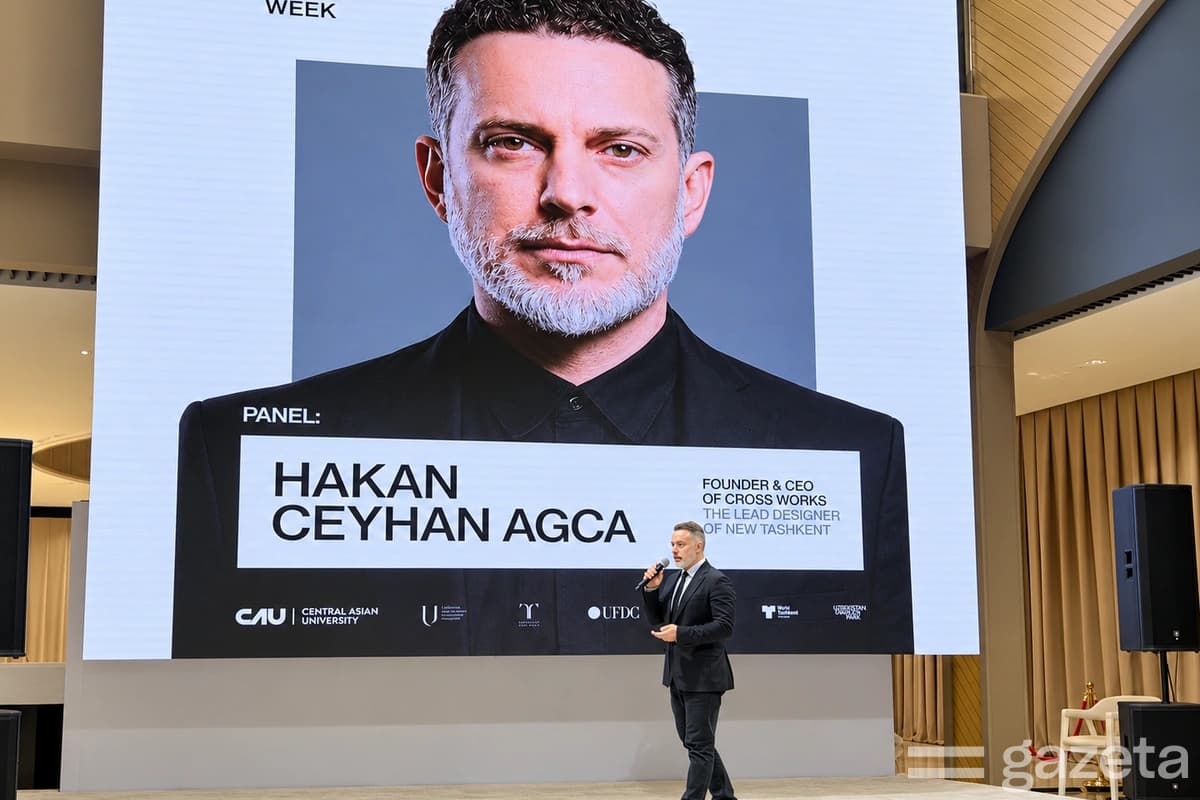
Hakan Ceyhan Agca, founder and managing director of the British firm Cross Works and lead designer of New Tashkent, spoke at Tashkent Design Week on October 27, where he discussed the development of the master plan for the city under construction. According to him, New Tashkent should not be a set of residential blocks and administrative buildings, but a full-fledged city with a life of its own: 'we design cities not for robots, but for people.' Gazeta reports this.
Why expand the capital
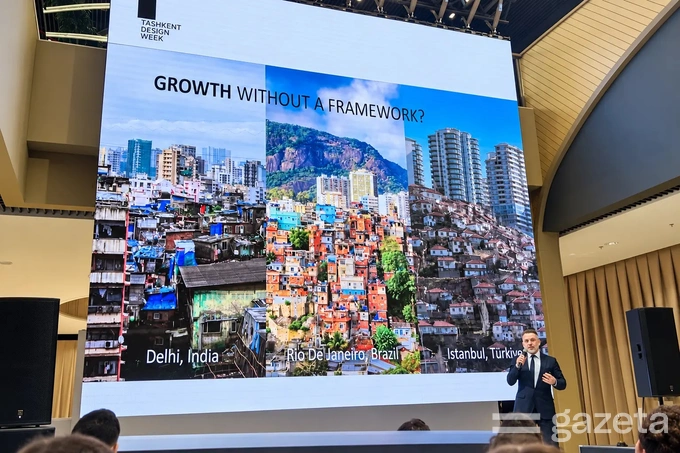
Agca linked the project to demographic growth: in his estimate, over the next 100 years the population of Tashkent and New Tashkent could grow to 5–6 million people. If land is not allocated in time and development plans are not drawn up, informal settlements emerge — he cited the slums of Delhi, the favelas of Rio de Janeiro and Istanbul's gecekondu, whose problems authorities have been solving for years. New Tashkent should connect the capital with the territory beyond the Chirchik river and, in the long run, become part of an expanding agglomeration; the first district is already under construction. The architect called the project one of the fastest-implementing in the world and stressed that at such a pace, maintaining quality is now the main priority of the New Tashkent directorate.
Canals, greenery and climate
The concept is based on the difference in water levels between the Karasu and the Chirchik: the Karasu level is higher, so water flows downhill, making it possible to create a sequence of canals and, in Agca's words, turn the city into 'the Amsterdam or Copenhagen of Central Asia.' The project provides for the integration of roads, metro and tram lines, wide avenues and streets of various types, including pedestrian ones. About 28% of the territory is planned to be allocated to open spaces — the developers expect this to make New Tashkent one of the greenest cities in the world. Climate was a separate factor: unlike projects in Saudi Arabia, where only heat is taken into account, in Tashkent the design must account for both summer heat and winter cold.
Local architects and the digital twin
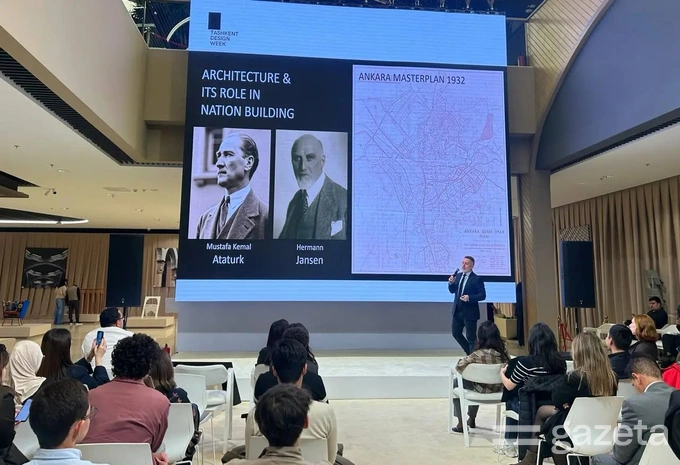
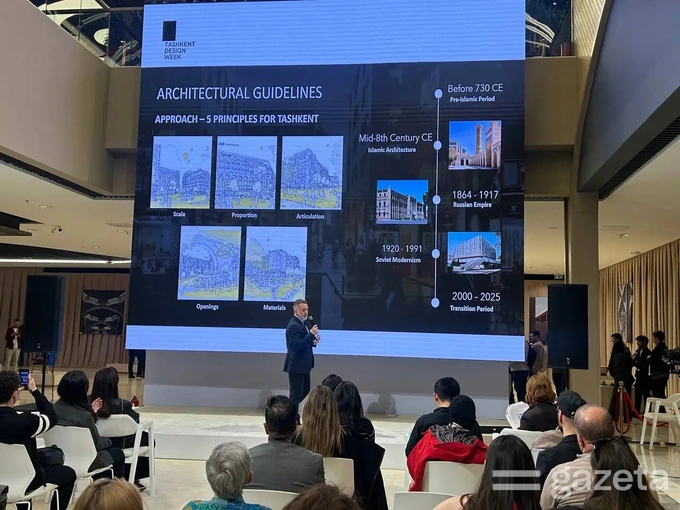
Agca drew a parallel with Ankara, whose general plan was developed in 1923 by the German architect Hermann Jansen after the capital was relocated: according to him, President Mirziyoyev's engagement of international specialists 'is fundamentally no different,' but those architects later left. Cross Works intends to pass on its experience: the company has offices in London and Riyadh, and recently opened an office in Tashkent to recruit staff so that 'buildings are designed by Uzbeks.' To regulate the appearance of development, guidelines based on five principles have been drawn up — scale, proportions, architectural expressiveness, openness and materials; they set a benchmark rather than a uniform look. The team has also created a digital twin — a virtual model of the territory, updated as construction progresses, which allows the project to be checked against the implementation of the master plan.
Culture as the foundation of identity
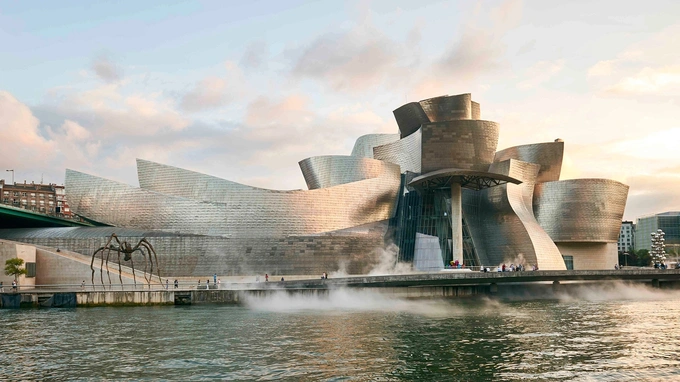
A separate part of the speech was devoted to cultural facilities. Agca cited the Guggenheim Museum in Bilbao, which, in his words, became a key factor in transforming an industrial city with unemployment and social problems, and noted that 'it is culture that ultimately shapes the soul of a city.' Among New Tashkent's facilities he highlighted the Alisher Navoi International Scientific Research Centre designed by Zaha Hadid Architects and the National Museum of Uzbekistan under construction, designed by Tadao Ando. In his view, laying out cultural facilities at the design stage means avoiding a situation where a city is first built up with housing and then needs a large-scale renewal for the sake of identity.