The key facts
- In January 2026 India and the EU signed a security and defence partnership; the first official dialogue took place in March, and the fifth dialogue on maritime security was held in Brussels in September.
- Experts cite India's dependence on Russian weapons and the differing approaches of EU countries toward China as the main obstacles.
- The partnership creates a framework for cooperation but is not a joint security commitment.
A partnership framework has been created, but without shared commitments
The European Union is seeking to play a more prominent role in Indo-Pacific security as the United States reallocates part of its naval forces away from the region due to conflicts in the Middle East. India, for its part, is looking for new partners as its economy and global ambitions grow. This is discussed in a report by Deutsche Welle.
What has already happened in 2026
In January, India and the EU signed a security and defence partnership; in March they held the first official dialogue on the topic, and in September the fifth dialogue on maritime security took place in Brussels. However, as DW notes, cooperation in the Indo-Pacific region itself remains difficult: India and the European countries have different defence priorities.
France is the exception, the EU is divided
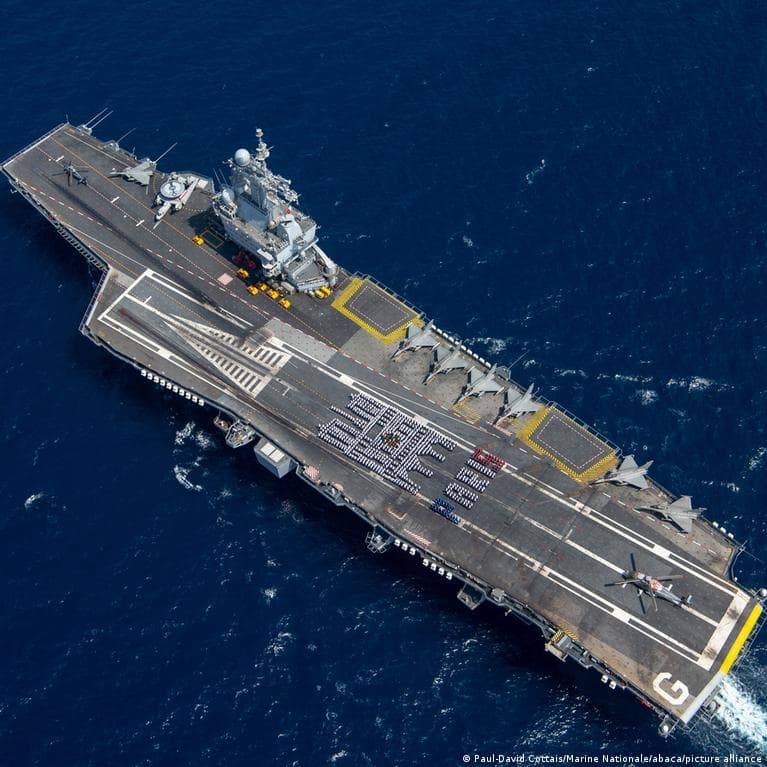
Mohan Kumar, a former Indian ambassador to France, believes that Europe can be a reliable defence partner for India primarily in the maritime sphere, but the conflict in Ukraine, which is of existential importance to Europe, limits its capabilities. France stands out thanks to its military presence in the Indian Ocean — on Réunion and Mayotte; the diplomat Javed Ashraf called it a 'strong, reliable and consistent partner', noting that France has no defence cooperation with either Pakistan or China. At the same time, Tara Kartha, a former member of India's National Security Council Secretariat, stated that 'Europe as a whole plays a very small role in Indo-Pacific security', despite the 2025 strategy, pointing to political disagreements within the EU — these also surfaced at the EU summit on 15–16 October in Brussels, where support for Ukraine was reaffirmed but differences over funding and national priorities were acknowledged.
Russia and China as the main obstacles
India remains heavily dependent on Russian weapons and technology, while European governments have been in a tense standoff with Russia since the 2022 invasion. Gulshan Sachdeva, a professor at Jawaharlal Nehru University, explains: purchasing large defence orders — Rafale fighter jets from France or submarines from Germany — is one thing, but integrating India's defence industry into the European value chain is difficult as long as Russia remains Europe's main security concern. With China it is different: for India it is a rival and a source of serious security problems, including a border dispute, while EU countries, although they regard China as a 'systemic rival', balance differently between security and economic ties with it.
What is actually possible
Most of India's growing defence cooperation with Europe is taking place bilaterally — with Germany, Spain, Italy and Poland. Ashraf believes Brussels could support its members' partnerships with India and open access to EU-funded programmes in maritime security, space, critical minerals, microchips and defence technologies; he also notes that India is becoming an important supplier of defence products for a rearming Europe. Kumar adds that India could gain access to drone technologies given the Europeans' experience in Ukraine. The bottom line, according to DW: the partnership creates a framework for closer ties but is not a joint security commitment, and for now what is more realistic are maritime domain awareness exchanges, defence technologies and selective industrial cooperation rather than a shared EU–India role in Indo-Pacific security.