The key facts
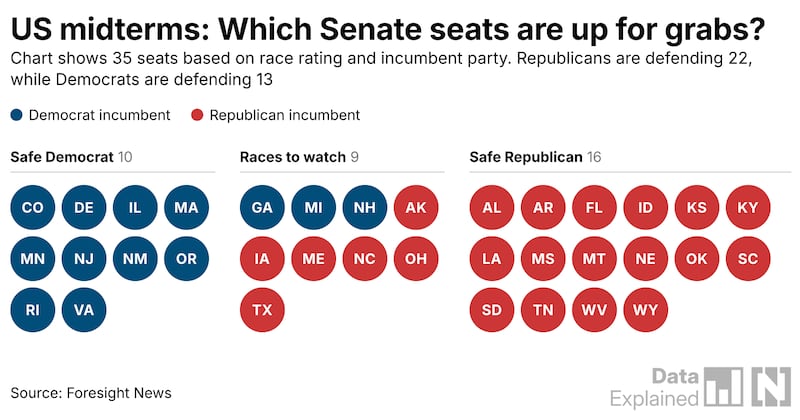
- Midterm elections take place on November 3: all 435 House seats and 35 of 100 Senate seats are up for grabs
- Democrats need a net gain of 4 seats in each chamber to control Congress
- The campaign revolves around the cost of living and the war with Iran; Trump's approval rating is in the mid-30s percent
What is being decided on November 3
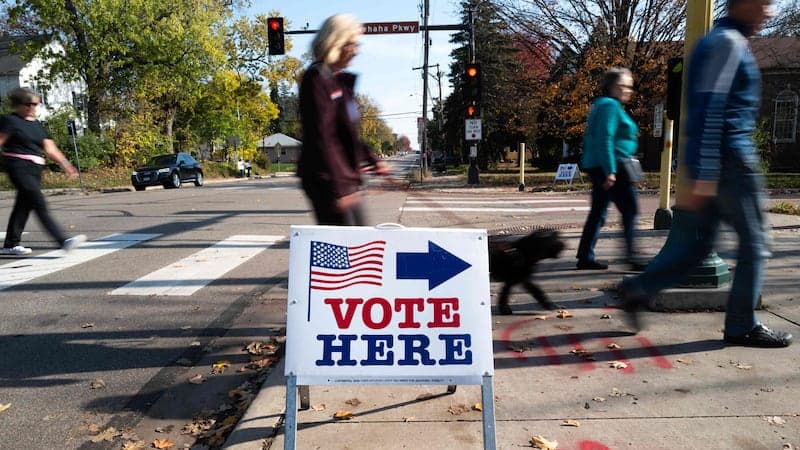
On November 3, American voters will elect the entire House of Representatives, a third of the Senate, as well as governors and a number of state-level offices. More than 100 million people are expected to vote, and billions of dollars have been poured into political advertising, especially in the 'swing' states of Texas, Ohio and Michigan. The National explains the logic of the elections: midterm elections take place in the middle of a president's term and effectively serve as a 'report card' on the president's performance, even though the president himself is not on the ballot.
The math of controlling Congress
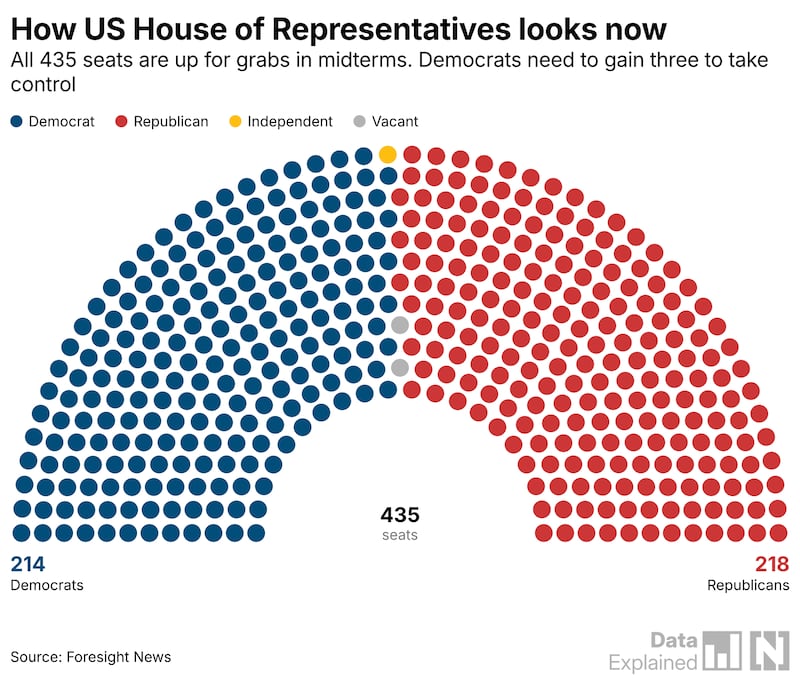
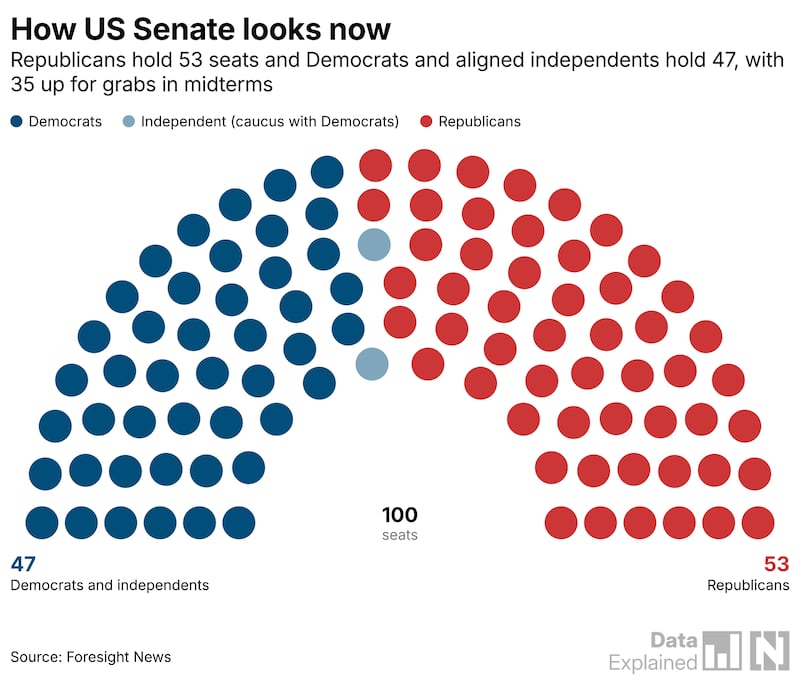
Currently in the House of Representatives (435 voting seats, two vacant, with one independent voting with the conservatives) Republicans hold a 218–214 majority; Democrats need a net gain of four seats to take control. In the Senate, Republicans hold 53–47, 35 seats are up for re-election, and Democrats likewise need four additional seats. The outlet names ten races as decisive for the Senate, including Maine, Ohio, North Carolina, Iowa and Georgia.
Key campaigns and contentious storylines
In Michigan, progressive Democrat Abdul El-Sayed, who if elected would become the first Muslim senator in US history, is facing Republican Mike Rogers; according to The National, Rogers and Trump ran a campaign linking the candidate to the 'Muslim Brotherhood' and other radical groups. In Alabama — actually, in Alaska — Mary Peltola is challenging Senator Dan Sullivan, who is running for a third term in a state hit hard by rising diesel prices; the election there was complicated by the fact that another person with the same name made it onto the ballot, and the Department of Justice filed a lawsuit seeking to block certification of the results in the event of the senator's defeat. Among the most closely watched House races are Republican Mike Lawler's re-election bid in a New York district that Kamala Harris won in 2024, and open seats in Pennsylvania and New Jersey.
Iran, prices and progressives
Democrats tie Republican support for the war with Iran to rising fuel prices and, in their words, Trump's lack of a clear plan to end the conflict. This line is resonating: according to an AP-Norc poll, about eight in ten registered voters want the next Congress to make lowering the cost of living a priority, above all fuel prices, and many are also demanding an end to the war in Iran. At the same time, the elections will be a test for progressive Democrats, most of whom favor ending military aid to Israel after the war in Gaza: in Minnesota, Michigan and Florida, progressives beat Israel-supporting Democrats in the primaries. The outlet notes that Trump's approval rating has held in the mid-30s percent amid discontent over rising prices and the war, and the number of seats Republicans manage to hold will show the depth of that discontent.