The key facts
- At the summit in Montreal, the EU and Canada are discussing 'association without accession' — the closest partnership with a non-European country in the bloc's history
- The term 'associated membership' has been excluded from the declaration at the request of Germany and other countries
- The term 'associate membership' has been excluded from the declaration at the request of Germany and other countries
- On the agenda: critical minerals, digital trade, AI, climate, energy and Canada's participation in the Erasmus programme
- On the agenda: critical minerals, digital trade, AI, climate, energy, and Canada's participation in the Erasmus program
A summit being watched more closely than usual
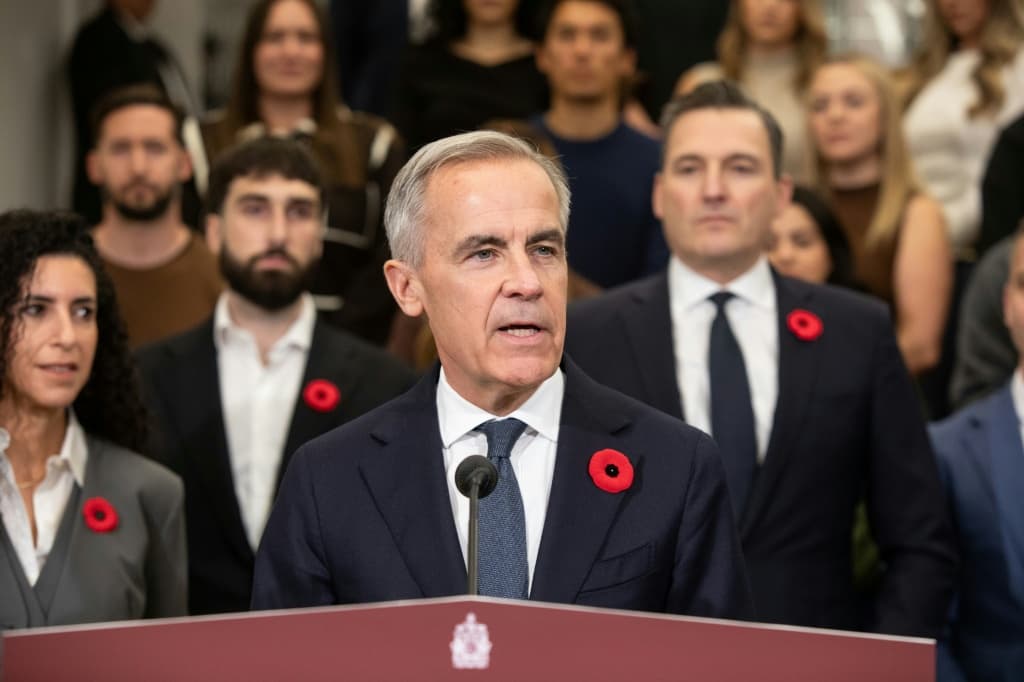
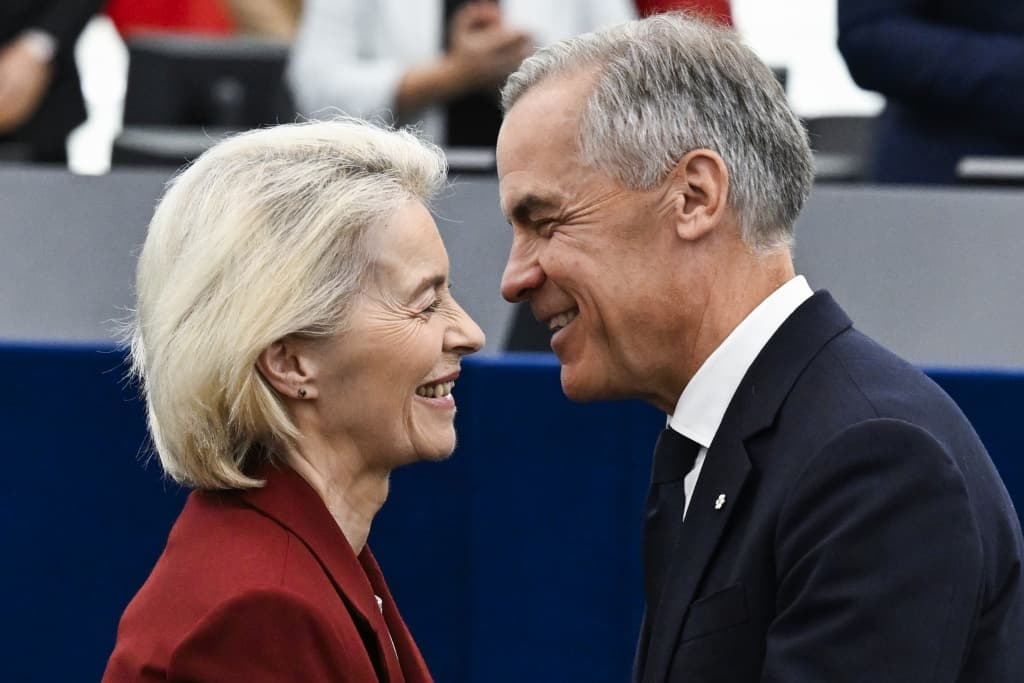
The two-day summit of Canada and the European Union opened on Thursday in Montreal. As BBC News notes, such meetings have for decades taken place without much fanfare, but this one is drawing heightened attention: the two sides are to determine exactly how they will deepen their relationship. Back in September, European Commission President Ursula von der Leyen offered Canada the status of an 'associated member' — formally, no such status exists in the EU treaties. Upon arriving in Montreal, she stated that the two sides 'will begin discussing how to make Canada the first associated member of the EU', adding: 'Our ambition is to build the closest relationship we have ever had with a non-European country.' Canadian Prime Minister Mark Carney called the forthcoming union 'a new ambitious alliance' and stressed that he is not concerned about 'specific names or nomenclature': 'What matters is what difference it will make to the lives of Canadians.'
A dispute over words: why Germany opposes the term
Despite von der Leyen's rhetoric, the very term 'associated membership' has been excluded from the summit's final declaration — Germany and a number of other countries secured this, Deutsche Welle reports. According to the BBC, a softer wording about an 'ever closer association' was used in the text instead. Germany's Ambassador to Canada Matthias Lüttenberg explained that some member states were 'a little surprised' by the European Commission president's September statement: in the EU, the term 'associated membership' is already used for relations with Ukraine and potentially Moldova, which have been seeking full membership in the bloc for many years. At the same time, as the ambassador stressed, neither Canada nor the EU is seeking full membership for the Canadian side — the goal is to bring Ottawa 'as close as possible' to the bloc without accession. Von der Leyen herself put it this way at the summit: 'Our idea is simple: this is association without accession.'
What exactly is being discussed
According to an unnamed EU official cited by AFP, the partnership involves aligning policy in the areas of climate, energy and artificial intelligence, Ottawa's participation in a number of EU programmes, and the creation of a common governance framework. A digital trade agreement is also expected, one that would speed up and reduce the cost of online transactions. A separate sensitive item is critical minerals: Canada holds large reserves of raw materials for green technologies such as batteries and wind turbines, which Europe currently buys mostly from China, but the Canadian mining industry needs major infrastructure investment. The summit may end with an agreement on support for Canadian projects by the European Investment Bank. Canada's participation in the Erasmus youth programme is also under discussion. According to the BBC, Canadian officials said the country does not plan to pay a membership fee similar to those paid by EU countries, and instead expects to take part in individual programmes. Over the two days, agreements on defence, critical minerals, research and trade are also expected; European officials, however, had modestly assessed in advance the chances of one major single announcement, noting that much would be agreed in the coming months.
Background: the trade war with the US and Trump's reaction
Both sides, according to AFP, are alarmed by Donald Trump's second term: his tariffs have hit key sectors of the Canadian economy, and repeated threats to annex Canada have caused outrage. Carney, in his own words, believes the Trump administration sometimes signs deals 'in pencil,' and calls reducing dependence on the United States an urgent priority. Frédéric Mérand, a political scientist at the University of Montreal, told DW that the summit provides a 'political impetus' for weakening dependence on the US, but warned that this will not happen quickly, and that every rapprochement with Europe exposes Canada's vulnerability to an American response. According to the BBC, Trump called the idea of Canada's associate membership in the EU 'ridiculous' and threatened Europe with 'very serious tariffs' if he considers it a 'hostile act.' Canadian officials, however, stressed that the pivot to Europe is not aimed against anyone, but builds on work already underway: Canada recently gained access for its defense companies to the EU's security and defense program, and in May it signed an energy deal with Germany on the first long-term supplies of Canadian LNG to Europe.