The key facts
- A Renfe AVE train with 397 passengers crashed into a stationary Iryo train carrying 147 passengers near Urda in the province of Toledo; at least 68 people were killed, with AFP later reporting 69.
- Transport Minister Óscar Puente called the control centre's decision to resume traffic after the automation failure 'inexplicable'; the CSIF union is demanding his resignation.
- Transport Minister Óscar Puente called the control centre's decision to resume traffic after an automation failure 'inexplicable'; the CSIF union is demanding his resignation.
- Three days of national mourning have been declared; this is the second major high-speed rail disaster in Spain in a year — in January, 46 people died near Córdoba.
- Three days of national mourning have been declared; this is the second major high-speed rail disaster in Spain within a year — in January, 46 people died near Córdoba.
The deadliest rail disaster in Toledo
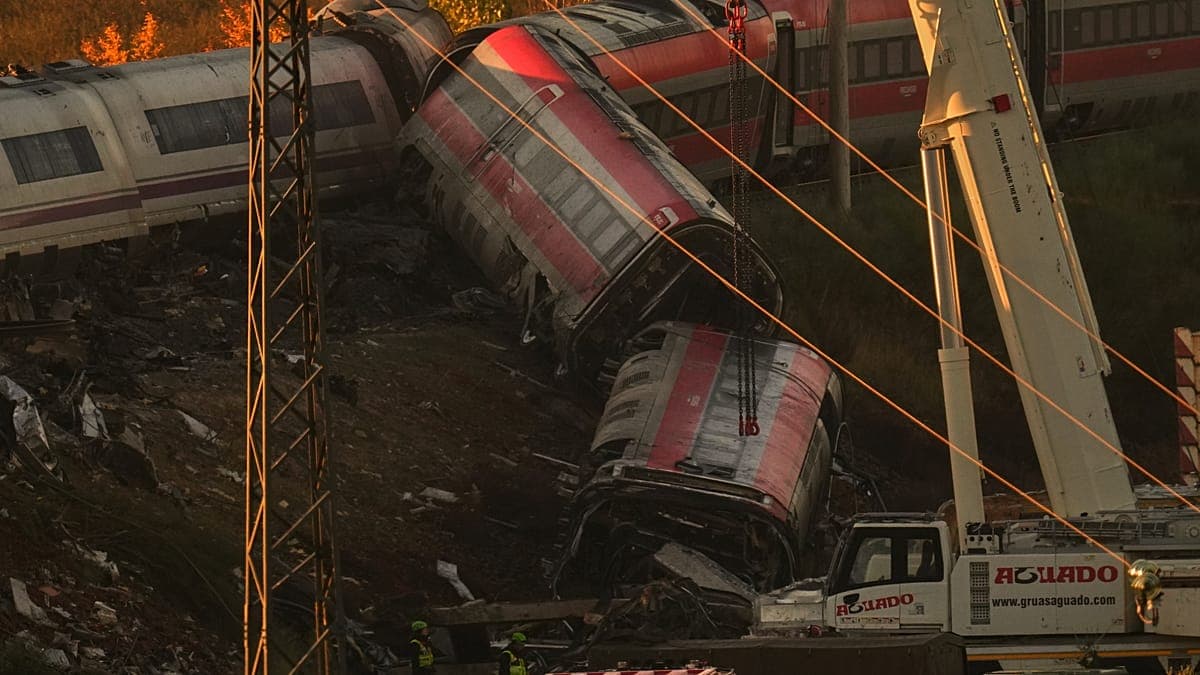
On the morning of October 28, 2026, on the Madrid–Andalusia high-speed line, between the municipalities of Mora and Orgaz near the town of Urda, an AVE train operated by the state-owned company Renfe rammed into the rear of a stationary train belonging to the private operator Iryo. The impact derailed several carriages and threw them off the embankment. According to Spain's civil protection service, at least 68 people were killed; by Thursday evening the AFP news agency was already reporting 69 dead, noting that the toll was still being updated. The stationary Iryo train was carrying 147 passengers, while the Renfe train behind it had 397.
How the accident unfolded
According to Spain's Transport Minister Óscar Puente, on a 69-kilometre section the automatic train control system failed, bringing all trains to a halt. When the system fails, control is taken over by the 24-hour centre in Madrid — and, in the minister's assessment, it made an 'inexplicable' decision to resume traffic without any speed restrictions. The Renfe train travelled about 25 kilometres before crashing into the stationary Iryo; Puente added that the centre 'had more than enough time to check the error, but they did not correct it.' Audio recordings of dispatchers' conversations with drivers, according to the BBC, show that one high-speed train was given clearance to proceed even though another train was standing ahead of it.
Survivors' accounts
Witnesses describe the impact as sudden and devastating. Passenger Rafael Barceló, who was in one of the worst-hit carriages, told the Reuters news agency that 'everyone was thrown into the air' and counted at least eight dead in his carriage. Another passenger, Salvador Arriza, noted that even in carriages far from the impact 'everything was completely destroyed,' and that a piece of rail that pierced the carriage roof may have helped absorb the train's momentum. Josimar Medina, a Peruvian holidaying in Spain, told AFP that he fell asleep on the Renfe train and 'woke up already in the air'; his compatriot Pablo Mejía said a random seat change saved his life.
Reaction of the authorities and society
Prime Minister Pedro Sánchez declared three days of national mourning and said that 'all of Spain is in mourning', promising a strict response if failures in safety systems are confirmed. He called it unacceptable that the country had suffered two serious rail disasters in a single year: in January 2026, in Andalusia, on the same line but much further south, 46 people died in a derailment and collision. Most parties suspended their election campaigns ahead of the general election on November 29; Santiago Abascal, leader of the far-right Vox party, said his party would not take part in attempts to 'use the mourning to silence criticism' of the rail infrastructure. The CSIF trade union called on Minister Puente to resign, accusing him of trying to shift the blame onto a railway worker; the minister himself said he did not intend to resign until the causes of the disaster are established. On Wednesday night, about 1,500 people gathered outside the transport ministry in Madrid demanding the resignations of Sánchez and Puente; police used tear gas after protesters threw bottles and flares. On Thursday, train drivers held a strike 'in defence of railway safety' that had been scheduled before the accident.
Rescue operations and investigation
Rescuers worked through the night under floodlights, cutting through the metal carriages in search of victims; cranes, helicopters, search dogs and thermal-imaging drones were used. The Civil Guard opened bureaus in Madrid, Toledo, Córdoba and Seville where relatives can provide DNA samples to help identify the dead; in Urda, a reception point for families was set up at a school, with psychologists from the Red Cross providing support. King Felipe VI and Queen Letizia planned to visit the injured at a hospital in Toledo on Thursday, according to the royal household. The causes of the disaster are being investigated by the Railway Accident Investigation Commission and the courts; high-speed rail services between Madrid and Andalusia have been suspended. Final conclusions about who exactly made the erroneous decision to resume traffic, and why, have not yet been reached.
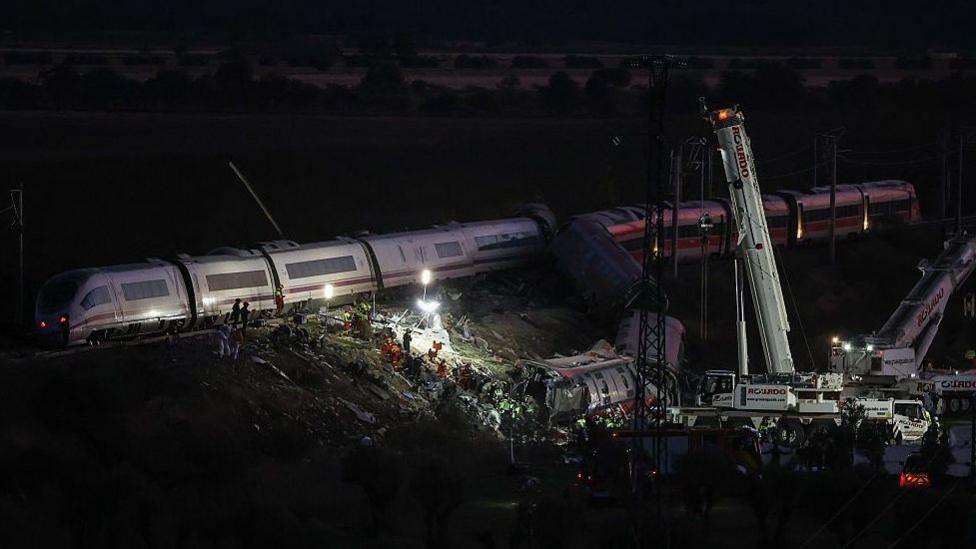 Image source, Europa Press via Getty Images
Emergency teams worked through the night to find victims and clear debris
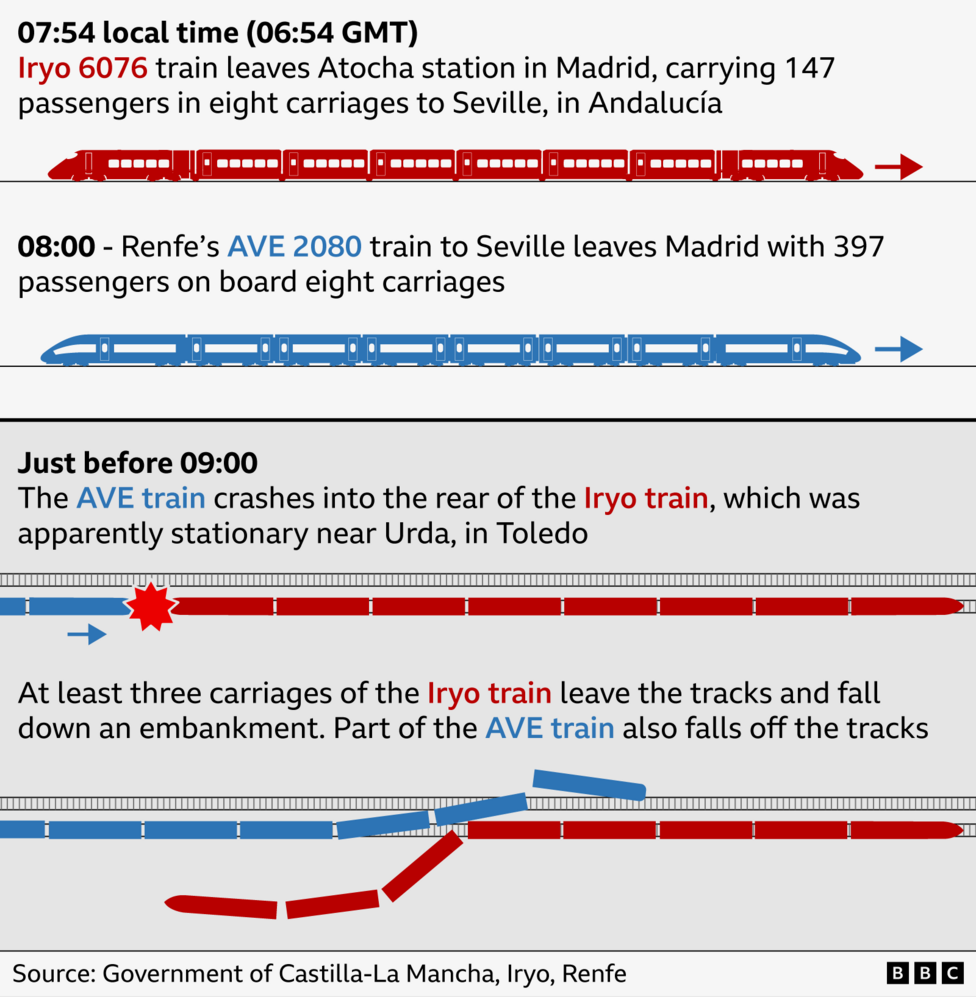
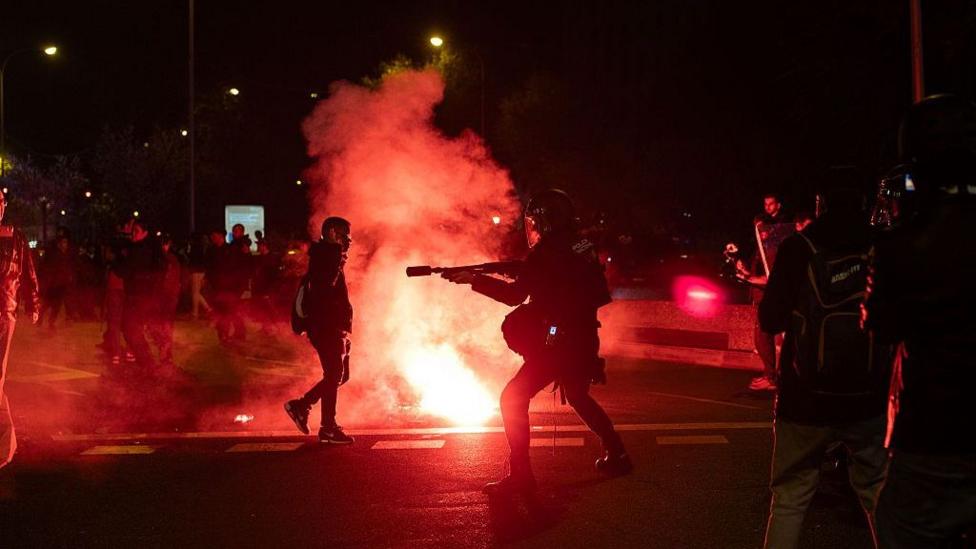 Image source, Europa Press via Getty Images
Protesters gathered outside the transport ministry offices in Madrid on Wednesday night