The key facts
- The Nanotyrannus skeleton named Jodi sold for $47.3 million against an estimate of $6–9 million
- It is the second most expensive fossil in history after the Tyrannosaurus 'Stan' ($50.1 million in July)
- Paleontologists criticize the sale: the skeleton may become inaccessible to the public
Record-breaking sale at Sotheby's
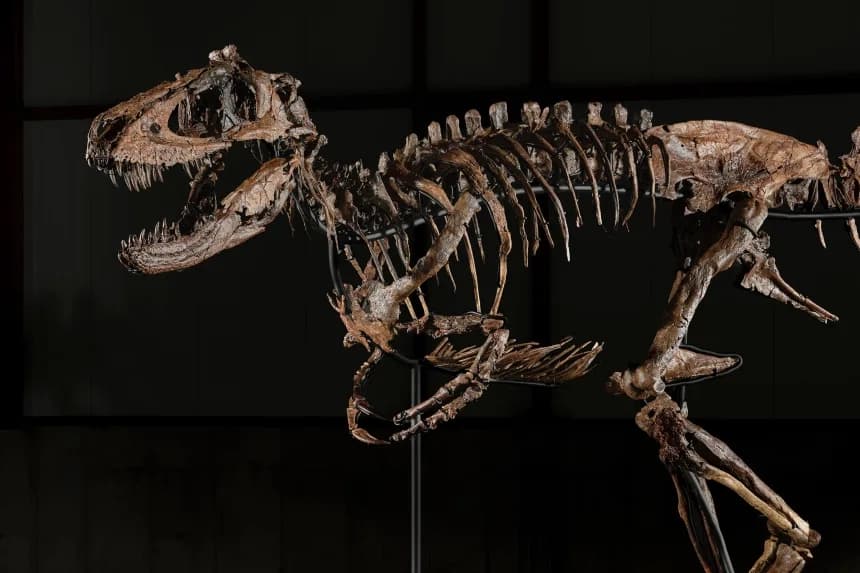
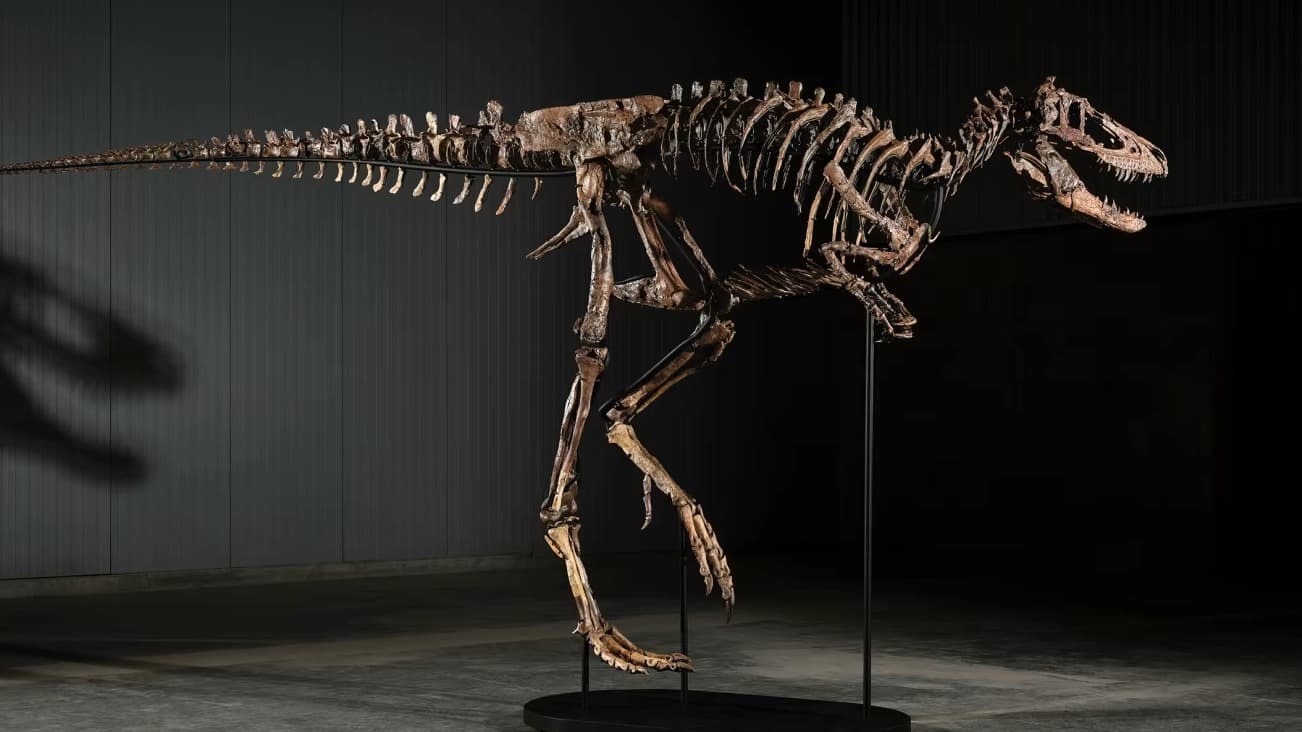
At a Sotheby's auction in New York, a Nanotyrannus skeleton named Jodi sold for $47.3 million, making it the second most expensive fossil in history, Kun.uz reports. The lot was originally estimated at $6–9 million; the exceptionally high final price is explained by the condition of the specimen — it is one of only three relatively complete Nanotyrannus skeletons known to science.
What is known about the find
The skeleton belonged to an animal about 2 meters tall and about 6 meters long. The fossil was found in 2019 by a Montana farmer named Jodi Pearson, after whom the specimen was named. For a long time, the Nanotyrannus was mistakenly believed not to be a separate species but a juvenile Tyrannosaurus: its remains were first discovered back in the 1940s, and only recently did researchers conclude that it is in fact a distinct species.
The Tyrannosaurus record and the scientists' reaction
Jodi's price is only three million dollars below the record for a dinosaur skeleton: in July of this year, a Tyrannosaurus nicknamed Stan, one of the largest known, was sold in a private sale for $50.1 million. As CNN notes, the sale of such fossils has drawn criticism from the scientific community. Steve Brusatte, professor of paleontology and evolution at the University of Edinburgh, said it is 'frightening to think' that one of the best skeletons of a species only just discovered could end up in a collector's storage instead of a museum, where it could inspire children, families and the general public. The buyer's name has not been disclosed; the skeleton passed to them with all rights, meaning they can sell casts of it to museums and collectors.