The key facts
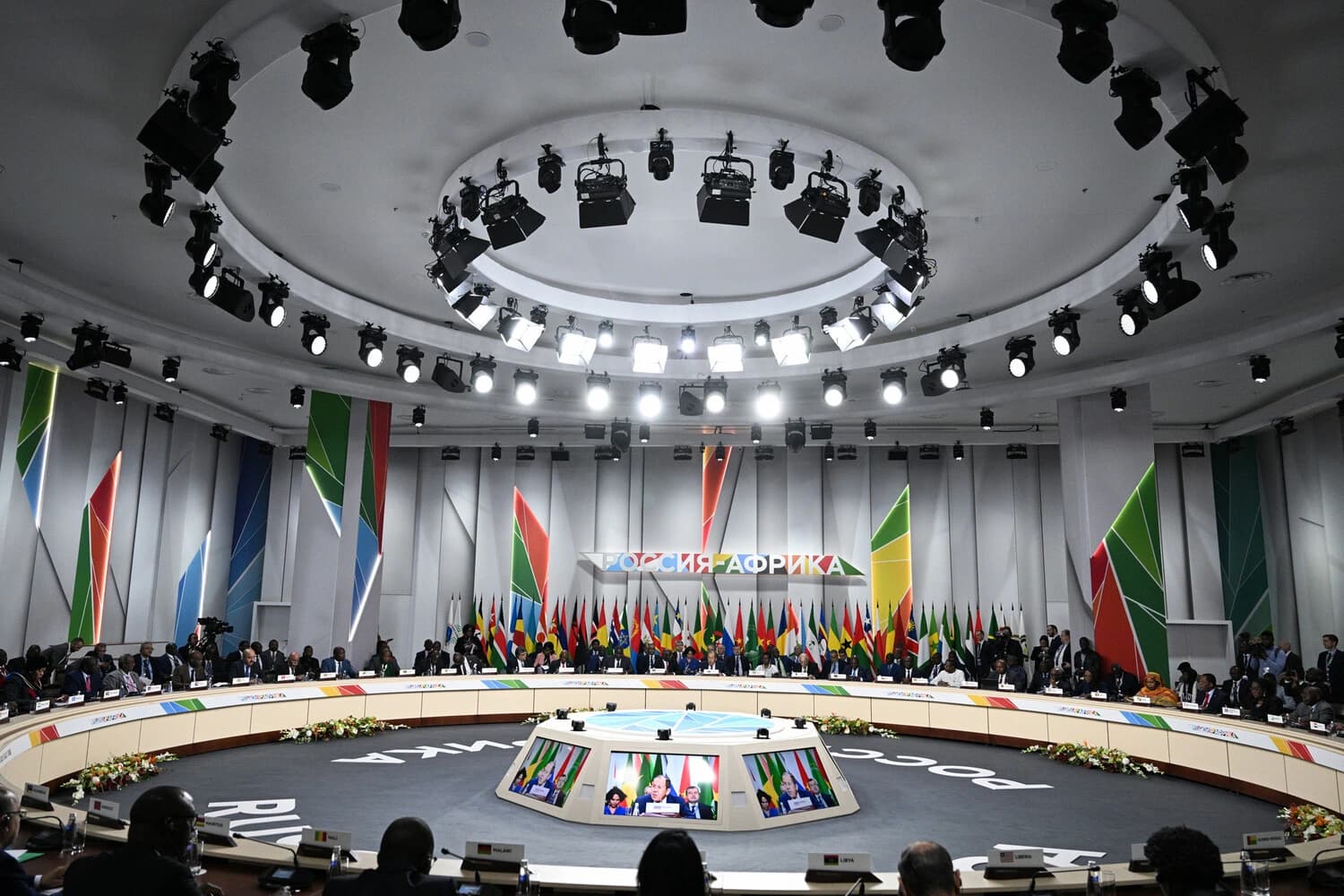
- The third Russia–Africa summit is taking place in Moscow on 28–29 October 2026 with a focus on economic cooperation.
- Russia's trade turnover with all 54 African countries in 2025 was about $27 billion, only 3.9% of Russia's foreign trade; the EU's trade with Africa is about $385 billion.
- Russia's trade turnover with all 54 African countries in 2025 is about $27 billion, only 3.9% of Russia's foreign trade; the EU's trade with Africa is about $385 billion.
- The key partner is Egypt: it accounted for about 39% of Russia–Africa trade, as well as the construction of the El-Dabaa nuclear power plant backed by a $25 billion Russian loan.
- The key partner is Egypt: it accounted for about 39% of Russian-African trade, as well as the construction of the El-Dabaa nuclear power plant backed by a $25 billion Russian loan.
The summit in Moscow and the real scale of trade
On 28 and 29 October 2026, the third Russia–Africa summit is taking place in Moscow; such meetings have been held roughly every three years since 2019. The programme focuses on economic cooperation, but also covers politics, security, science and culture. As Deutsche Wellenotes, Russia actively works with only a handful of African countries, mostly in the north of the continent, and this is reflected in the trade figures: according to Russia's Federal Customs Service, total trade turnover with all 54 African countries in 2025 amounted to about $27 billion — just 3.9% of Russia's foreign trade. For comparison, Africa's trade with the EU reached roughly $385 billion, with China over $348 billion, with the US almost $105 billion, and with India $103 billion.
Egypt — the main partner, but not an ideological ally
Moscow's key partner on the continent remains Egypt — Africa's second-largest economy. Bilateral trade has more than doubled since 2021 and reached $10.5 billion in 2025; the backbone is Russian grain supplies, followed by metallurgical products, while Egypt mainly exports fruit and vegetables to Russia. Egypt accounted for about 39% of all Russia–Africa trade in 2025. The flagship project is the large nuclear power plant at El-Dabaa on the Mediterranean coast, financed by a Russian loan of $25 billion covering about 85% of the cost. Nikita Smagin, an expert on Russian policy in the Middle East, believes that in the long term Egypt could become Moscow's 'gateway' to Africa, but he cautions that Cairo pursues its own interests, and it would be too optimistic to assume that support is offered purely out of political solidarity. According to Ivan Klyszcz of the International Centre for Defence and Security (ICDS) in Tallinn, diplomats and businesses are trying to expand ties with Tanzania and Ethiopia, but 'without notable success'.
Military presence matters more than economics
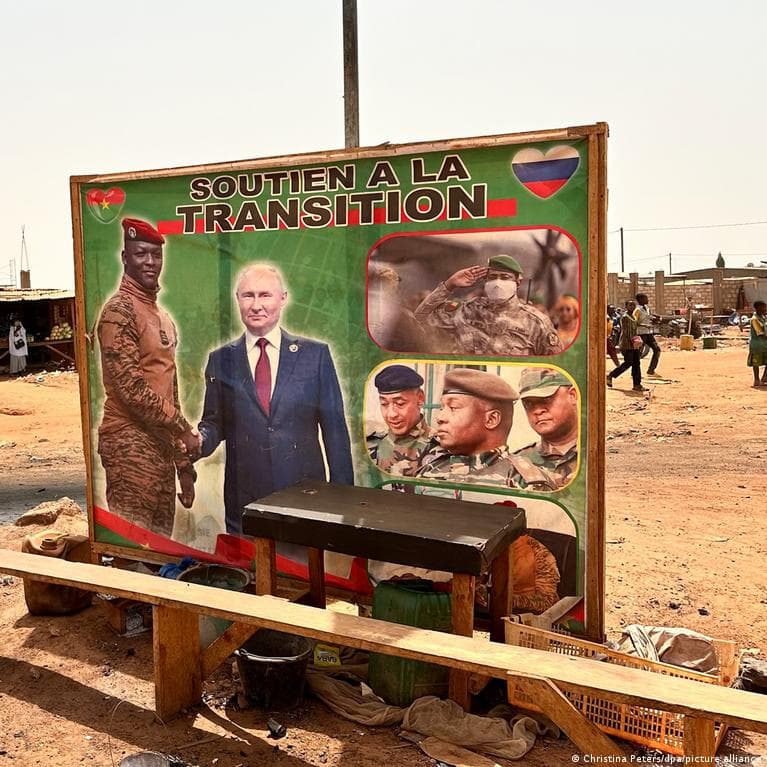
Russia's presence in the military sphere is more visible than in trade. Since the arrival of the Wagner Group , Russian mercenaries have been propping up regimes, primarily in the unstable countries of the Sahel, receiving in return access to natural resources through affiliated structures. After the death of Yevgeny Prigozhin, most operations passed to the 'Africa Corps', created and controlled by Russia's defence ministry. According to the US Congressional Research Service, the largest Russian military contingents — several thousand strong — are in the Central African Republic, Mali and Libya; the corps is seeking to expand its presence in Burkina Faso and Niger, and mercenaries have also been spotted in Equatorial Guinea. Irina Filatova of the University of Cape Town explains the significance of such a presence by gold and uranium deposits, the ability to influence Europe's southern borders — including migration and regional security — and Libya's role as a logistics hub for supplying landlocked countries.
Arms, diplomacy and perceptions of Russia
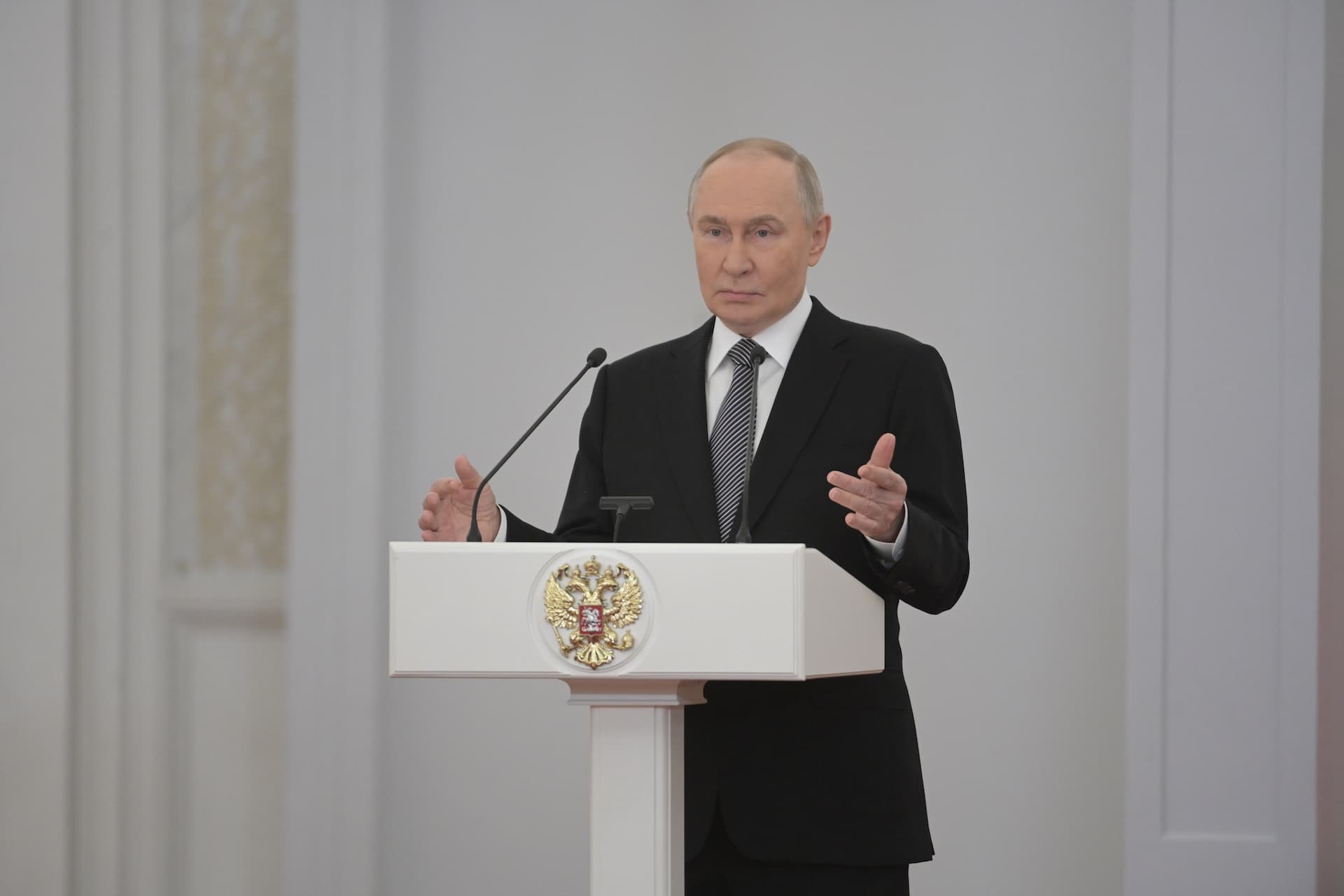
Russia remains one of the largest arms suppliers to Africa, although exports declined during the war in Ukraine: according to SIPRI estimates, in 2021–2025 its market share was 15% — third place after the US (19%) and China (17%), whereas in 2020–2024 Russia was first with 21%. Ivan Klyszcz notes that Moscow's influence in Africa is far greater than trade and investment volumes would suggest — thanks to food and fertiliser supplies and its military presence. Fidel Owusu, a Ghanaian expert at GIS, points to the continent's 'diplomatic weight': Russia counts on support in the UN General Assembly and has recently been achieving better voting results than before. Moscow positions itself as a defender of the Global South's interests: Putin told the Valdai Club conference that Russia's goal is not to 'earn money or steal something from Africa' as the colonial powers did, but to 'develop together'. Filatova, however, stresses that Africa is not a single country: perceptions of Russia differ, and the views of elites often diverge markedly from the sentiments of ordinary citizens; in South Africa, the Russian narrative are received very positively, but the anti-colonial agenda is not necessarily associated with Russia in other countries.