The key facts
- The platform, 138 meters long and 85 meters wide, will be able to move independently between research areas
- Construction will begin in 2028, with delivery in June 2030
- The design is rated for waves of up to 7 on the scale and typhoons with winds above 260 km/h
A floating science complex instead of a stationary platform
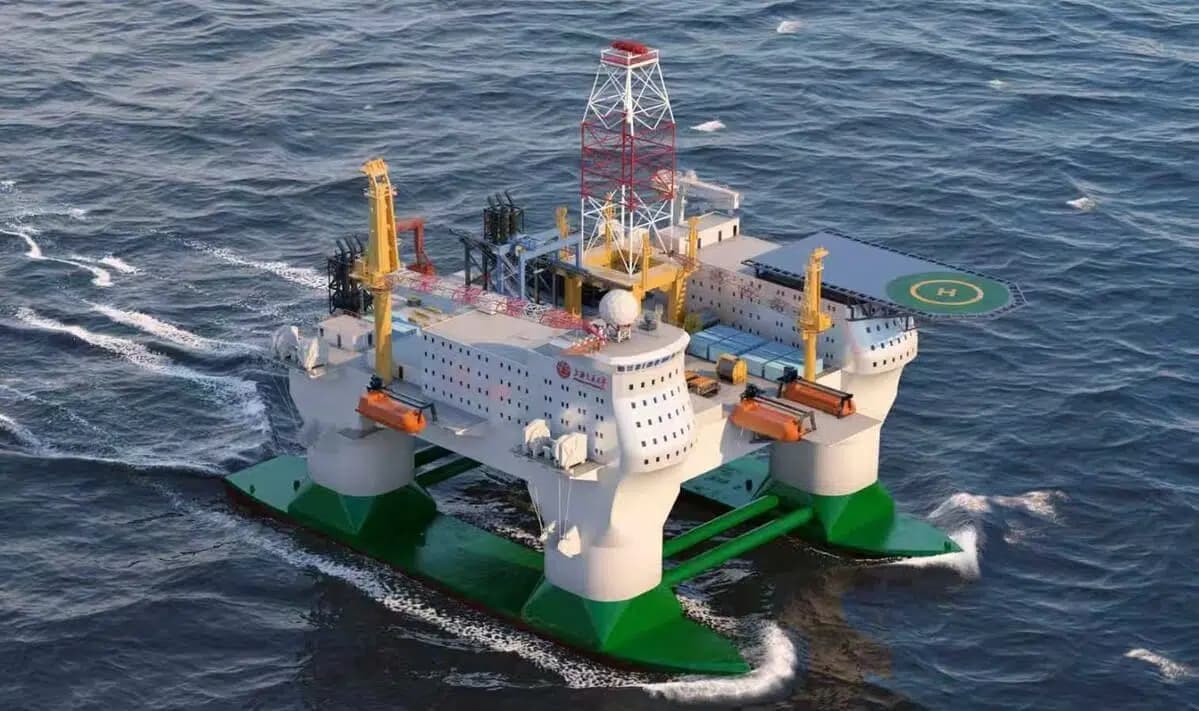
China plans to build the world's first purpose-built floating artificial 'island' for such research, capable of moving across the ocean on its own. As reported by Kun.uz citing a publication by Interesting Engineering, the project is meant to combine the capabilities of a major science complex with the mobility of a vessel: unlike offshore structures fixed to a single point, the platform will be able to move from one area to another depending on scientific tasks.
Customer, builder and timeline
The platform will be used by Shanghai Jiao Tong University. Design and construction have been entrusted to Shanghai Waigaoqiao Shipbuilding, part of the state-owned shipbuilding corporation CSSC. Construction is planned to begin in 2028, with the finished platform to be handed over to the customer in June 2030.
Design and operating conditions
The platform will have a catamaran shape with two hulls and a semi-submerged main structure: its length will be 138 meters, its width 85 meters, and its maximum speed almost 20 kilometers per hour. The twin-hull design is intended to provide stability during long-term operations in the open sea. Under the technical requirements, the platform must operate in sea states of up to seven on the international scale (wave heights of about 6–9 meters) and withstand typhoons with sustained winds above 260 kilometers per hour.
What will be studied on board
The science complex will house six laboratories, living quarters and a spacious working deck — scientists are expected to be able to conduct long-term research in the open sea without frequent returns to port. Plans include testing heavy marine equipment and engineering systems, studying dangerous marine phenomena, meteorology and long-term changes in ocean ecosystems — both technologies for working at great depths and natural processes affecting the state of the World Ocean.