The key facts
- Ukraine's 2027 funding gap officially confirmed at €70 billion; the EU is expected to cover about €46 billion
- The EU summit has been extended to two days — 26 and 27 November — to discuss Ukraine and the budget
- The negotiations are complicated by the position of the 'frugals' and the 'cohesion camp' and by the French elections
Two topics, one deadline
The battle over the EU's next seven-year budget has coincided with an attempt to close Ukraine's €70 billion funding gap for 2027. The figure was officially confirmed only at this month's summit, although Brussels had long anticipated a major hole in Kyiv's accounts amid Russia's escalation and the destruction of the country's internal economic mechanisms, writes euronews. Leaders tasked the European Commission with presenting options for additional funding, and the issuance of joint debt was immediately named the most realistic one.
Who pays and how much
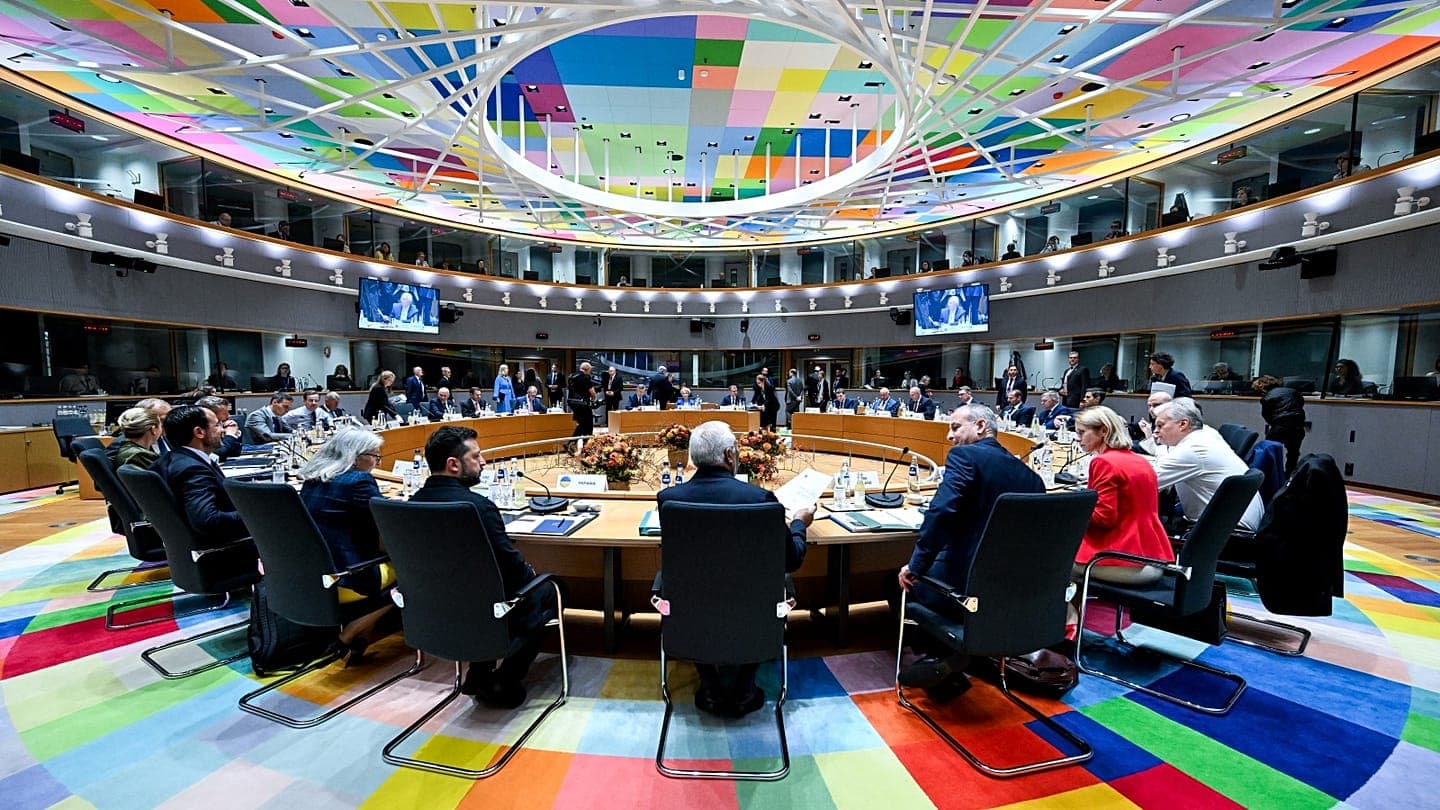
The EU is expected to cover about two-thirds of the sum — roughly €46 billion — with the rest to be taken on by other allies, including the United Kingdom, Canada, Norway and Japan. The scale of the shortfall forced a change to the agenda of next month's special summit: instead of discussing only the budget draft, the meeting has been extended to two days, 26 and 27 November, to allow time for Ukraine. New proposals are expected on both issues.
Why the dossiers became entangled
Formally, the budget and Ukraine funding remain separate files, but according to diplomats and officials, politically they are quickly becoming intertwined. First, both topics are about money: the 'frugal' donor countries demand spending cuts across the board, while the 'cohesion camp' insists on preserving the volumes. Second, both topics run up against the timing of the French elections. Marine Le Pen, confidently leading in the polls, has promised to cap France's contribution at €5 billion a year, called concluding an agreement before the elections a 'democratic scandal', and pledged to completely end French support for Kyiv. Incumbent President Emmanuel Macron told colleagues that reaching a deal between January and April would be 'difficult'.
Will it help or hinder
It is unclear whether a budget compromise will ease the Ukraine question or complicate it. According to one view, a deal is easier because the 'frugals' include Ukraine's largest donors — Denmark, Finland, the Netherlands, Sweden and Germany — for whom locking in funding is beneficial, and a collective decision could make a larger budget acceptable to them. The opposite view: the 'frugals'' pressure to cut funding for agriculture and cohesion policy could deprive some 'cohesion camp' members of the ability to support the Ukraine deal. The Czech Republic, Hungary and Slovakia have already signalled they will refuse to take part in joint borrowing for Kyiv, with Bulgaria expected to follow.
Time pressure and warnings
Officials in Brussels admit that both issues must be closed by the end of the year. 'Our internal cohesion is fragile. If it starts to unravel, the consequences for Ukraine could be even more serious than any of Trump's words and actions,' said one official, referring to the US president's recent pivot towards Russia. Slovakia's Prime Minister Robert Fico, by contrast, warned against linking the two topics: 'It would be very dangerous, and I want to stress this absolutely clearly, if someone tries to tie Ukraine funding to the budget,' adding that an agreement in December would be a 'miracle'. Diplomats, meanwhile, caution that it is premature to speak of a single big package.