The key facts
- The Formula 35 science festival was held at the Tashkent Botanical Garden, organized by the Academy of Sciences of Uzbekistan.
- The Formula 35 festival was held at the Tashkent Botanical Garden, organized by the Academy of Sciences of Uzbekistan.
- Nine thematic zones covered chemistry, physics, astronomy, biology, technology, art, and other fields.
- The Institute of Botany won first place in the national science hackathon with a project addressing soil salinization and degradation.
- The Institute of Botany took first place in the national scientific hackathon with a project on combating soil salinization and degradation.
Nine zones instead of a lesson at the blackboard
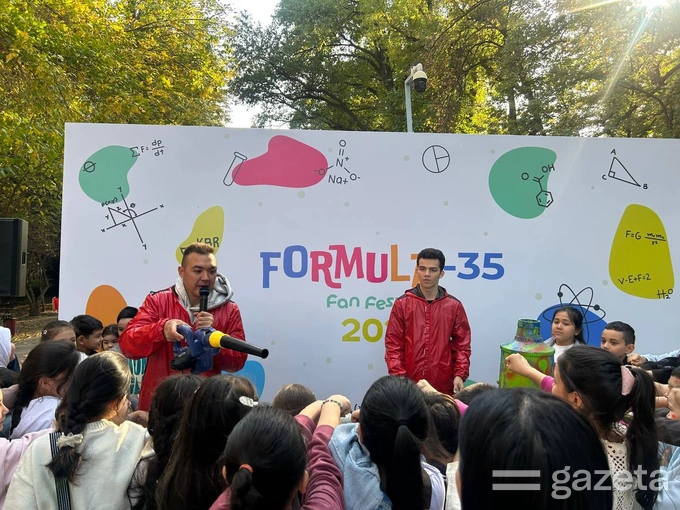
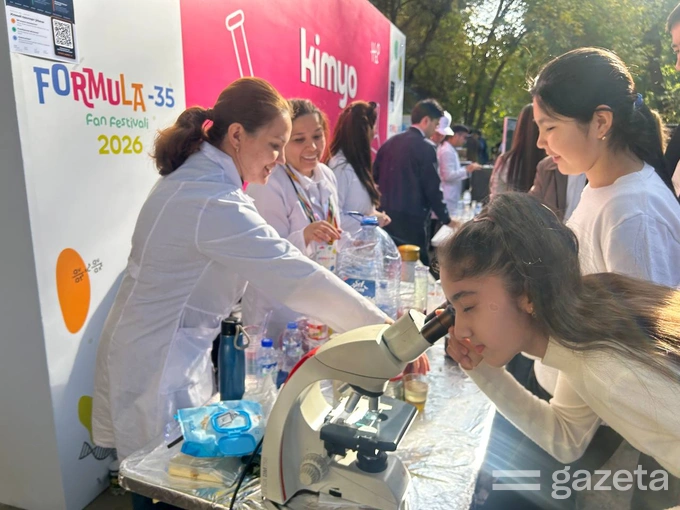
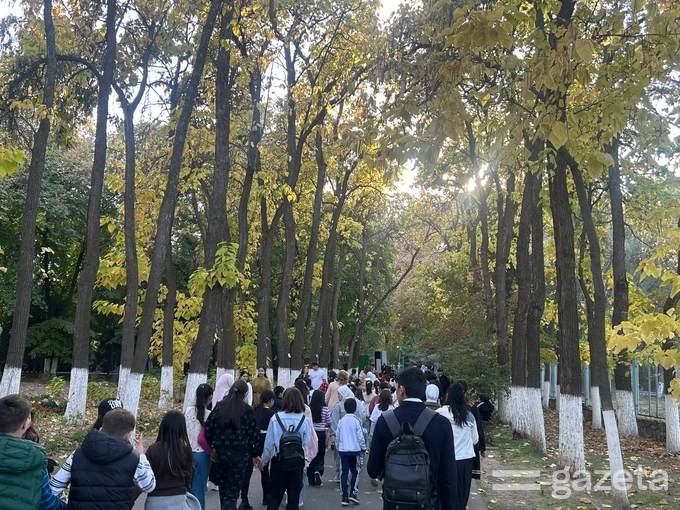
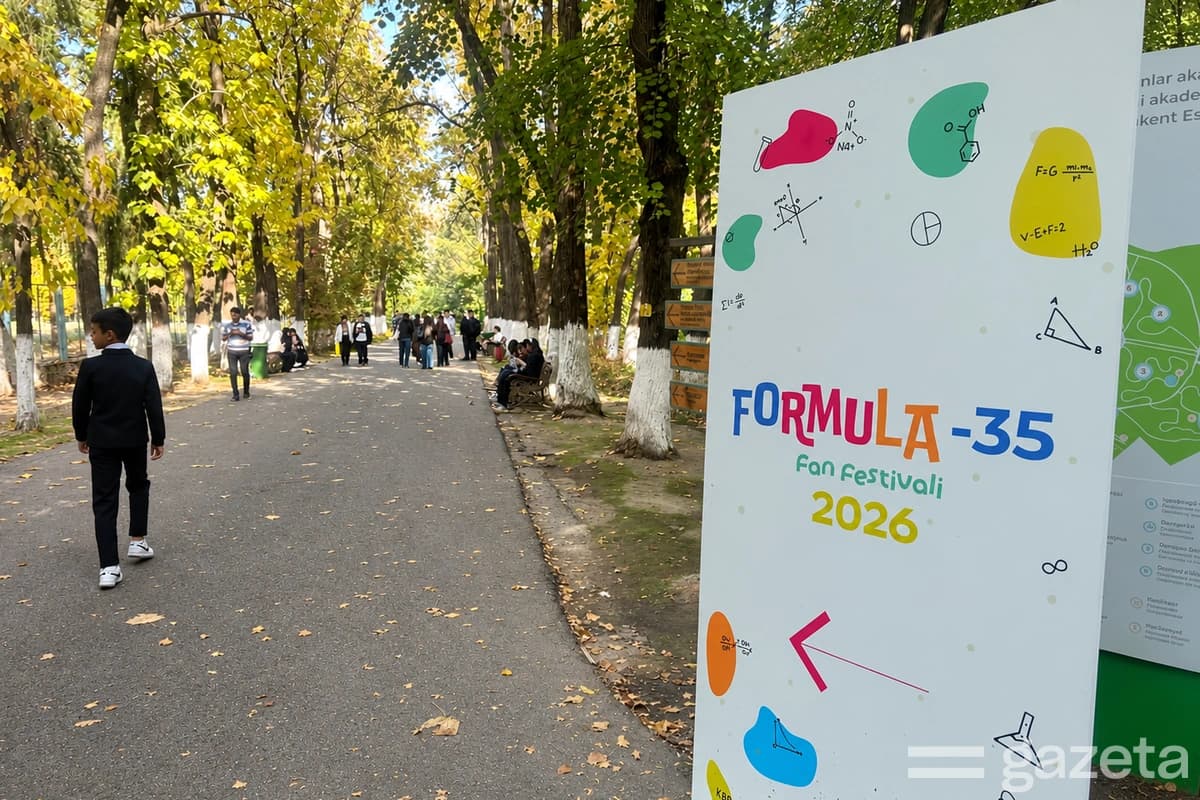
The Formula 35 science festival, organized by the Academy of Sciences of Uzbekistan, took place at the Tashkent Botanical Garden. Specialists from various scientific institutes were invited to engage in interactive activities with children: the venue was divided into nine thematic zones covering chemistry, physics, astronomy, biology, technology, art, and other fields. Instead of the usual classroom explanations at the blackboard, the introduction to science was conducted through experiments, observations, and hands-on activities. The Gazeta newspaper reports on how the festival unfolded.
Experiments: from dry ice to topazes
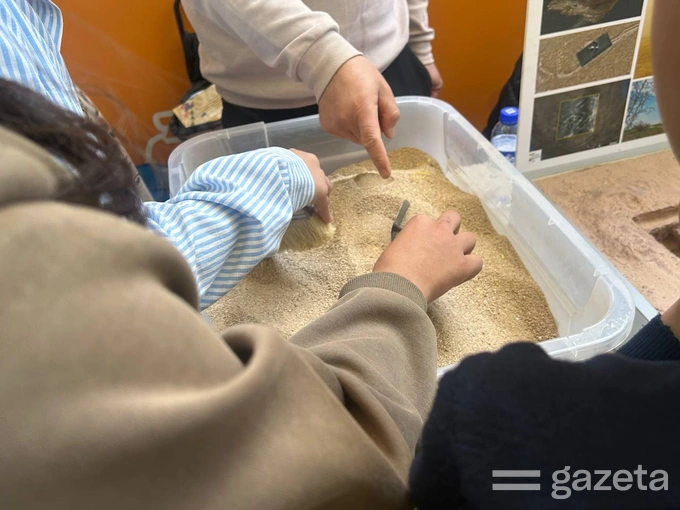
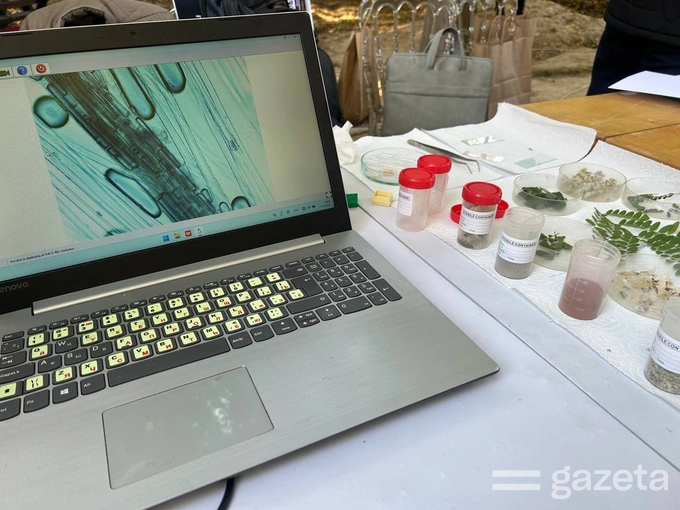
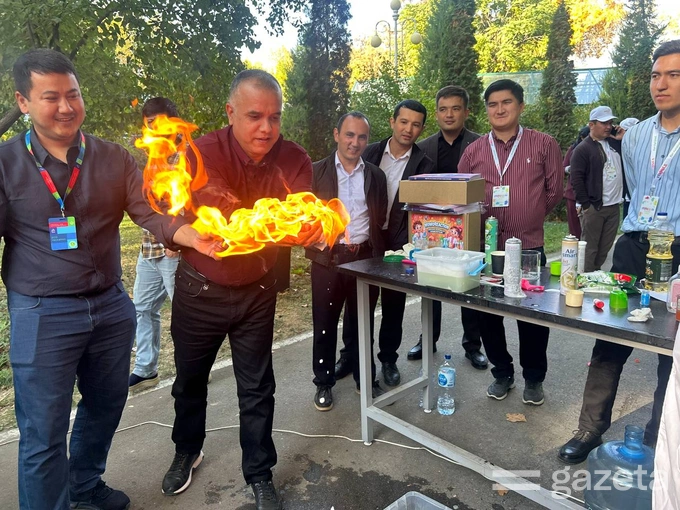
At the booth of the Institute of History, children were given shovels and brushes for 'excavations,' while nearby, microscopes allowed them to examine plants magnified 100 and 400 times. Kamila Mardiyeva, head of the laboratory at the Institute of Chemistry of Plant Substances, demonstrated a reaction resembling a lava lamp and introduced acid-base indicators using purple cabbage: in a neutral environment, it remained purple; in an alkaline one, it darkened to green; and in an acidic one, it turned raspberry-colored. According to her, such transformations help explain the chemical properties of substances without complex formulas—children first observe the color change and then learn about the underlying process.
Nuclear technologies and questions for schoolchildren
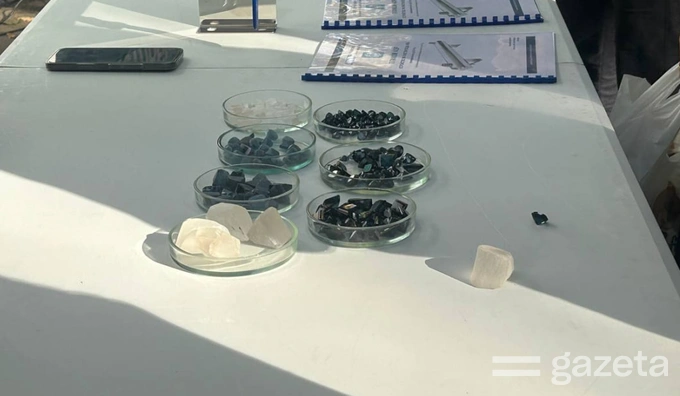
Temur Usmanov from the Nuclear Analytical Laboratory of the Institute of Nuclear Physics explained how neutron irradiation changes the color of minerals. According to him, topazes arrive in white form and change color after irradiation in a reactor—this is an example of applying nuclear technologies not only in energy but also in material processing. He also asked schoolchildren questions about the speed of light, the length of the equator, and the Earth's radius. The scientist regretfully noted that some could not answer simple questions from the school curriculum, but everyone who persisted and offered answers received prizes such as caps, T-shirts, and notebooks. 'It seems to me that young people are less interested in physics than, for example, in IT. Perhaps after the festival, they will have the opportunity to view the world in a new way,' he suggested.
Martian soil and telescopes
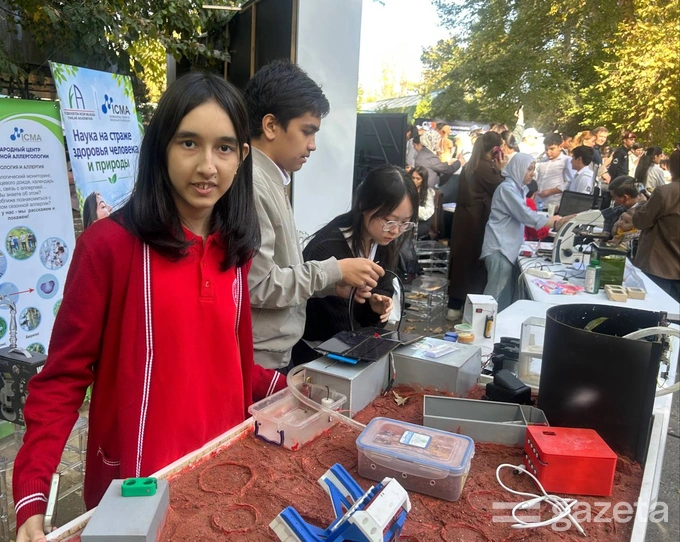
Young participants also presented their projects at the festival. Iymona Pulatova, a student from Sehriyo School, explained that her team at the NASA Space Apps hackathon recreated Martian soil using data from rovers, mixing 20% Earth soil, 20% sand, salts, acids, and other substances. According to her, NASA representatives who attended the hackathon later confirmed in the laboratory that the mixture resembled Martian soil. Currently, the team is studying how Earth worms survive in a mixture of ordinary and artificial Martian soil in a 70% to 30% ratio and plans to recreate lunar regolith using fragments of solidified volcanic lava. At the Institute of Astronomy, junior researcher Yodgor Rajabov helped children adjust telescopes and observe the Sun through special filters. He admitted that he did not expect so many visitors and that such an event, had he attended it as a child, might have led him to science earlier.
Ebru, bacteria on cookies, and hackathon results
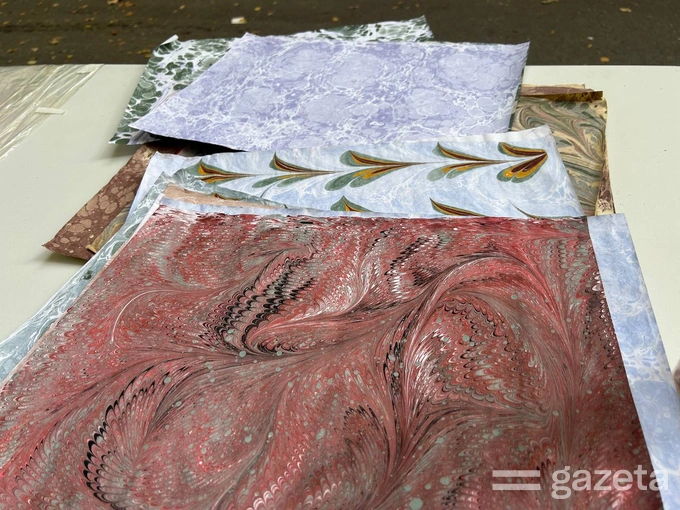
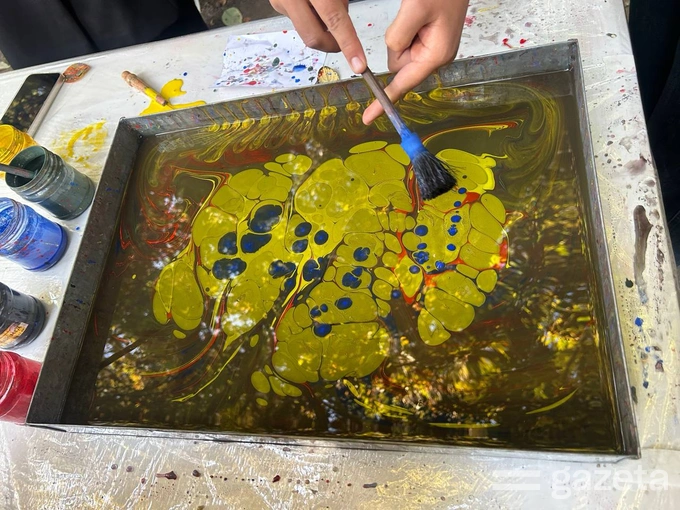
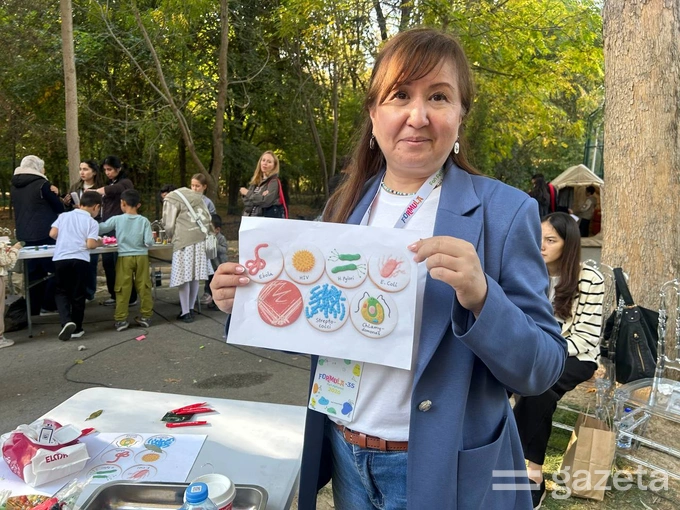
Science at the festival was not limited to natural disciplines. Doctor of Sciences Bashorat Khodjaeva from the Institute of Oriental Studies introduced visitors to ebru, the art of creating patterns on water. According to her, this technique was used in the 16th century in Bukhara for decorating book bindings, but the tradition later declined, unlike in Turkey, where ebru continues to develop. Employees of the Institute of Microbiology invited children to decorate gingerbread cookies with drawings of bacteria and algae and to assemble birdhouses that could be left within the Botanical Garden's territory. Junior researcher Dildora Amirsaidova noted that there were more participants than available spots and expressed regret that a one-day festival does not allow everyone to fully understand the principles of the experiments. Finally, the results of the national science hackathon were announced: the Institute of Botany took first place with an innovative project addressing soil salinization, degradation, and desertification.