The key facts
- The US is providing Saudi Arabia with intelligence and an AI targeting tool similar to the Maven Smart System; according to CNN, 100–200 American troops are in the country
- The US is providing Saudi Arabia with intelligence and an AI targeting tool similar to the Maven Smart System; according to CNN, 100–200 American military personnel are in the country
- Trump, according to media reports, declined direct military action against the Houthis at Mohammed bin Salman's request
- Since September, the Houthis have expanded control over Yemen's coastline and attacked Saudi airports and oil pipeline facilities
- Since September, the Houthis have expanded control over Yemen's coast and are attacking Saudi airports and oil pipeline facilities
US AI assistance amid escalation
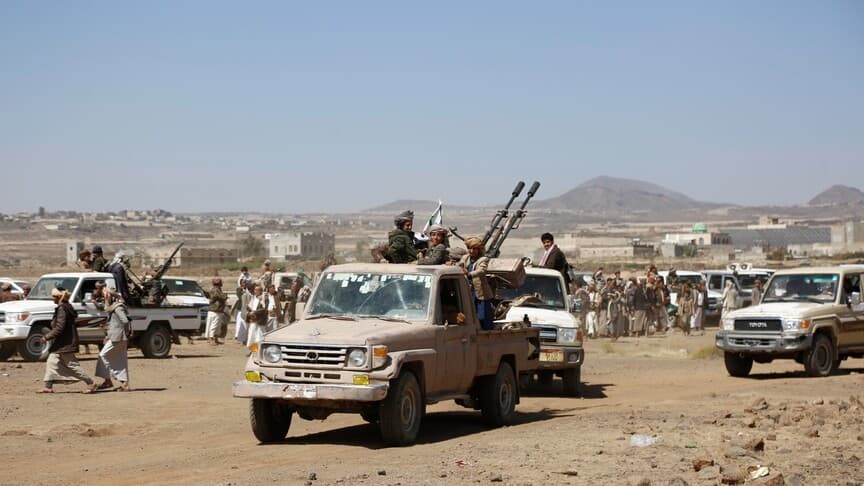
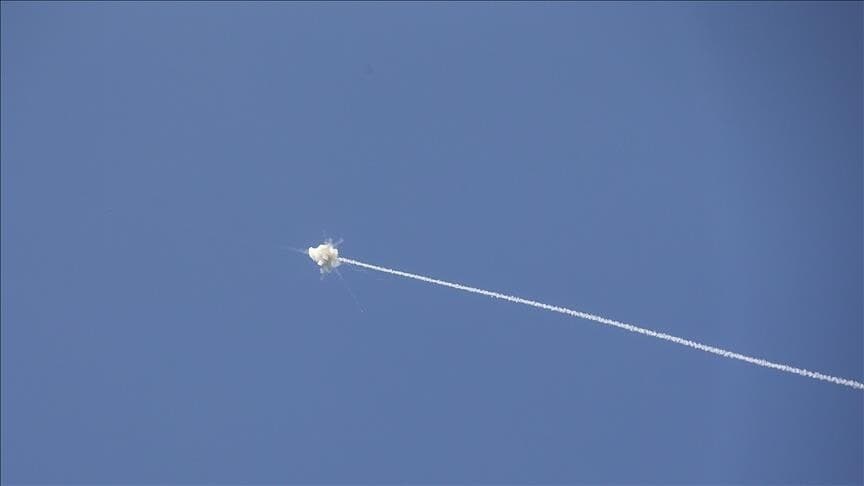
Saudi Arabia, which is under attack from Yemen's Houthi movement, has turned for help to a number of allies, including the United States. At the same time, media report that US President Donald Trump refused Saudi ruler Mohammed bin Salmanwhen the latter asked for direct military action against the Houthis. Nevertheless, Washington is passing intelligence to Riyadh, including an AI-based targeting tool. According to a September report by the American TV channel CNN, citing several unnamed US officials, between 100 and 200 US service members are stationed in Saudi Arabia as part of a new joint command. They are helping the Saudis 'use a targeting tool that allows military officers to see in real time what is happening on the battlefield,' CNN wrote. According to officials, the system in Saudi Arabia is similar to the Maven Smart System (MSS), which the US military used for target selection in Iran, Iraq and Syria.
What is the Maven Smart System
MSS grew out of Project Maven, the flagship US military artificial intelligence program launched in 2017. As analysts at Washington's Center for Strategic and International Studies (CSIS) explained in June, MSS is an AI-based digital platform that 'aggregates, organizes and visualizes vast streams of intelligence, surveillance and reconnaissance data.' The system detects patterns in data, for example from satellite feeds or drone cameras, and flags potential targets: possible missile launchers, tanks or suspicious vehicle convoys. Previously, analysts had to manually review numerous sources, which was nearly impossible with hours of footage. MSS also calculates the optimal way to strike a target. Bilal Sidhu, a former Google product manager and commentator, compared MSS to 'Google Earth for war.' The system dramatically accelerates the 'kill chain' — the time from detecting a target to deciding on a strike. When the US used MSS in the attack on Iran in late February, the system helped strike more than 1,000 targets in the first 24 hours of the war — previously, US forces struck about 100 targets per day.
Escalating conflict and the limits of AI
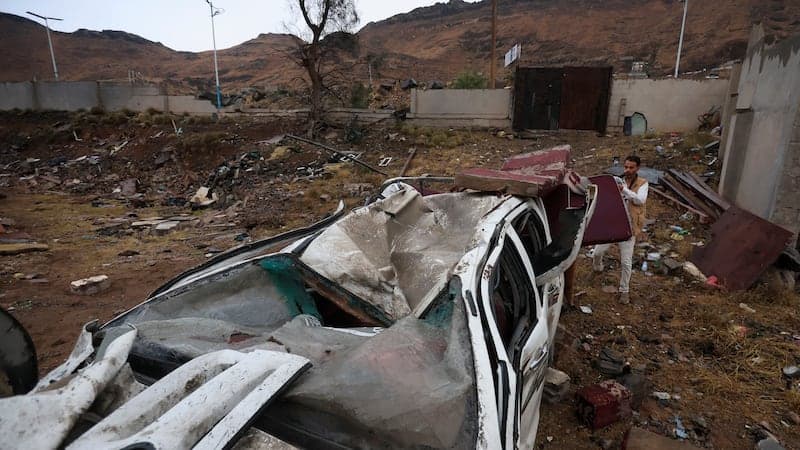
Yemen's civil war was relatively quiet after the informal truce of 2022. The Houthis have controlled large parts of the country's north and west since 2015, while the internationally recognized government and other groups in the south and east are backed by Saudi Arabia and the UAE. The new Houthi military campaign, which began in September, allowed them to take additional control of Yemen's coastline; they have also intensified attacks on Saudi Arabia, hitting the country's main airport and oil facilities. At the same time, military campaigns against the Houthis by Saudi Arabia, the US and others have so far failed to significantly weaken the group. Farea al-Muslimi, a fellow at the British think tank Chatham House — more precisely, Farea al-Muslimi, according to DW — attributes this to the Houthis' 'zero-sum approach': their ideology is built around martyrdom and sacrifice, and strikes against them only play into their hands.
Technical and ethical risks
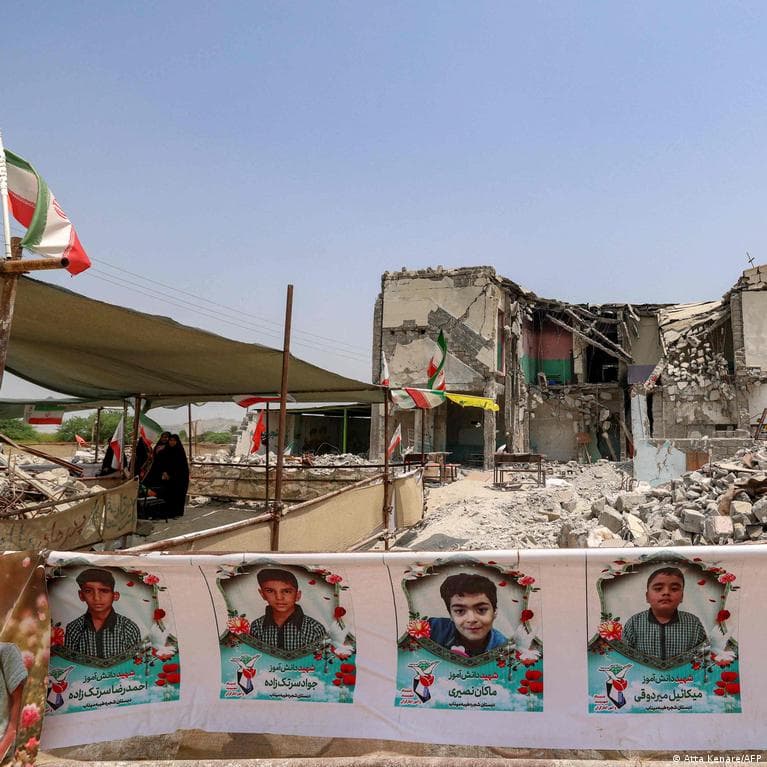
MSS has known limitations that may also manifest in Yemen. The Houthis are highly mobile: they use ballistic missiles mounted on trucks and small drone swarms, operating from hills and canyons of rugged terrain — fighters can move away before a strike even with AI targeting. MSS works best in sparsely populated areas, while changes in desert terrain, dust storms, strong winds, snowfall, dense vegetation and deliberate decoys reduce its effectiveness. There is also an ethical problem with shortening the 'kill chain': a human is formally supposed to verify the target, but this does not always happen. On the first day of the war with Iran, a school was among MSS's targets: an American missile killed nearly 200 people at an elementary school in southern Iran, most of them children aged 7 to 12. In Israel's campaign in Gaza, where a similar system called Gospel (Habsora) is used, the use of AI targeting was accompanied, as analysts Frederic Wehrey and Andrew Bonney wrote in War on the Rocks, by an increase in civilian casualties due to the weakening or cancellation of protective safeguards. Independent Australian journalist Antony Loewenstein, who has researched Israeli AI technologies, does not believe such tools will lead to the defeat of the Houthis: in his words, there is little evidence that an AI tool will change anything on the ground apart from enormous civilian casualties, and the Houthis have anincredibly high level of tolerance for destruction».
Why it matters
Transferring an AI targeting system to Saudi Arabia means a de facto deepening of American military involvement in the Yemen conflict — while at the same time refraining from direct strikes, which underscores Washington's caution. For residents of Saudi Arabia, who are facing attacks on airports and oil infrastructure, and for Yemen's civilian population, the practical significance of these events is twofold: accelerated targeting may increase strike effectiveness, but the experience of Iran and Gaza shows the risk of rising casualties among the civilian population. It remains unknown whether the new technology will manage to change the balance in a conflict where previous campaigns have not weakened the Houthis.