The key facts
- Riots in central Barcelona began at around 18:00 near Plaça de Catalunya; sources estimate the number of detentions at 100–128
- Riots in central Barcelona began around 18:00 near Plaça de Catalunya; sources estimate the number of arrests at 100–128
- Between 14 and 23 retail establishments were looted, dozens of fires were recorded, and police officers were injured
- The city council intends to take part in court proceedings for compensation; many of the detainees are minors
- The city hall intends to take part in court proceedings for damages; many of the detainees are minors
A night of unrest at Plaça de Catalunya
On Saturday evening, mass riots broke out in central Barcelona: groups of young people clashed with police, looted shops and set barricades on fire. The action, promoted on social media under the slogan “Instituts Indignats,” was conceived as bringing to the Catalan capital the French youth movement “Lycéens Indignés,” associated with student protests in France. According to Spanish media, about 600 people took part in the demonstration at its peak; the Anadolu agency, citing authorities, puts the figure at around 500. The Russian-language version of Euronews reports that the gathering was organized via social media, while Anadolu specifies that the calls were spread mainly through TikTok, Telegram and WhatsApp by an anonymous platform calling for actions in major Spanish cities for better learning conditions.
Course of the clashes and damage
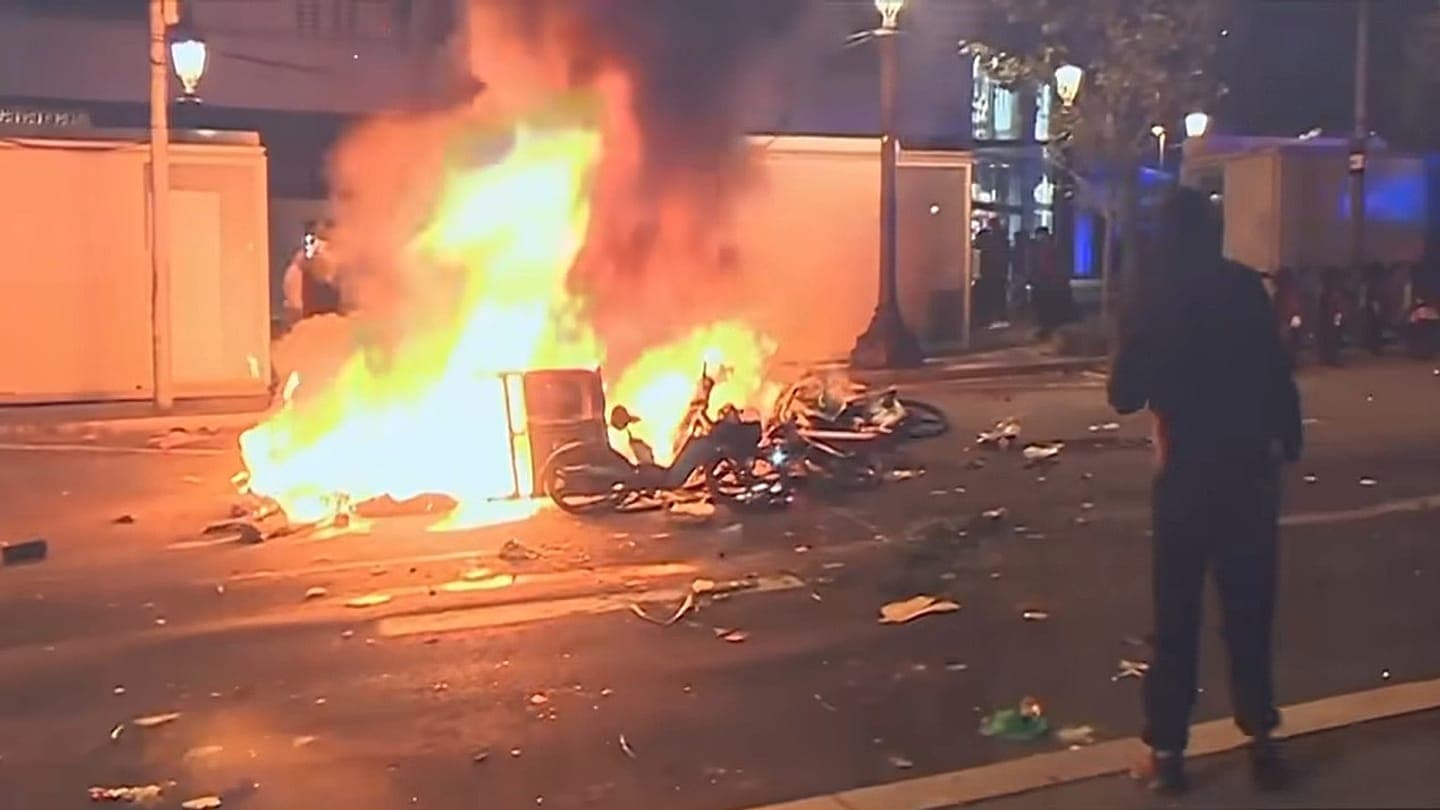
The riots began at around 18:00, when several groups of young people, many dressed in black and wearing hoodies, began damaging city property. After police units intervened, participants dispersed through the streets around Plaça de Catalunya, where the clashes continued: demonstrators threw stones and heavy objects at police officers, built barricades, set containers on fire and smashed shop windows. The Mossos d'Esquadra police responded with forceful dispersals.
Scale of the damage: conflicting figures
Sources differ on the consequences. The Russian-language version of Euronews, citing “La Vanguardia,” reports 14 looted retail establishments and 33 small fires (figures from “El País”); the English-language version of the same outlet also cites about 14 looted shops. Anadolu, citing RTVE, gives different figures: at least 23 looted or damaged establishments, 31 burned garbage containers and 128 detainees, of whom 72 were minors — more than half. The Russian-language version of Euronews, by contrast, writes about a hundred detainees, roughly a quarter of them minors. Police officers were also injured: Anadolu reports 14 wounded officers, four of them seriously, plus one municipal police officer; the English-language version of Euronews speaks of 15 injured police officers. The emergency service 112 received about 450 calls, related to the unrest. The Barcelona City Council estimated the damage to urban furniture alone at a minimum of €36,000. Police drew up 68 administrative reports after confiscating knives, sprays, balaclavas and pyrotechnics. The violence forced many shops to close: the Guardia Urbana restricted access to Plaça de Catalunya, and train services through the “Plaça de Catalunya” station were temporarily suspended.
The authorities' response
Barcelona Mayor Jaume Collboni condemned the incidents and announced that the city council would take part in court proceedings to seek compensation for the damage. “This will not be left like this. We will see the case through to the end”, he warned, adding that what happened could have consequences for the parents or guardians of the minors involved. President of the Generalitat Salvador Illa also condemned the riots and voiced support for the police, stressing that “protesting is a democratic right,” but violence is not justified by that right. Catalonia's Interior Minister Núria Parlon called what happened “senseless violence and vandalism” and stated that the perpetrators were not defending any legitimate demands. Both politicians separately noted that the riots were not connected with the tent camp for the right to housing, which has stood on Plaça de Catalunya for several weeks. Chief commissioner of the Mossos d'Esquadra Sílvia Cata said officers were surprised by the “extreme brutality” of the participants — a disorganized group of very young people who gathered in small groups for vandalism and looting; according to her, some participants are under 14 years old, meaning they have not reached the age of criminal responsibility in Spain. Police are monitoring social media and cooperating with law enforcement agencies of other European countries to identify the organizers.
Why it matters
The event primarily affects residents and businesses in central Barcelona: looted shops, damaged public transport, and suspended train services represent direct material damage that the city hall intends to pursue through the courts. For the families of the detained minors — at least 72 according to Anadolu — legal consequences are possible, as the mayor has warned. The key practical question is the responsibility of platforms and organizers: the police are already monitoring social media and cooperating with other EU countries, while the discrepancies in official figures (the number of detainees and the share of minors) have not yet been clarified by the authorities.