The key facts
- Agriculture accounts for 17.5% of Uzbekistan's greenhouse gas emissions; about two-thirds is methane, with livestock farming as the main source (CERR estimate).
- In 2017–2025, grain yields rose by 48%, raw cotton by 71%, water withdrawal fell by 22%, and water-saving technologies are used on 2.6 million hectares.
- CERR developed three scenarios for the sector's development up to 2070: continuation of current trends, implementation of state programs, and additional measures to raise productivity and reduce emissions.
Seminar at the Ministry of Economy and Finance and CERR's study
The Ministry of Economy and Finance of Uzbekistan hosted an international practical seminar devoted to assessing the country's progress toward the Sustainable Development Goals and studying international experience. The discussion was attended by representatives of the Sustainable Development Solutions Network (SDSN) and the Institute for Sustainable Development and International Relations (IDDRI). At the event, the Center for Economic Research and Reforms (CERR) presented the results of a study on long-term decarbonization scenarios for agriculture, forestry, and land use in Uzbekistan up to 2070.
Emissions structure: the role of methane and livestock
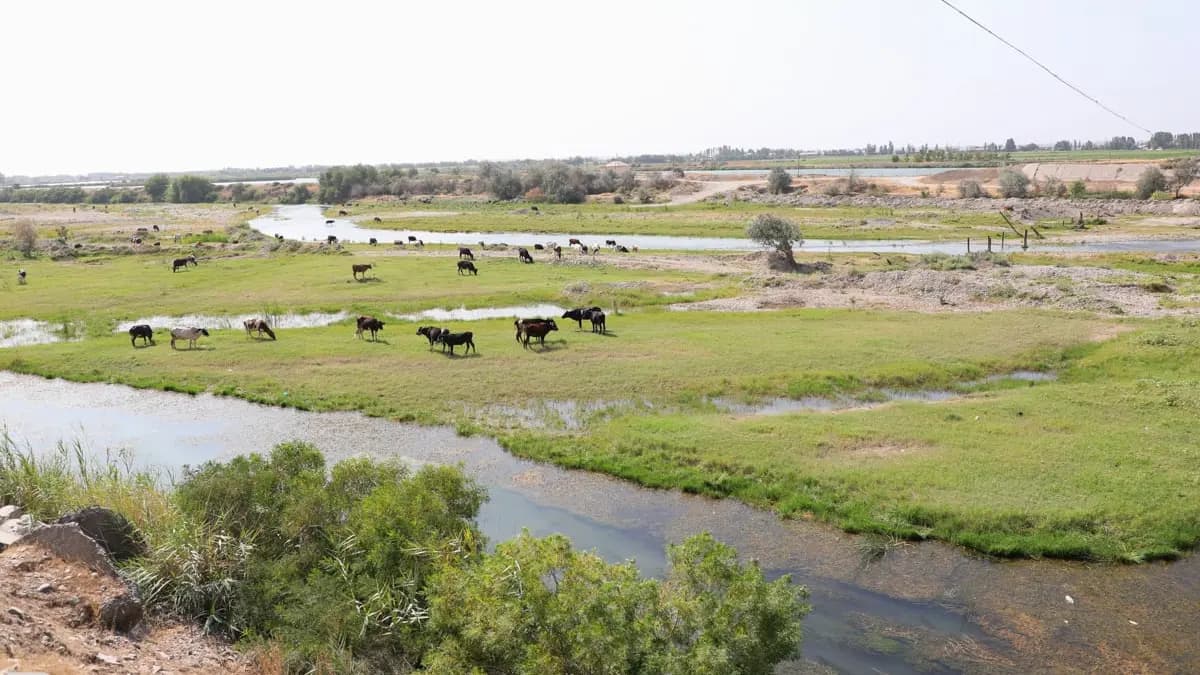
According to CERR estimates, agriculture accounts for 17.5% of Uzbekistan's total greenhouse gas emissions. About two-thirds of the agricultural sector's emissions come from methane, the main source of which is livestock farming. As the journal Khimiya i Zhizn (Chemistry and Life) explains, methane is produced in the digestive system of ruminants — cows, sheep, and goats: microorganisms in the rumen break down plant feed, and methanogens use the resulting hydrogen and carbon dioxide to produce methane, which is released mainly through the animals' belching. In addition, methane is produced when manure decomposes under oxygen-deficient conditions.
Reform results and persisting problems
The CERR study notes positive results of the 2017–2025 reforms: yields of grain crops increased by 48%, and raw cotton by 71%. Water withdrawal fell by 22%, and the area using water-saving technologies reached 2.6 million hectares. Nevertheless, the sector still faces problems with the efficient use of natural resources: according to expert estimates, 37% of irrigation water is lost in canals, and nearly half of the country's irrigated land is affected by salinization.
Three development scenarios up to 2070
CERR specialists developed three scenarios for agricultural development up to 2070: continuation of current trends, implementation of state programs, and additional measures to raise productivity and reduce emissions. According to the calculations, emissions can be significantly reduced by increasing livestock productivity, using fertilizers rationally, restoring pastures, and developing forestry. Raising livestock productivity will make it possible to increase agricultural output while reducing the pressure on pastures and natural resources. Experts emphasize the importance of maintaining food security and improving the efficiency of agricultural production.
Why this matters
The figures show that Uzbekistan's climate agenda is directly tied to the state of the agricultural sector: nearly one-fifth of the country's emissions come from agriculture, and two-thirds of those are methane from livestock farming. The choice of scenario up to 2070 will determine both food security and the use of water resources, which are already being used inefficiently — 37% of irrigation water is lost in canals. In practical terms, this means that the measures proposed by CERR to raise livestock productivity and apply fertilizers rationally could form the basis of the sector's future policy.