The key facts
- Rafiq Nishonov led Uzbekistan from January 1988, supported the investigators of the 'Cotton Case' and coined the term 'sharafrashidovshchina'
- During the Fergana events of June 1989 he stayed in Moscow, explaining the conflict with a 'basin of strawberries', for which he was criticized
- After the collapse of the USSR he did not return to Uzbekistan, lived in Moscow, and died in Switzerland in 2023
The path from teacher to leader of the republic
The Kun.uz portal continues its series of articles on the leaders of Uzbekistan — this time about Rafiq Nishonov, who spent the last 35 years of his life in Russia. There were various rumors about why he did not return to his homeland after the collapse of the USSR. Nishonov was born in 1926 in Gazalkent, the center of Bostanlyk district. From 1942 he worked on a collective farm and joined the Komsomol. In 1945–1950 he served in the army, then worked in Komsomol organizations in Tashkent. In 1955 he headed the political department of the fire safety directorate of the Ministry of Internal Affairs, in 1959 became head of the Oktyabrsky district of Tashkent, in 1962 — chairman of the city executive committee, in 1963 — head of Tashkent and a member of the bureau of the Central Committee of the Communist Party of Uzbekistan. In 1970 he moved to the USSR Ministry of Foreign Affairs, was ambassador to Sri Lanka and the Maldives (at that time the current head of Russia's Foreign Ministry, Sergey Lavrov, worked under him), and in 1978–1985 was ambassador to Jordan.
Rapid rise under Gorbachev
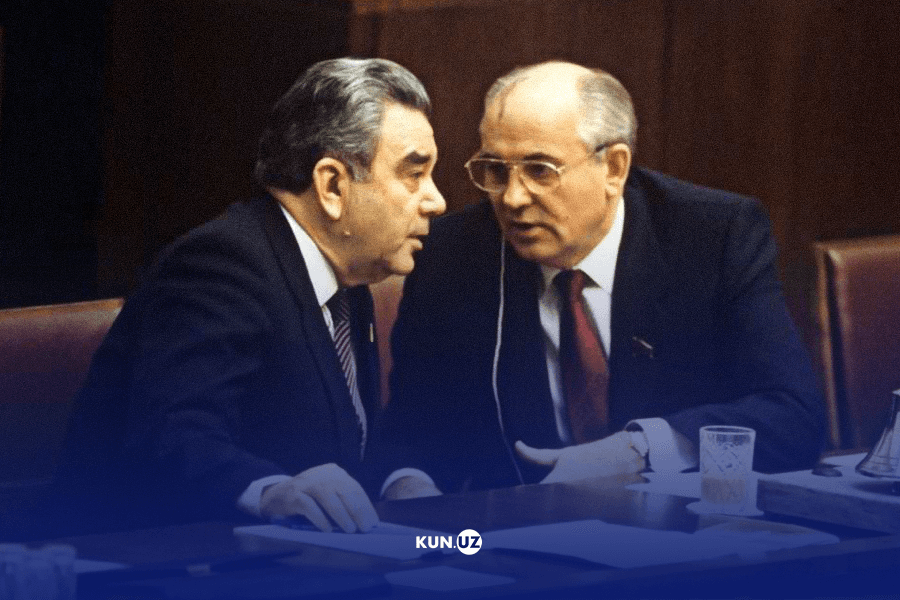
After Mikhail Gorbachev came to lead the USSR, Nishonov returned to Tashkent in March 1985 and became the republic's minister of foreign affairs. In 1986 he headed the presidium of the Supreme Soviet of Uzbekistan, and in 1987 became deputy chairman of the presidium of the Supreme Soviet of the USSR. In January 1988, after the resignation of Inamjon Usmanhodjayev, Nishonov took charge of the republic. According to the publication, his rapid advancement was aided by friendly relations with Gorbachev — behind his back he was called 'Gorbachev's Rafik'. The well-known Uzbek politician Nuritdin Mukhitdinov noted in his memoirs that Nishonov was very loyal to Gorbachev and placed the interests of the Center above the interests of Uzbekistan.
The Fergana events and the 'basin of strawberries'
On June 3–12, 1989, bloody events took place in the Fergana region: according to the publication, the Meskhetian Turks, as a result of deliberately provoked actions, were subjected to attacks by Uzbeks. At the moment of the events, Nishonov and other leaders of the republic were in Moscow at the Congress of People's Deputies. Instead of returning immediately, he sent to Uzbekistan only the head of the Council of Ministers, Gayrat Kadyrov, and the head of the Fergana region, Shavkat Yuldashev. When Gorbachev asked him about the situation, Nishonov, according to his own recollections, replied that the conflict arose from a quarrel at a market: a Meskhetian buyer treated an Uzbek seller rudely and knocked over a basin of strawberries. In an interview with UzA in 2020, he said he received one of the most terrible phone calls of his life on the evening of June 3 and had no reliable data, and that he was later harshly criticized for the words about the strawberries. He returned to the republic only two days later together with the USSR Minister of Internal Affairs, but, according to Mukhitdinov's assessment, showed weakness and indecisiveness. According to official data, more than 100 people died and over a thousand were injured. Most analysts and contemporaries believe that with decisive action the tragedy could have been stopped. The publication also notes that the conflict occurred only in the Fergana region — in other regions the Meskhetian Turks lived peacefully, and Moscow evacuated only part of them from Fergana; today more than 50 thousand Meskhetian Turks live in various regions of Uzbekistan.
The 'Cotton Case' and criticism of Rashidov
During Nishonov's leadership of the republic, repressions in the 'Cotton Case', conducted by investigators Gdlyan and Ivanov, continued. Moscow first removed Usmanhodjayev and arrested him in October 1988. Nishonov, despite the beginning of glasnost, did not demand the investigators' recall, but supported them: at one of the sessions he spoke in support of the repressions and used the term 'sharafrashidovshchina'. This caused a decline in his reputation among activists in Uzbekistan. In an interview with UzA in 2020, he explained that he used the term to describe an authoritarian style of governance and did not expect it to spread widely. Even 30 years later, Nishonov did not change his views, accusing Uzbek officials of bribery: according to him, money not paid to cotton growers was used as bribes in the republic and in Moscow, with Volga cars, palaces and jewelry bought with it. He also cited the words of Veniamin Yarin, who headed the commission overseeing the investigative group, about allegedly seized 100 million sums and valuables from the accused. At the same time, the publication writes that the Uzbek people know well how Gdlyan and Ivanov themselves came to possess this money: allegedly they promised the relatives of detainees release for money, and then used the transferred funds as evidence against the detainees themselves.
Departure to Moscow and final years
Because of his position on the 'Cotton Case' and his indecisiveness during the Fergana tragedy, Nishonov's reputation in Uzbekistan declined. Under these conditions, Gorbachev recalled him to Moscow, appointing him chairman of the Council of Nationalities of the Supreme Soviet of the USSR. After the collapse of the USSR in August 1991, this body was abolished, Nishonov retired, but did not return to Tashkent and remained in Moscow. During Islam Karimov's rule he was perceived as a symbol of the Soviet system and the era of the 'Cotton Case' and was treated with political coldness — possibly that is why he did not return. In his Moscow years, Nishonov received awards from Putin several times. He spent the last years of his life in Switzerland, where he died in 2023. The material was prepared by Gayrat Yuldash.