The key facts
- Kea (Tzia) is the westernmost island of the Cyclades, 16 nautical miles from the port of Lavrio; it is called the 'gateway to the Cyclades'
- The capital Ioulida has been a protected historic settlement since 1978; about 2,500 people live on the island
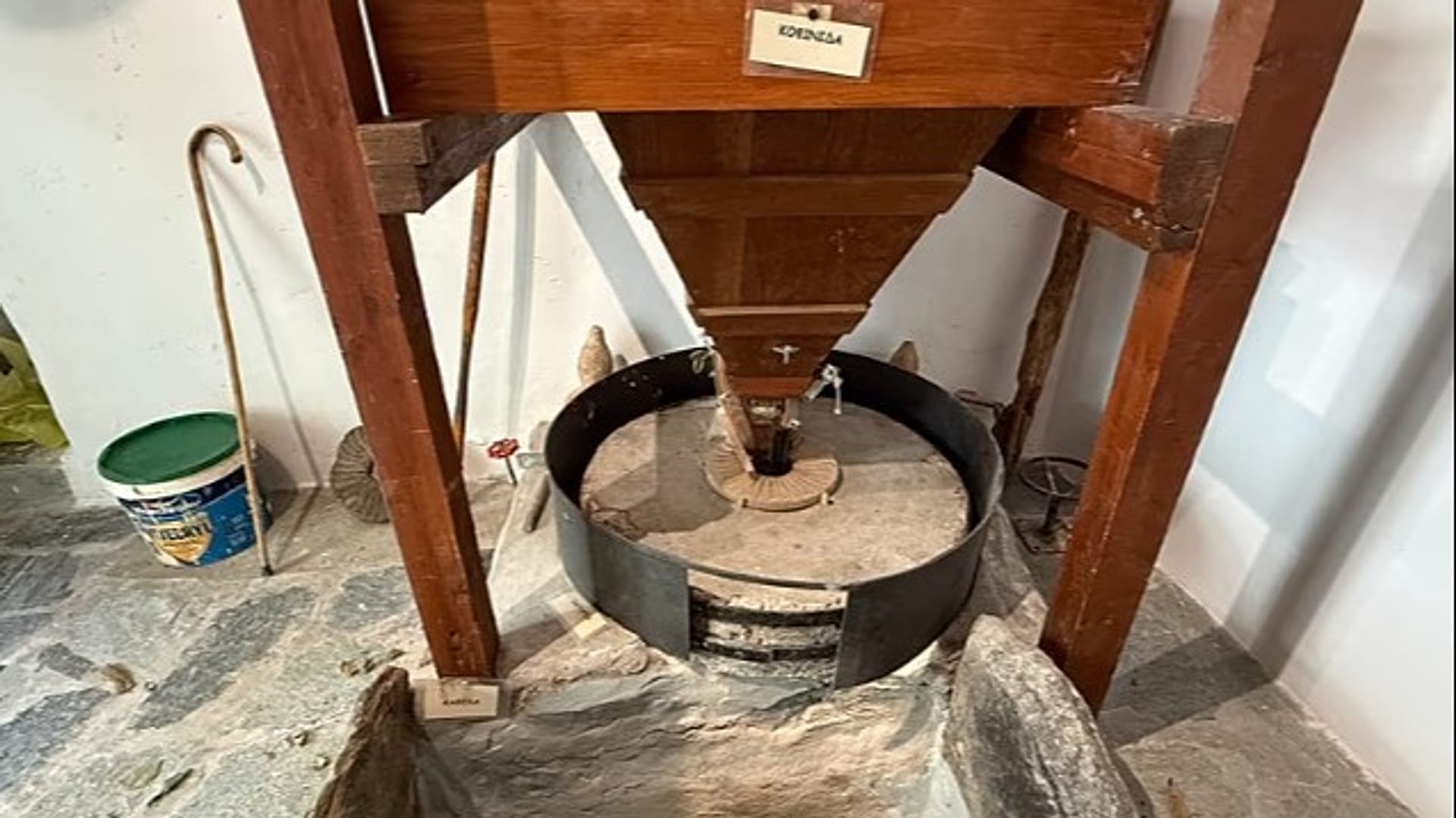
- Eleven watermills from the Ottoman period survive in the Milopotamos area; one is used as a dwelling, another welcomes tourists
The island travelers choose outside the high season
The Cyclades welcome millions of holidaymakers every summer, but, as Euronews observes, in recent years the archipelago has increasingly attracted travelers interested in more than just the beach: they come in spring and autumn for hiking trails, archaeology and architecture. One such island is Kea, also known as Tzia, the westernmost in the archipelago. It is called the 'gateway to the Cyclades': only 16 nautical miles separate it from the Athenian port of Lavrio, making it the most accessible island in the archipelago from the mainland.
A capital that breaks the white-and-blue Cycladic stereotype
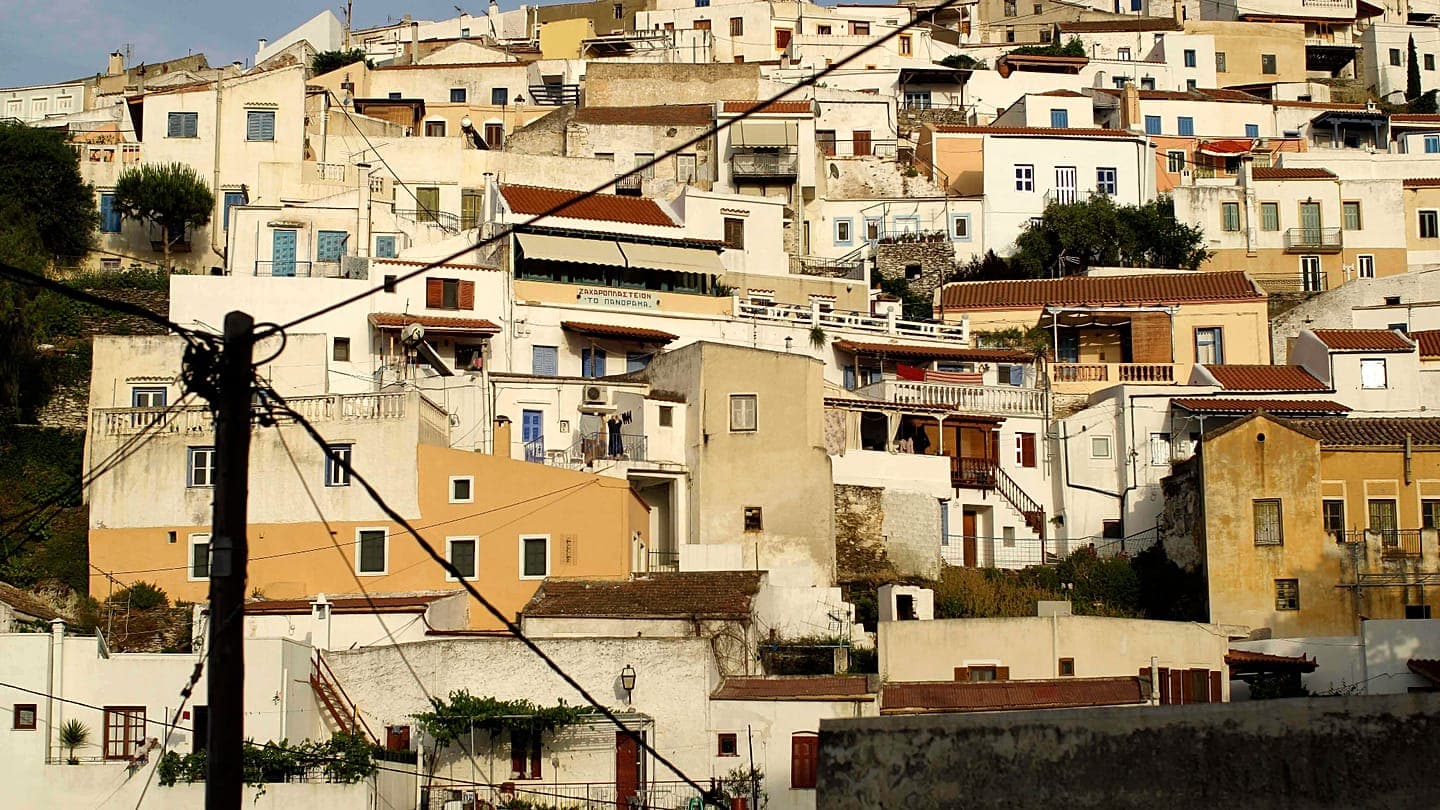
The island's capital, Ioulida (Chora), is one of the four ancient poleis of Kea and the only one located in the island's interior: historically it was a trading center. The town is built like an amphitheater on the slopes of the Kastro and Myle hills, and since 1978 it has held the status of a protected traditional settlement. Instead of the familiar white houses, the influence of urban and neoclassical style is evident here — the historic town hall building was designed in 1892 by the renowned architect Ernst Ziller.
Color beneath the plaster and red miltos
The island's current mayor, Rena Velissaropoulou, in office since 2019, explains to Euronews that Tzia has always been a 'colorful' island: Greeks were required to whitewash their houses in a white-and-blue palette under the Metaxas regime (the Russian version of the publication gives the 1930s, the English one 1936–1940), mainly for sanitary reasons. But beneath the crumbled old plaster, according to the mayor, color is almost always found. A special role was played by miltos — a grayish-red mineral mined in cave workings in the Otzia area and exported to Athens in antiquity; the mayor compares its color to the frescoes of the Palace of Knossos.
Katikies: farmsteads passing to foreigners
Scattered across the hills outside the capital are katikies (or kafikies) — traditional stone farmsteads. Local resident Dinos Vrettos, who worked as a stonemason for a quarter of a century and spent five years taking part in excavations of the ancient theater of Karthaia, showed journalists the layout of such a farmstead: it was a seasonal workplace for a farmer or herder, while the family's permanent home was always in Ioulida. The house in the capital usually passed to the woman as a dowry, while the farmstead outside town went to the husband. Peasants did not build on hilltops because of the northern winds and did not descend into the ravines because of the summer heat, and they took stones for construction from ancient structures. According to Vrettos, almost all the katikies have changed owners: they are bought up mainly by foreigners, who, however, try to keep the buildings in their original state.
The watermills of Milopotamos
Another hallmark of the island is the 11 watermills in the Milopotamos area near the Fleas spring. They probably date from the period of Ottoman rule, operated until World War II and stood empty by the 1980s. Today one mill is used as a dwelling, another serves tourists. Savvas Michail, a retired aviation officer, is engaged in preserving this heritage: 'Modern children have no idea how people used to live and work. We must preserve this tradition so that the younger generation understands its heritage. Even if these mills are no longer needed for work, at least one of them must remain alive,' the Russian version of Euronews quotes him as saying.
What readers should know
About 2,500 people live permanently on the island, and, as Euronews notes, despite the growth of tourism Kea manages to preserve its traditional character. The material is based on two versions of the same Euronews report — Russian and English; they agree in substance and differ only in details of the dating of the Metaxas regime. The piece is guide-like in nature: it is not a report on a new event, but a story about the heritage of an island that is increasingly visited by tourists outside the high season.